Her student debt had been double-counted, making it look as though she owed a quarter of a million dollars and putting home ownership out of reach. Jones disputed the items with Experian, one of the major credit reporting agencies, multiple times in writing and over the phone, but got nowhere. "They kept saying it's been verified, it's been verified...They never investigated. They never tried to remove it," Jones said in an interview.
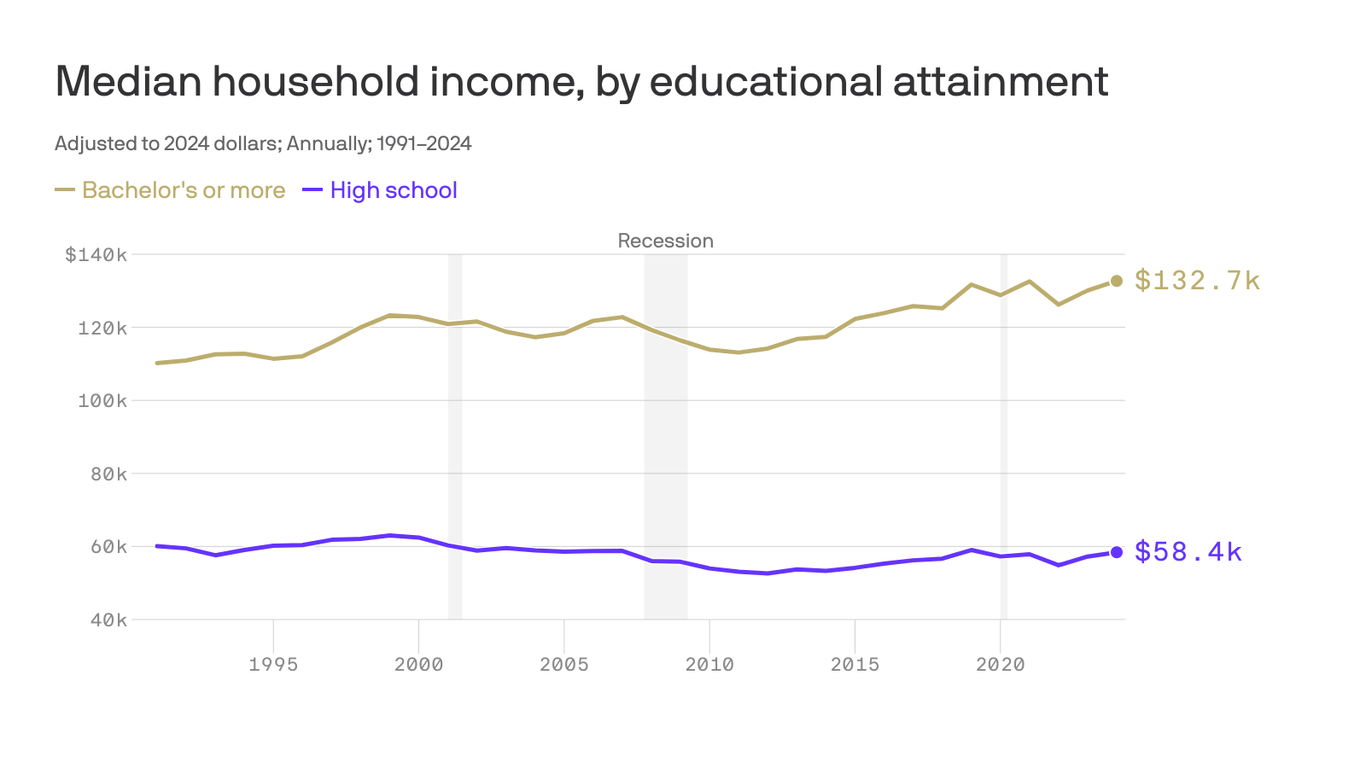
The four-year college degree no longer has the same pull it once did - and the Trump administration agrees. The Department of Education concluded its negotiations on the Workforce Pell program on December 12, a new initiative included in President Donald Trump's "big beautiful" spending legislation. The program would extend Pell grants to low-income borrowers in short-term certification programs, with the intention of providing more funding for alternative paths to a four-year college degree or trade school.
The dirty secret many now understand is that a lot of wage labor is not enough to get by in America anymore. The past promise of working hard for 40 hours per week and getting a home and a retirement in return is gone for a significant chunk of this country, stripped away by capitalists whose only desire in their miserable lives is to have more than they currently do.
setting in motion significant changes in student borrowing rules that will have huge implications for students, institutions and the economy. Among the negotiated points were directives in the One Big Beautiful Bill Act designed to address the $1.8 trillion student debt crisis by canceling Grad PLUS loans-used by many students to pay for grad school-and putting caps on the amount of money students can borrow: $200,000 for professional degrees, capped at $50,000 annually, and $100,000 for graduate programs, limited to $20,500 a year.
We all know that a legal education can land the average law school graduate in up to six figures of debt (to be specific, on average, 2025 graduates racked up more than $112,500 in student debt), and we all know that egregiously high tuition costs are to blame. But which schools had the most costly tuition and fees for out-of-state students for the 2024-2025 academic year? The Short List blog of U.S. News has compiled a ranking for that, and it's not at all shocking that almost all 15 schools that made the list are private.
A close friend, "Sam," and his girlfriend, "Emily," are doing something truly terrible. She has a lot of student debt to pay off, so they have come up with a plan. She will date and marry someone rich, and he will pay off her student loans, and then she will break up with him to be with Sam after a few years.
According to the 2025 National Association of Realtors' Home Buyers and Sellers Generational Trends Report, 43% of younger millennials carry a median student debt of $30,000 with around 29% of older millennials having a median debt of $35,000. That's on top of the average millennial's credit card debt of $6,691, per Experian. Retirement? Seventy-five is optimistic. The American dream we were promised is behind us, and millennials, also known
Student loan balances have ballooned over the past 20 years, growing from $260 billion in 2004 to $1.6 trillion by 2025. According to a recent Point survey, 42% of American homeowners are currently paying student debt for themselves or a family member. Another 37% plan to take on student debt in the future including 10% who don't currently have any student debt.
A typical student graduating from high school in 2025 could take on an estimated $40,000 in student loan debt before completing their college education, amidst rising interest rates.