#tariff-policy
#tariff-policy
[ follow ]
#trump-administration #us-china-trade #donald-trump #supreme-court-ruling #us-economy #economic-impact
US politics
fromAbove the Law
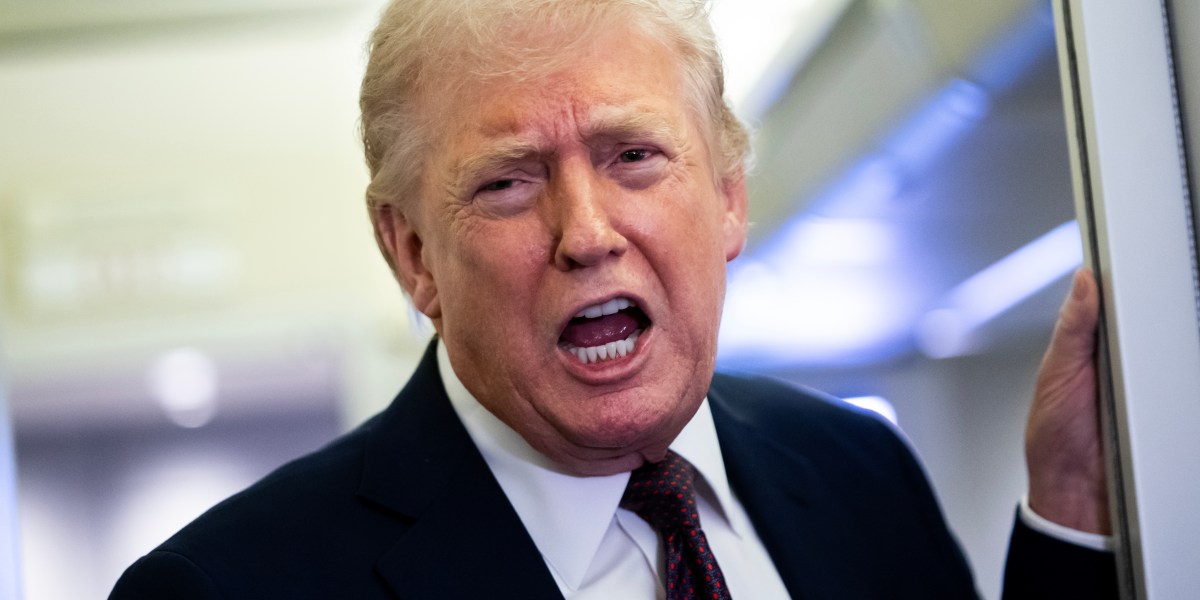
1 month agoDonald Trump Has Totally Not Dementia-Addled Thousand-Word Meltdown About Supreme Court - Above the Law
During major global crises and government shutdown, the president spent late Sunday night posting a lengthy Truth Social rant criticizing the Supreme Court's tariff decision while praising justices who sided with him.
#trade-investigations

US Elections
fromFortune
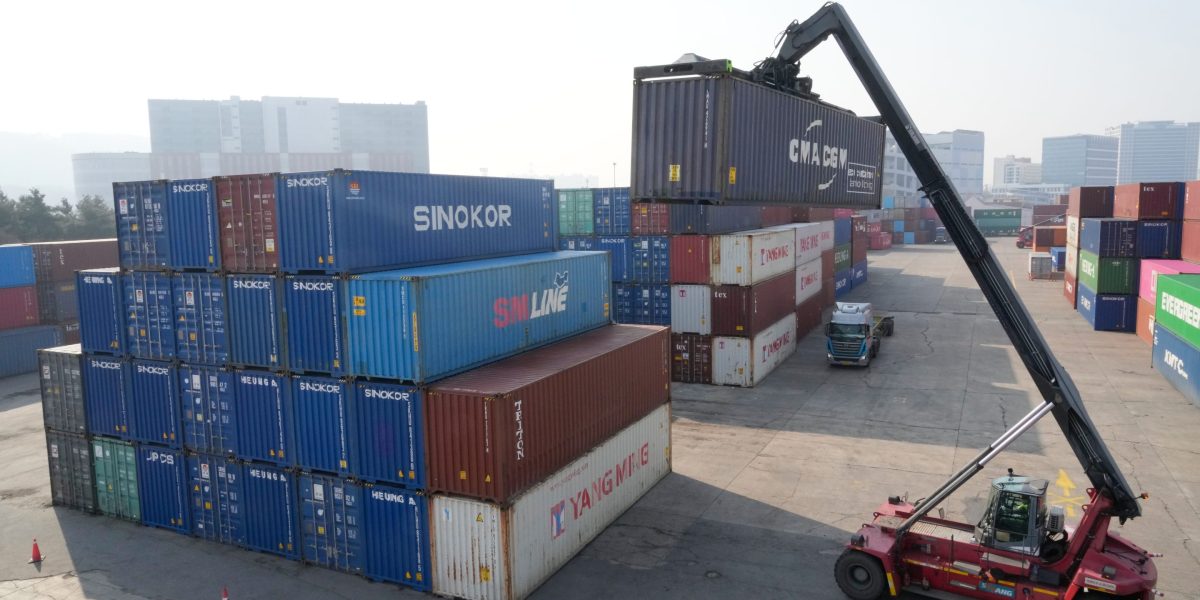
1 month agoTrump Administration races to rebuild tariff revenue after Supreme Court setback | Fortune
The Trump administration is pursuing new tariff investigations under Section 301 of the Trade Act to replace $1.6 trillion in revenue lost after the Supreme Court struck down previous import taxes.
US Elections
fromFortune
1 month agoTrump seeks to close a $1.6 trillion revenue gap with new tariffs that will be easier for people to challenge | Fortune
The Trump administration is pursuing new tariff investigations under Section 301 of the Trade Act to replace $1.6 trillion in revenue lost after the Supreme Court struck down previous import taxes.
US politics
fromFortune
1 month agoTrump touts tariffs as a budget fix. But the brutal truth is 'they're very weak' and barely dent the $39 trillion national debt | Fortune
Tariffs are ineffective revenue tools that cannot meaningfully address the federal deficit or replace income tax, despite Trump's claims of their transformative potential.
fromFortune
1 month agoTrump's $175 billion illegal tariff revenue is now accruing interest, and refund delays could be costing American taxpayers $700 million a month | Fortune
Federal regulations outline that in the case of an overpayment for duties, including those determined to be illegal, those payments must be returned with interest. U.S. Customs and Border Protection (CBP) outlines this interest compounds daily at an annualized rate of 4.5% for overpayments more than $10,000 and 6% on overpayments less than that.
US politics


US politics
fromwww.theguardian.com
2 months agoThe supreme court has struck a blow to Trump's corruption machine | David Sirota
The Supreme Court restricted presidential power to unilaterally impose tariffs, making it harder for presidents to use tariffs as political tools to reward allies and punish critics.
fromFortune
2 months ago'I sell millions of Halloween costumes to Americans-here's my take on tariffs' | Fortune
Since Donald Trump entered the White House for the second time, the US import taxes faced by Morph, which supplies Walmart and Target, have lurched wildly-from zero tariffs to 20% tariffs to 50% tariffs, before briefly flirting with 145% tariffs. The figure fell back to 20%, before the Supreme Court intervention last week ruled the tariffs illegal, which brought them back down to zero.
US politics
fromBusiness Insider
2 months agoAston Martin to cut up to 20% of its workforce as tariff and China pain rocks automakers
Trump imposed a 25% tariff on car imports last April, adding export costs to the supercars hand-made in Aston Martin's UK factory. While a subsequent US-UK agreement in May provided some relief for British automakers, there has been fresh uncertainty after Trump introduced a 10% global tariff on exports to the US in response to the Supreme Court ruling against his expansive tariff policy.
Cars
US politics
fromAxios
2 months agoTrump promised to replace taxes with tariffs. Here's what it would cost
Trump proposes replacing income taxes with tariff revenue, but customs duties of $195 billion fall far short of the $2.6 trillion needed, and higher tariff rates cannot proportionally increase revenues due to reduced consumer demand and domestic substitution.
fromwww.theguardian.com
2 months agoThe Guardian view on the EU's answer to Trump: trade without threats | Editorial
For the European Commission president, Ursula von der Leyen, the EU's trade pact with India was the mother of all deals. Seen from the other end of the telescope, it looked like the mouse of all deals, with just 4bn (3.5bn) in tariff reductions a rounding error in a 180bn trading relationship. But that misses the point: this is about economic heavyweights resetting the terms of their cooperation because of Donald Trump's use of tariffs as a tool of economic and political compulsion.
Europe politics
US politics
fromwww.mediaite.com
3 months agoSecret Tapes Reveal Ted Cruz Bashed JD Vance and Warned Trump of Bloodbath' Midterms And the President Told Him F*ck You': Bombshell Report
Sen. Ted Cruz privately criticized Trump's tariff plan and labeled Vice President JD Vance as Tucker Carlson's protégé, warning tariffs would devastate Republicans in 2026.
fromInsideHook
3 months agoCanada Slashes Tariffs on Chinese EVs, Breaking From US
Electrek reports that a new trade agreement between Canada and China will allow 49,000 Chinese-made EVs into Canada each year, with a tariff rate of just 6.1%. To put that number into context, the publication Driving reports that 1.9 million new vehicles were sold in Canada last year. Canada's shift in policy will move them away from the tariff policies of the U.S. (where Chinese EVs are subject to a 100% tariff) and closer to those of other North American countries. That could have big implications for the industry; according to a recent article in Mexico News Daily, Chinese automobiles now make up around 20% of the cars, trucks and SUVs sold in the country in question. And while Canada is not as populous as Mexico, gaining access to North America's third-largest automotive market remains a big deal.
Canada news
US politics
fromFortune
3 months ago'Military adventures cost money': Economists' key concern about Trump's Venezuela action is how it weakens $38 trillion national debt picture | Fortune
U.S. fiscal strain and delayed tariffs raise investor concern that geopolitical actions and reduced tariff revenue will increase the debt risk premium.
from24/7 Wall St.
3 months agoTariffs Pushed CPER Up 39%, Doubling S&P 500 Returns
While investors chased artificial intelligence stocks and cryptocurrency throughout 2025, a commodity fund quietly delivered returns that rivaled the market's biggest winners. The United States Commodity Index Funds Trust ( NYSE:CPER) surged 39% last year, matching NVDA's performance and more than doubling the S&P 500's 16% gain. CPER tracks copper futures contracts, providing exposure to the industrial metal without mining company operational risks.
Business
fromIntelligencer
7 months agoThe Federal Reserve Is Too Independent
He is breaking with decades of precedent and allegedly the law to attempt to fire Lisa Cook, a Biden-era appointee to the bank's board of governors. It appears to be part of his campaign to demand lower interest rates, which is a lousy policy when inflation hasn't quite cooled. Trump has done little otherwise to bring prices down. His aggressive tariff regime, certainly, will punish many families - especially when it's not coupled with a new industrial policy or jobs program.
US politics
US politics
fromFortune
8 months ago'The nation's finances have deteriorated' since Trump's took office, CRFB says, gaming out the scenarios up to a $28.5 trillion deficit
Federal deficits and debt are projected to rise sharply through 2035 due to recent legislative, trade, and interest-rate developments, reaching unsustainable levels.


#us-economy

US politics
fromNew York Post
11 months agoMore Americans say the country is on the right track after tariff rollback - sweeping import duties viewed as Trump's 'biggest failure' of second term: poll
Voter optimism has increased about the country's direction, driven by eased tariffs under Trump's administration.

from24/7 Wall St.
9 months agoWill The Tariff "Taco Trade" End The Rally? 5 High-Yield Value Stocks Are Strong Buys Now
Value stocks are companies trading below their fundamental value, often overlooked due to market volatility or economic downturns, with the potential for future performance improvement.
Business
fromEntrepreneur
10 months agoHow Trump's Tariffs Will Reshape Startups and Venture Capital | Entrepreneur
President Trump’s 2025 tariffs, intended to protect domestic manufacturing, are significantly disrupting startups, increasing costs, and enforcing complexities in international trade.
European startups




[ Load more ]