#text-to-music
#text-to-music
[ follow ]
#ai #ai-music #ai-music-generation #music-industry #music-streaming #communication #artificial-intelligence
#ai



Artificial intelligence
fromFuturism
10 hours agoChatGPT's "Honest Reaction" to a "Song" Composed Entirely of Gas-Passing Noises Will Make You Question Whether It's Honestly Evaluating Your Other Brilliant Ideas
AI chatbots often provide sycophantic responses, even to absurd prompts, raising concerns about their reliability and the potential for misleading advice.
fromFuturism
15 hours agoBerklee College of Music Students Furious That It's Offering an AI "Songwriting" Class
The petition accuses the school of promoting OpenAI's ChatGPT, which 'steal the art of [tens of thousands] of artists and rot the essence of the industry and have devastating consequences on the environment all to create facsimiles of real human art.'
Higher education

fromTechCrunch
2 weeks agoCohere launches an open-source voice model specifically for transcription | TechCrunch
Cohere's Transcribe model is designed for tasks like note-taking and speech analysis, supporting 14 languages and optimized for consumer-grade GPUs, making it accessible for self-hosting.
European startups
Roam Research
fromTechCrunch
3 weeks agoThese AI notetaking devices can help you record and transcribe your meetings | TechCrunch
Physical AI notetakers provide versatile recording and transcription options for meetings, offering features like live translation and unlimited transcription without subscriptions.


fromWIRED
2 weeks agoMeet the Man Making Music With His Brain Implant
Galen Buckwalter, a 69-year-old research psychologist and quadriplegic, participated in a brain implant study to contribute to science that aids those with paralysis. The six chips in his brain decode movement intention, allowing him to operate a computer and feel sensations in his fingers again.
Music production
fromThe Atlantic
1 month agoPlay It Again, Claude
By the early 1900s, player pianos had evolved to more fully reproduce a human performance, including subtle dynamics like tempo changes and the introduction of a damper pedal. The human role went from deskilled to fully deprecated as electric motors replaced foot-powered bellows. With the Seeburg Lilliputian Model L, the only job left for humans who wanted to play the piano in the 1920s was to put in a coin.
History



fromThe Verge
3 weeks agoThe secret story of the vocoder, the military tech that changed music forever
The vocoder was never supposed to be a revolution in music. Its development began a century ago, when an engineer at Bell Labs was looking for a simpler way to send phone calls across copper telephone lines.
Music production
fromFast Company
2 months agoThe answer to AI in music isn't suppression. It's data
But to anyone tracking the data over the past few years, it was inevitable. In 2022, Bad Bunny's Un Verano Sin Ti redefined the market, driving Latin music's streaming growth to new heights. It later became the first Spanish-language album nominated for Grammy Album of the Year. The takeaway is simple: When you have accurate, real-time data, you don't guess where culture is going, you know.
Music
fromDEV Community
4 weeks agoI Built a 100% Private, On-Device AI Audio Stem Splitter (No Servers!)
If you've ever used tools like PhonicMind or LALAL.AI, you know the drill: Upload your MP3. Wait in a queue. Pay for "credits" or high-quality downloads. Your file sits on someone else's server. For musicians, producers, or just karaoke fans, this is slow and privacy-invasive.
Music production
fromYanko Design - Modern Industrial Design News
2 months agoTeenage Engineering-inspired Music Sampler Uses AI In The Nerdiest Way Possible - Yanko Design
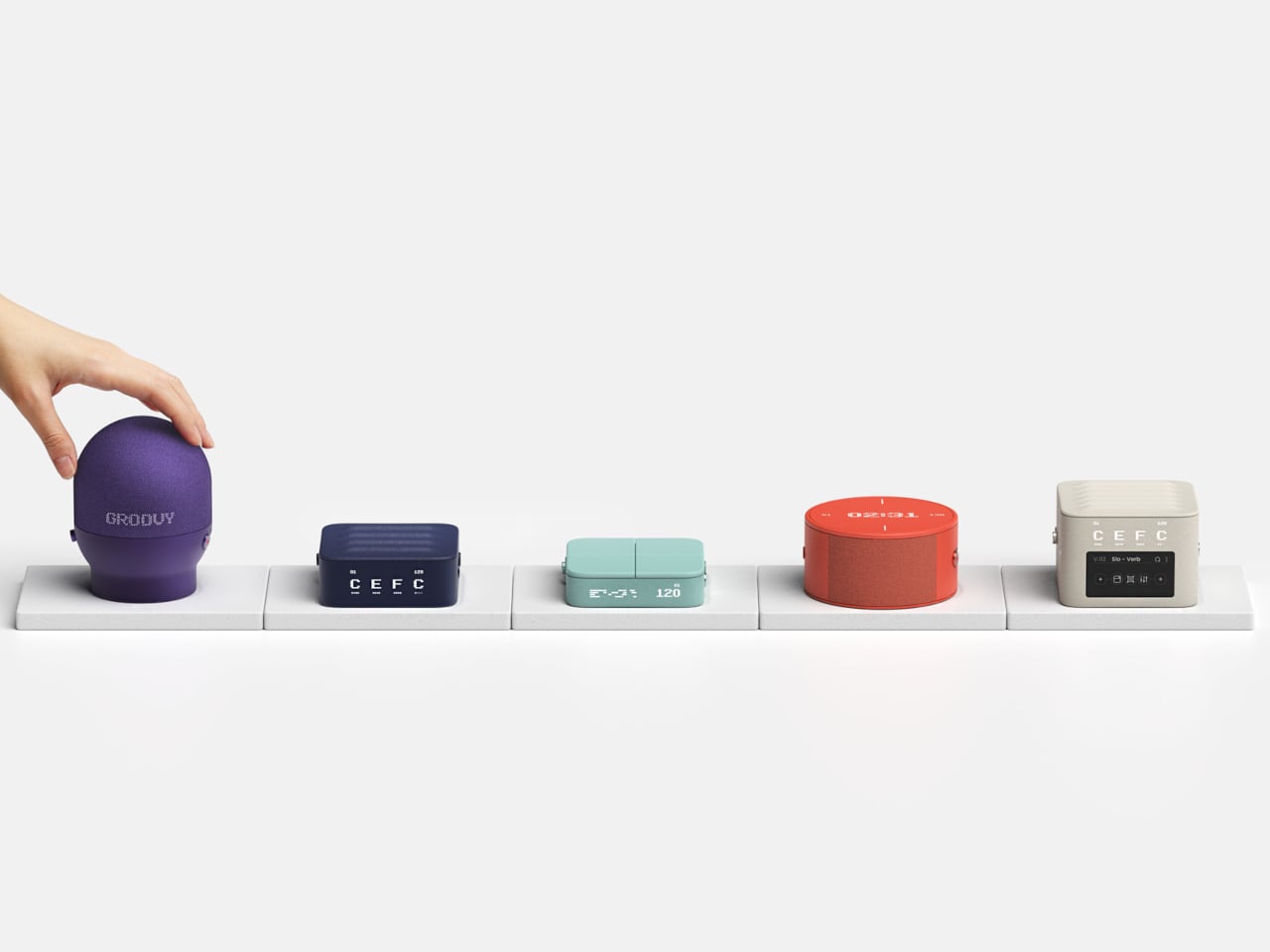
Junho Park's graduation concept borrows all the right cues from TE's playbook, that modular control layout, the single bold color, the mix of knobs and buttons that practically beg to be touched, but redirects them toward a gap in the market. Where Teenage Engineering designs for people who already understand synthesis and sampling, the T.M-4 targets people who have ideas but no vocabulary to express them.
Gadgets
Marketing tech
fromExchangewire
1 month agoAudion Launches First AI Agent Built to Deliver Tangible Outcomes in Digital Audio Advertising
Audion AI automates and optimises multi-platform audio advertising, translating campaign objectives into scalable, continuously optimised media plans across audio and video listening environments.
Music production
fromMetro Silicon Valley | Silicon Valley's Leading Weekly
1 month agoSJSU, MAX/MSP & the Roots of Computer Music
MAX, an object-oriented programming environment created in the late 1980s, revolutionized music production and became foundational to SJSU's pioneering electro-acoustic music concentration.
Music production
fromwww.scientificamerican.com
1 month agoExperimental composer Holly Herndon built an AI voice clone that anyone can use
Holly Herndon uses machine learning and AI models to create protocol art, where the creative act occurs in designing rule sets and datasets rather than in final media generation, making collective creativity visible.
Music
fromYanko Design - Modern Industrial Design News
1 month agoSynth Modular Controller Treats Music Making Like Building with Blocks - Yanko Design
A modular synth system uses snap-together physical blocks for each function, making synthesis tangible, teachable, and scalable from beginner toy to serious performance instrument.
fromEngadget
1 month agoSpotify can reorder your playlists by BPM and key
Spotify is rolling out a new feature that's meant to make transitions in between tracks even smoother. If you'll recall, the streaming service released the ability to create customized transitions within playlists in August last year. It gave people a way to create uninterrupted progressions and eliminate awkward silences between songs.
Music
Artificial intelligence
fromwww.socialmediatoday.com
1 month agoGoogle introduces next iteration of AI image generation model
Google launched Nano Banana 2, a unified AI image generation model combining previous capabilities with advanced world knowledge, real-time web search integration, and enhanced control features for faster, more accurate visual creation.
[ Load more ]