#uk-industrial-protection
#uk-industrial-protection
[ follow ]
#uk-economy #middle-east-conflict #brexit #inflation #uk-eu-relations #energy-costs #tariffs #economic-impact
London politics
fromLondon Business News | Londonlovesbusiness.com
12 hours agoSupermarkets urged to restore real living wage amid rising cost pressures - London Business News | Londonlovesbusiness.com
Investor activists urge UK supermarkets to reinstate pay in line with the real living wage, which reflects the actual cost of living.





fromLondon Business News | Londonlovesbusiness.com
12 hours agoGeopolitical tensions and energy volatility shape global markets - London Business News | Londonlovesbusiness.com
Major indices, including the Nasdaq Composite, S&P 500, and Dow Jones Industrial Average, all recorded gains, with the Nasdaq delivering its strongest weekly performance since November.
Europe news



fromABC7 San Francisco
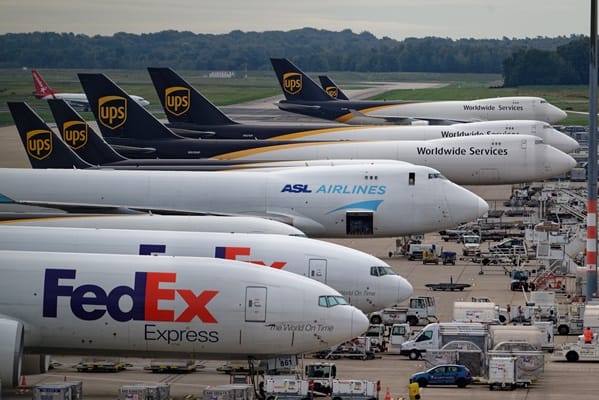
12 hours agoAmazon, UPS, FedEx, USPS add temporary fuel surcharges to offset extra costs
"Transportation costs are a big factor there. Every company that is involved and has logistics and they have to pay for gas, either they have to absorb this cost, or they will charge the third party that will provide this service. I'm not surprised this is happening, because at some point, Amazon will say we cannot absorb all this cost."
Alternative transportation
fromThe Local France
2 days agoEurotunnel and Eurostar still not ready for EES rollout despite deadline
The new checks, part of the EU's new Entry/Exit System (EES), collect digital personal records of third country nationals travelling to the Schengen area and replace the manual stamping of passports.
EU data protection




fromLondon Business News | Londonlovesbusiness.com
12 hours agoDollar volatile amid changing geopolitical conditions - London Business News | Londonlovesbusiness.com
The geopolitical backdrop in the Middle East remained tense after renewed threats to Iranian infrastructure from President Donald Trump, although reports of a potential deal could limit the demand for the dollar.
World news
fromBusiness Matters
2 days agoAmazon bets on Whole Foods to salvage its troubled UK grocery ambitions
Whole Foods has endured a bruising time on this side of the Atlantic since entering the British market in 2004. Turnover at its UK arm fell seven per cent to £86.4 million in the year to December 2024, while pre-tax losses hit £20 million.
London food
#retail-crime
UK news
fromLondon Business News | Londonlovesbusiness.com
3 days agoM&S staff fear going to work as retail crime surges and violence escalates - London Business News | Londonlovesbusiness.com
Marks & Spencer staff face increasing violence and abuse, prompting calls for government action against rising retail crime.
fromComputerWeekly.com
4 days agoData dive: Government 2030 datacentre capacity targets look shaky | Computer Weekly
The UK has about 1.59GW of currently installed datacentre capacity at just under 190 sites. If we add existing capacity to that which is planned to complete by 2030 and which has planning consent, we get 4.9GW.
UK news
fromwww.theguardian.com
1 day agoFair Work Agency's priorities criticised days before its launch
Sharon Graham, the general secretary of Unite, stated that the priorities showed the agency was in danger of being a dead duck before it even begins. For too long, workers have borne the brunt of disreputable employers who have had carte blanche.
UK politics
fromLondon Business News | Londonlovesbusiness.com
4 days agoMillions of drivers hit the roads for Easter despite soaring fuel costs - London Business News | Londonlovesbusiness.com
According to a survey of over 13,000 members conducted by the AA, an estimated 21.7 million journeys are expected across the UK on Thursday, making this one of the busiest Easters in recent years.
Europe news
UK politics
fromwww.theguardian.com
2 days agoTrussonomics still haunts parties' economic promises in run-up to UK local elections | Phillip Inman
Local and regional elections in the UK reveal extravagant spending promises from various parties, often funded by cuts or borrowing without clear economic consequences.
London startup
fromLondon Business News | Londonlovesbusiness.com
4 weeks agoHow UK manufacturers can build supply chain resilience in uncertain times - London Business News | Londonlovesbusiness.com
Supply chain resilience requires real-time visibility and diversified suppliers across multiple geographic locations to quickly recover from disruptions.
fromwww.bbc.com
1 month agoUK set to be among worst hit by Trump's 15% global tariff
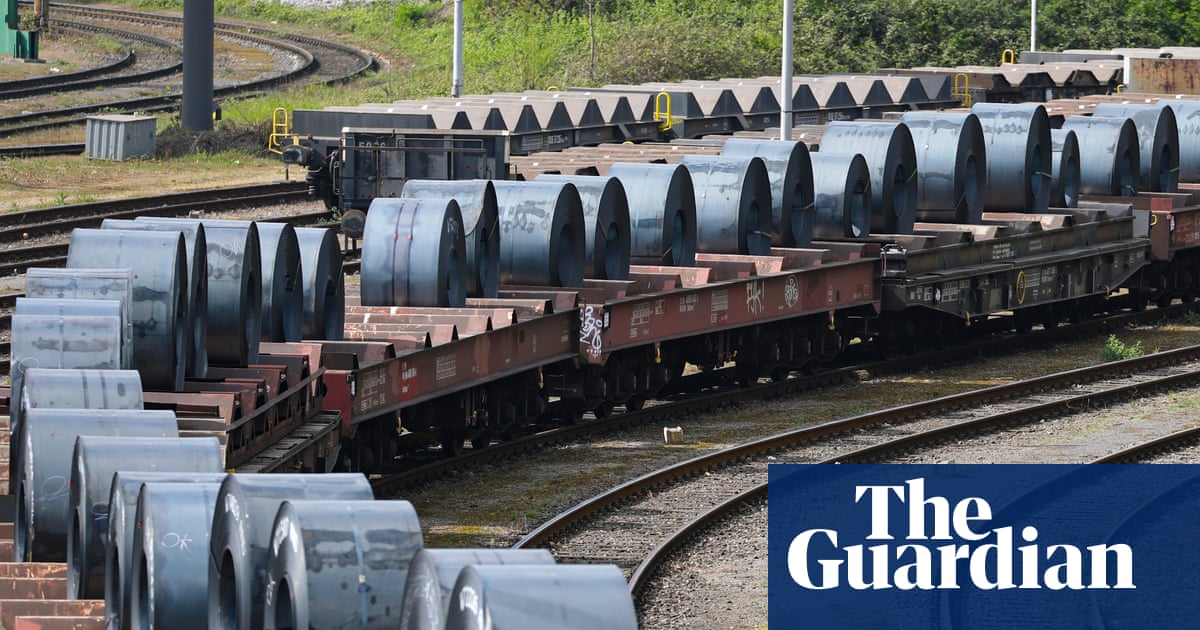
The UK is set to be among the countries worst hit if US President Donald Trump's 15% global tariff goes ahead, analysis has suggested. The British Chamber of Commerce told the BBC the UK would "sit towards the bottom of league table" of trade partners if Trump's announcement came into effect on Tuesday. On Friday, the US Supreme Court outlawed most of the global tariffs that Trump had announced last year, saying the president had overstepped his powers.
US politics
UK politics
fromLondon Business News | Londonlovesbusiness.com
5 days agoMinimum wage rises which is 'another cost increase' companies will have to absorb - London Business News | Londonlovesbusiness.com
The National Living Wage in the UK rises to £12.71 per hour, benefiting low-wage workers but posing challenges for businesses and the economy.
fromwww.bbc.com
4 days agoDoctors lose new jobs package as strike to go ahead
The government has withdrawn an offer of creating 1,000 more doctor training posts in England after the British Medical Association (BMA) refused to call off a six-day strike next week. The extra posts were part of a wider package of measures put forward by ministers earlier this year to resolve the long-running dispute with resident doctors.
UK politics
fromBusiness Matters
2 weeks agoUK sets 50% domestic steel target as tariffs ramp up on imports
Under the plans, import quotas will be reduced by 60 per cent from July, with any steel brought into the UK above those limits facing a punitive 50 per cent tariff. The move represents one of the most assertive steps taken by ministers in recent years to bolster domestic manufacturing capacity amid intensifying global competition.
UK politics
fromLondon Business News | Londonlovesbusiness.com
1 month agoBombshell new data reveals worsening effects of Brexit and US tariffs - London Business News | Londonlovesbusiness.com
'That's just the tip of the iceberg when it comes to ongoing export costs and delays,' says Parcelhero's Head of Consumer Research, David Jinks M.I.L.T. 'It was not only to EU destinations that export costs rose. 'Costs for shipping to the USA and other international destinations also rose year-on-year. 40.5% of retailers and 36.1% of manufacturers reported their global exports cost them more in December than in the same month of 2024. Trump's tariffs, introduced last April, played a role in this overall increase.
Miscellaneous



UK news
fromLondon Business News | Londonlovesbusiness.com
1 month agoUK Factory Output Reaches 17-Month High Milestone - London Business News | Londonlovesbusiness.com
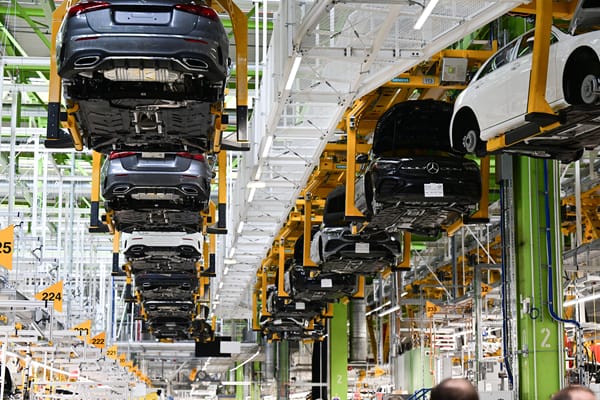
UK manufacturing activity reached its highest level in 17 months in February, driven by strong overseas orders and export growth, though expansion remains uneven across firm sizes.
UK news
fromwww.theguardian.com
1 month agoHigh energy prices threaten UK's status as manufacturing power, business groups say
Rising energy prices and outdated networks threaten UK manufacturing competitiveness, prompting calls for price caps, network upgrades and regulatory reform to avoid deindustrialisation.


fromwww.theguardian.com
2 months agoUK services sector job cuts continue as companies automate, PMI survey shows
The monthly purchasing managers' index showed employment numbers fell more sharply in January compared with December, continuing a trend that started in October 2024. The PMI survey, which is considered to be one of the most reliable indicators of how a sector is performing, said this was the longest period of job shedding in the UK services sector in 16 years, with firms also choosing not to replace voluntary leavers.
UK news
fromwww.theguardian.com
2 months agoOver-reliance on China could hit UK energy supply chains putting 90,00 jobs at risk'
Tens of thousands of jobs could be lost if the UK's clean energy supply chains were to suffer a shock as a result of an over-reliance on China, a left-leaning thinktank has warned. A year-long disruption to the supply of essential battery components used to manufacture electric vehicles could wipe out production of more than 580,000 electric cars and endanger 90,000 jobs, according to the Institute for Public Policy Research.
UK politics
[ Load more ]