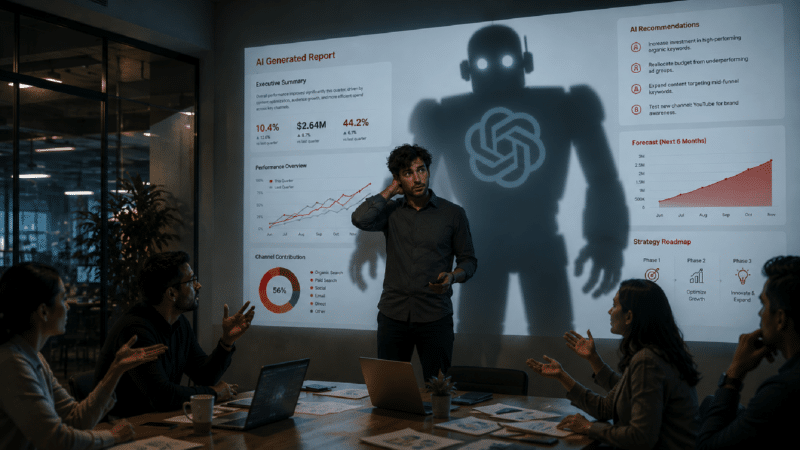
"They hadn't just used AI to refine their thinking. They had used it to generate something they didn't fully recognize as their own and couldn't explain. In short, AI is making it easier to produce work, but harder to tell who actually understands it."
"Once I started noticing it, I saw it everywhere. A student submitted an excellent final project. Clear thinking, strong structure, polished writing. Much better than any of her previous assignments. But many paragraphs had that telltale space at the beginning. I asked if she had used AI. She had."
"But when I asked questions, the answers weren't there. At one point, the lead mentioned how great Claude is at building these. I'm seeing more polished work than ever. I'm also seeing more people who can't explain what they produced."
"AI is very good at helping us produce output faster, cleaner, and more structured than we might create on our own. In many ways, that's a win. But we've started to confuse producing work with understanding work. Those are not the same thing. Increasingly, the gap between them is harder to spot."
AI helps people generate output faster, cleaner, and more structured than they might create alone. This can be a benefit, but it also blurs the difference between producing work and understanding work. Some teams and individuals use AI to generate drafts or polished materials they cannot fully explain or locate within their own documents. Students may submit improved projects while struggling to demonstrate mastery of the underlying concepts. Agencies may present detailed decks that look credible, yet fail to answer questions because the content was produced with AI assistance. As polished work becomes more common, the gap between output quality and real comprehension becomes harder to detect.
#ai-generated-content #content-marketing #learning-and-assessment #understanding-vs-output #academic-integrity
Read at MarTech
Unable to calculate read time
Collection
[
|
...
]