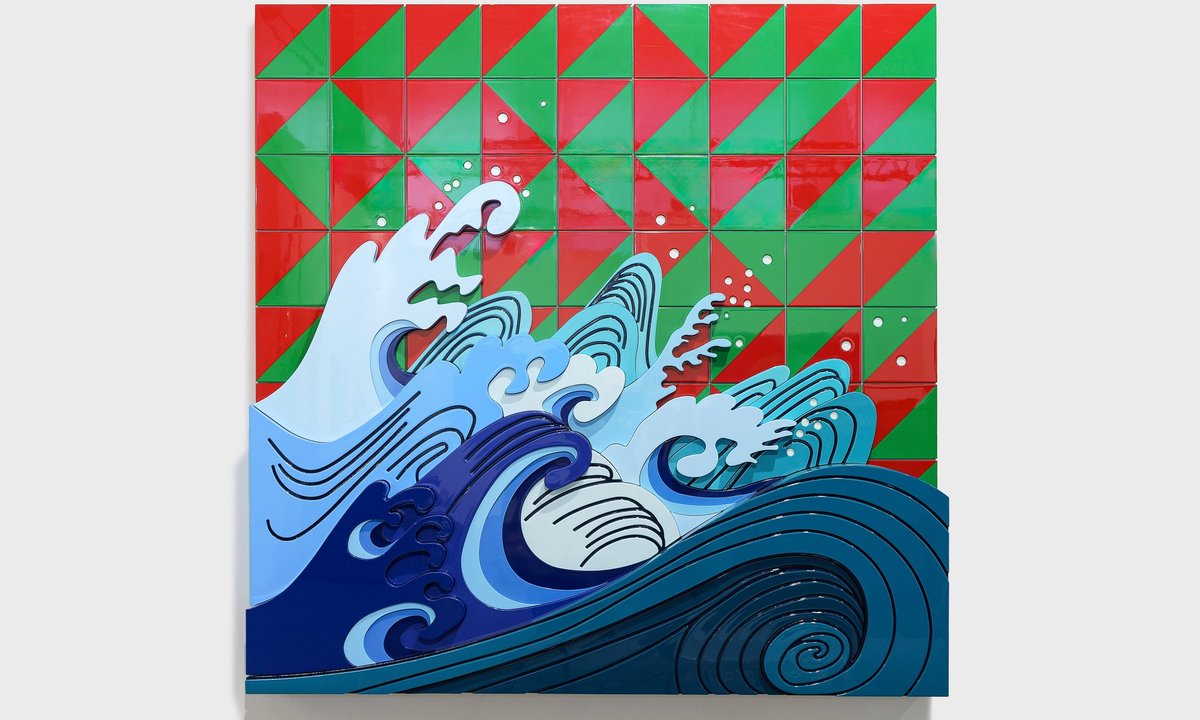
"“Brazil is the largest Black country outside the African continent. We were the primary destination for the objectified bodies of Black people for three centuries,” Simões tells The Art Newspaper. “My question is: how is this absence possible and what does it reveal?”"
"He says the presentation at 1-54 aims to challenge reductive readings of Afro-Brazilian art, moving beyond stereotypical motifs like samba or the orixás (divine spirits associated with the Yoruba religion) to give US audiences a better understanding of the artists shaping the canon today."
"Highlights of the section include Luana Vitra's Geological suture 3 (2024), a wall-mounted sculpture made from materials associated with the mining industry in her native state of Minas Gerais that critiques extractive practices and the labour of Black communities. Helô Sanvoy's Parabrigar (2022), named after the words for shelter ( abrigar) and struggle ( brigar), appropriates materials like brick and glass that are used in the construction of makeshift homes in Brazilian favelas, reflecti"
The 1-54 Contemporary African Art Fair returns to the Starrett-Lehigh Building in Chelsea for its 12th New York edition, featuring 20 exhibitors from 12 countries. A special section, Brazil Beyond Brazil, foregrounds Afro-Brazilian artists through ten artists and six galleries. The section is organized by Brazilian art historian and curator Igor Simões, informed by prior research and fellowships. The curatorial framing examines why Afro-Brazilian artists were largely excluded from global discourse on African diasporic art, despite Brazil’s central role in Black history outside Africa. The presentation aims to move beyond stereotypical motifs such as samba and orixás, offering US audiences a clearer view of artists shaping contemporary canons. Works include Luana Vitra’s Geological suture 3 and Helô Sanvoy’s Parabrigar, both engaging extractive labor and precarious housing materials.
Read at The Art Newspaper - International art news and events
Unable to calculate read time
Collection
[
|
...
]