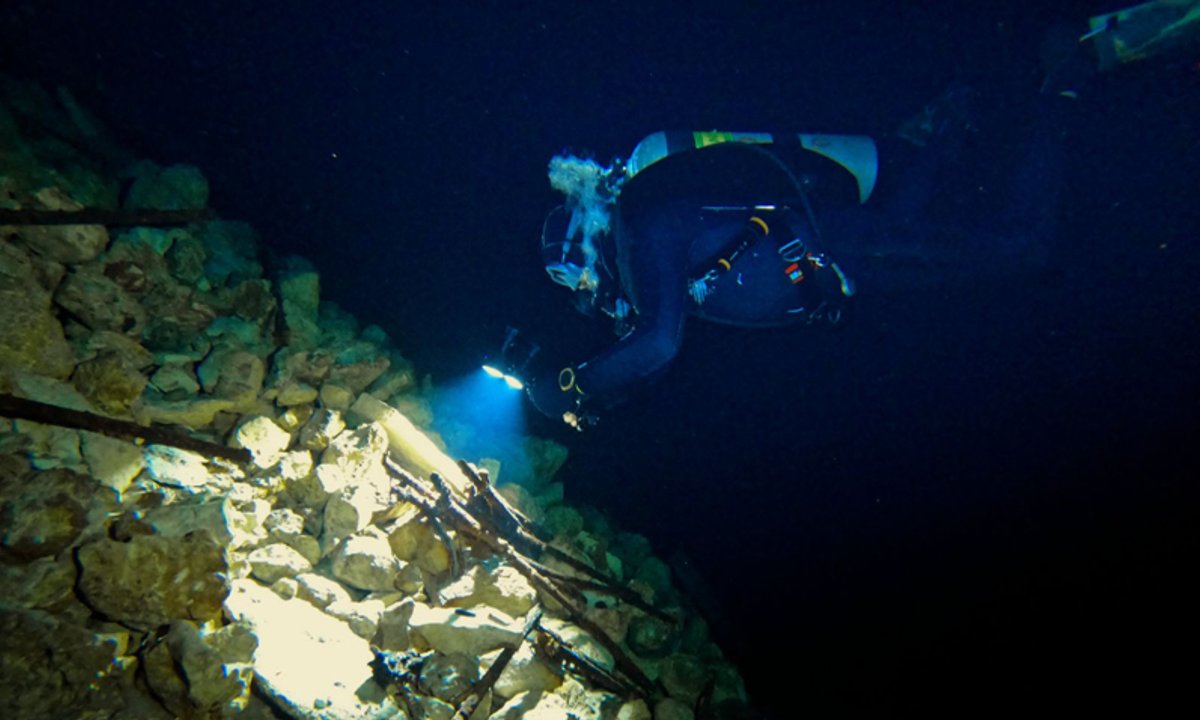
"Prehistoric, pre-Hispanic and modern remains lie beneath the Yucatán Peninsula's more than 8,000 cenotes. At the , beneath the 16th-century former convent San Bernardino de Siena in Valladolid, Mexico, archaeologists recently found 153 Spanish and British muskets and rifles, as well as an iron cannon. The weapons were likely discarded by the Yucatecan (Spanish colonial) government during the early years of the Caste War of Yucatán (1847-1901), preventing them from falling into Maya rebels' hands. Mexico's National Institute of Anthropology and History (INAH) also reported debris and pollution affecting the site."
"Cenotes are that form unique ecosystems connected to the peninsula's underground aquifer. They are a key source of water and preserve significant archaeological and anthropological remains. "Cenotes help us understand the settlements of the continent 13,000 to 15,000 years ago," the archaeologist Arturo Montero tells The Art Newspaper. "Specific conditions facilitate the conservation of ancient remains.""
""Weapons from the Caste War have been uncovered in other cenotes, like those in Homún," says Roberto Junco, the head of INAH's underwater archaeology division. "But this is the only cenote where an iron cannon has been found, and it is beneath one of the region's oldest convents." Junco notes that Maya ceramic pieces and 18th-century Chinese porcelain were also found there, "tracing the region's history"."
"The ritual use of cenotes dates to prehistoric times. They later became central to Maya cosmology. Offerings and everyday objects were deposited into cenotes and caves. These locales later became strategic during wartime."
Prehistoric, pre-Hispanic, and modern remains lie beneath the Yucatán Peninsula’s thousands of cenotes, which connect to the underground aquifer and preserve archaeological and anthropological evidence. At the Síis Já cenote near Valladolid, Mexico, archaeologists uncovered 153 Spanish and British muskets and rifles and an iron cannon beneath the 16th-century former convent San Bernardino de Siena. The weapons were likely discarded by the Yucatecan colonial government during the early years of the Caste War of Yucatán to prevent them from reaching Maya rebels. INAH also reported debris and pollution affecting the site. Maya ritual deposits and later historical materials, including Maya ceramics and 18th-century Chinese porcelain, were found there as well.
Read at The Art Newspaper - International art news and events
Unable to calculate read time
Collection
[
|
...
]