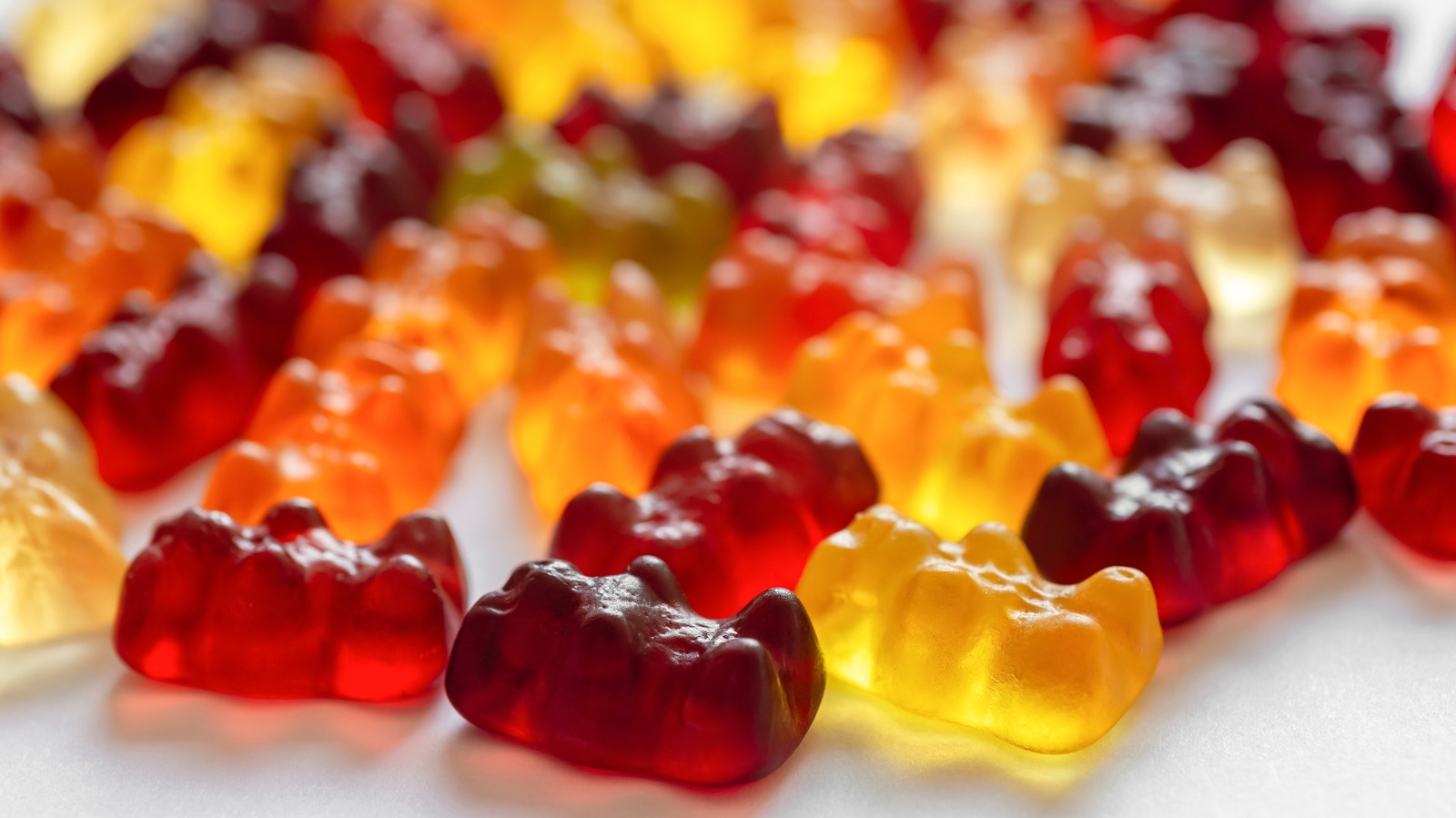
"Using animal-based gelatin as the gelling agent was not a new practice in 1922 when Hans Riegel unveiled his confectionery dancing bears, but it has remained the sole gelling agent (apart from two varieties available in Australia) in Haribo gummies to this day. Using gelatin over other gelling agents, such as pectin or starch, is what gives its gummies their harder, more elastic texture."
"Gelatin's strength and resistance is due to its chemical components. Derived from animal collagen, gelatin is comprised of a triple-helix structure of protein strands which, along with the application of heat in the production process, are unraveled and reconstituted into the candy's chosen shape. When the liquid gelatin cools, these protein strands attempt to return to their original shape, and in the process, lock the other ingredients and additives inside a soft-yet-firm form."
"Haribo uses primarily pork skin-derived gelatin, although halal versions are also produced from beef collagen. Other gummies may use pectin or starch. The first two letters of Hans Riegel put the "HA" and the "RI" in Haribo, while the "BO" comes from his hometown of Bonn."
Gummy candy preferences often depend on texture as much as flavor. Haribo is a major gummy producer, selling Goldbears in more than 100 countries. The original dancing bears were introduced in 1922 and used animal-based gelatin as the gelling agent. Gelatin remains the sole gelling agent in Haribo gummies, except for two varieties available in Australia. Gelatin’s triple-helix protein structure, formed from animal collagen and shaped during production with heat, reconstitutes as it cools and helps lock ingredients into a soft-yet-firm form. Haribo primarily uses pork skin-derived gelatin, with halal versions made from beef collagen. Other gummies may rely on pectin or starch, which can produce different textures.
Read at Tasting Table
Unable to calculate read time
Collection
[
|
...
]