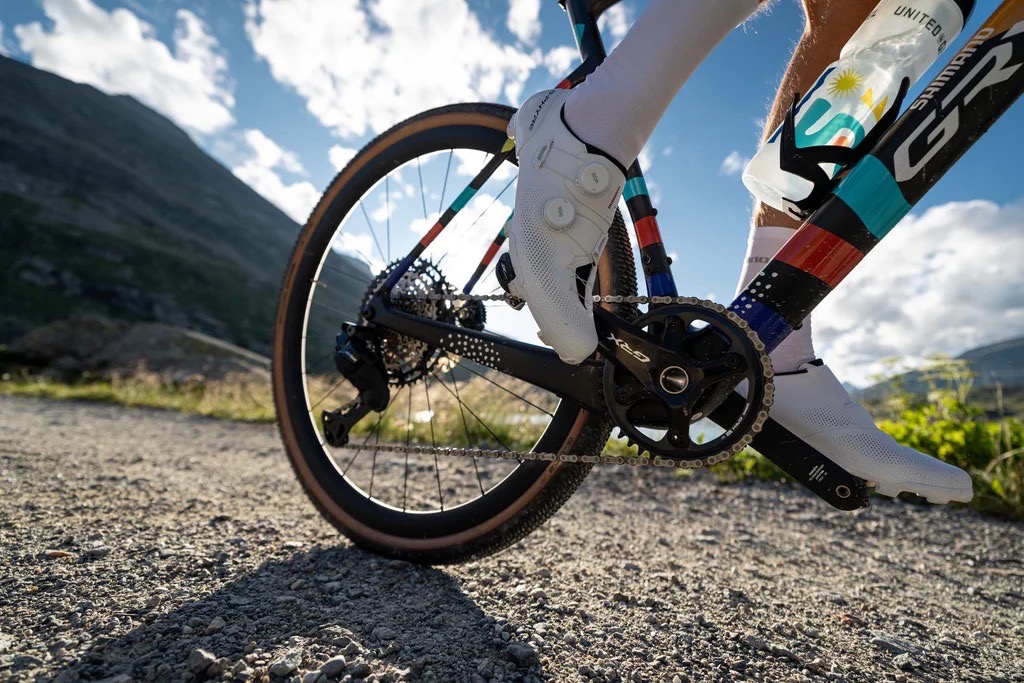
"The updated 44-tooth and 46-tooth chainrings join the existing 40T and 42T options. Along with that are the new shorter 160mm and 165mm crank arm lengths. The new rings and crank arms are for the RX810 series. These additions will give gravel riders even more ways to dial in their bike's fit and gearing."
"The larger 44t and 46t chainrings are for the riders who spend time on flatter terrain or take part in race-focused gravel events where maintaining higher speeds matters. Additionally, as Shimano often points out, a larger chainring results in less chain friction. The new chainrings work with existing GRX cranksets in both 1x and 2x configurations across the 600- and 800-series groups."
"That means current GRX users can upgrade without replacing their entire drivetrain. That's nice. There's been a "shorter is better" movement going on in the crank arm world for some time now. A shorter crank arm can benefit riders by allowing a smaller, more efficient pedal stroke."
"Shorter cranks can also support higher pedaling cadences and reduce stress on joints during long rides. With the addition of new crank arm lengths, the RX810 lineup now offers crank lengths ranging from 160mm to 175mm in 2.5mm increments."
Shimano added two chainring sizes and two crank arm length options to the GRX gravel RX810 lineup. The new 44-tooth and 46-tooth chainrings join existing 40T and 42T options. These larger rings target flatter terrain and race-focused gravel riding where higher sustained speeds are important, and they are described as reducing chain friction. The chainrings are compatible with existing GRX cranksets in both 1x and 2x configurations across the 600- and 800-series groups, enabling upgrades without replacing the full drivetrain. New shorter crank arms at 160mm and 165mm expand RX810 crank lengths from 160mm to 175mm in 2.5mm increments, supporting efficient pedal strokes, higher cadences, and reduced joint stress on long rides.
Read at Bikerumor
Unable to calculate read time
Collection
[
|
...
]