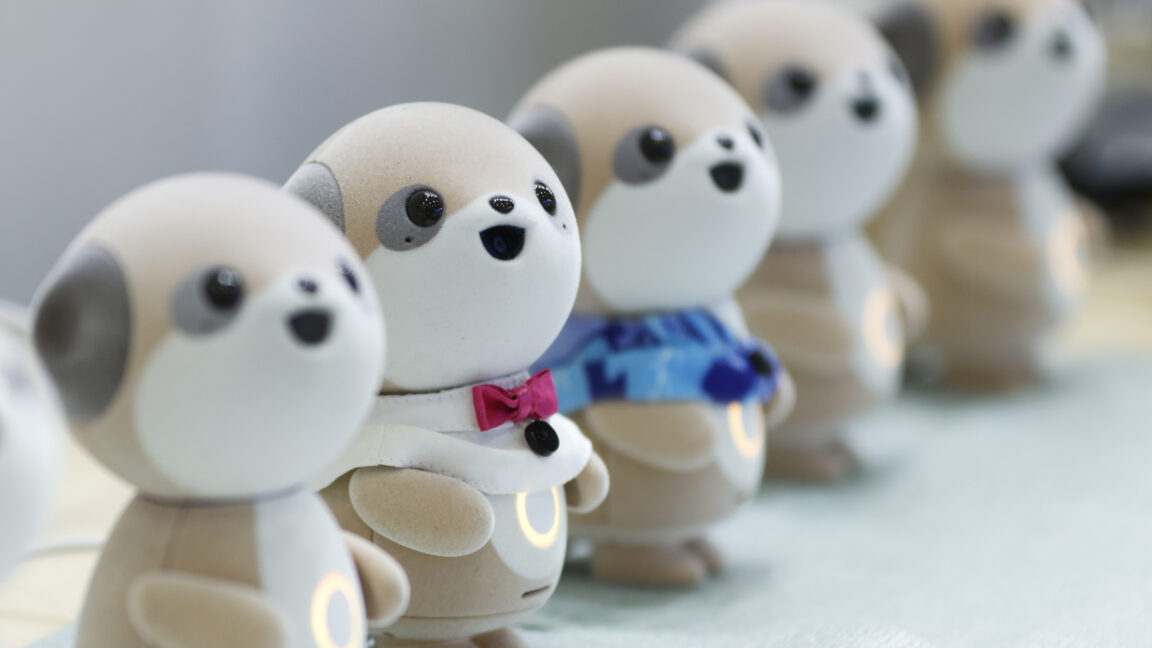
"AI toys are seemingly everywhere, marketed online as friendly companions to children as young as three, and they're still a largely unregulated category. It's easier than ever to spin up an AI companion, thanks to model developer programs and vibe coding. In 2026, they've become a go-to trend in cheap trinkets, lining the halls of trade shows like CES, MWC, and Hong Kong's Toys & Games Fair. By October 2025, there were over 1,500 AI toy companies registered in China, and Huawei's Smart HanHan plush toy sold 10,000 units in China in its first week. Sharp put its PokeTomo talking AI toy on sale in Japan this April."
"Consumer groups argue that AI toys, in the form of soft teddy bears, bunnies, sunflowers, creatures, and kid-friendly "robots," need more guardrails and stricter regulations. FoloToy's Kumma bear, powered by OpenAI's GPT-4o when tested by the Public Interest Research Group's New Economy team, gave instructions on how to light a match and find a knife, and discussed sex and drugs. Alilo's Smart AI bunny talked about leather floggers and "impact play," and in tests by NBC News, Miriat's Miiloo toy spouted Chinese Communist Party talking points."
"Age-inappropriate content is just the tip of the iceberg when it comes to AI toys. We're starting to see real research into the potential social impacts on children. There's a problem when the tech is not working, like the guardrails allow"
AI toys marketed as friendly companions for children as young as three are widely available and largely unregulated. New tools such as model developer programs and vibe coding make it easy to create AI companion products, which are increasingly common at major trade shows and in low-cost consumer markets. By late 2025, many AI toy companies were registered in China, and multiple branded AI toys sold significant units. Testing and reporting have found examples of inappropriate or harmful outputs, including instructions for violence, discussion of sex and drugs, and political messaging. Consumer groups argue that these products need stronger guardrails and stricter regulations, and research is beginning to examine social impacts on children.
Read at Ars Technica
Unable to calculate read time
Collection
[
|
...
]