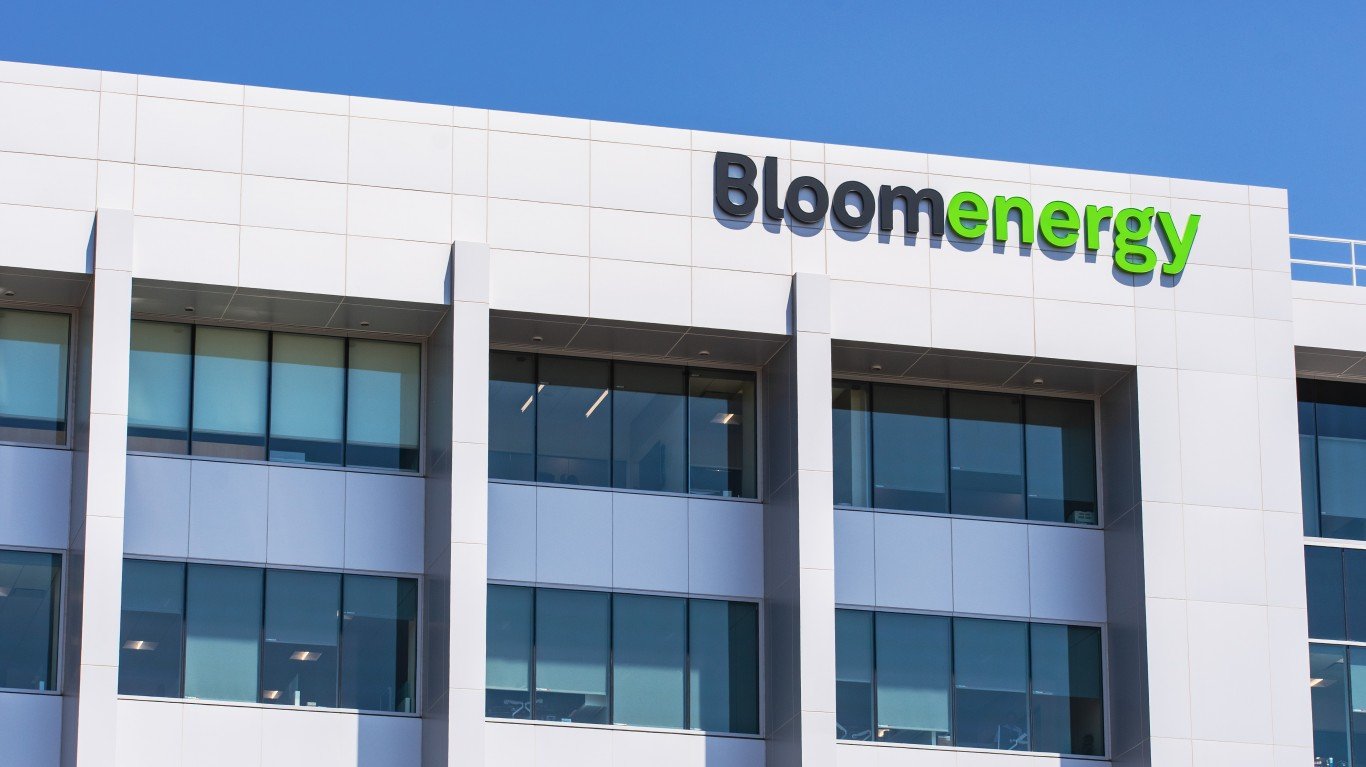
"Bloom Energy is a non-traditional tech company, it focuses on on-site electricity production. The company's flagship product consists of Bloom Energy server . Unlike nuclear, renewables, or combustion-based power generation, Bloom's servers rely on fuel cells. These convert natural gas, among other fuels, into electricity without combustion but through an electrochemical process."
"While the technology might sound novel, it has been around since the 18th century. The first commercial use of fuel cells was during the Apollo program . NASA chose fuel cells to generate electricity inside the ship due to several advantages over other technologies. Fuel cells were safer than nuclear approaches, worked with the available materials in the rocket ( Hydrogen and Oxygen) and provided useful byproducts for the crew, including water."
"By the 2000's, people widely knew the technology, but it still showed several shortcomings. These factors reduced its competitiveness compared to other on-site generation methods, due to higher cost per kW and shorter lifespan. Bloom Energy started as an academic project for NASA's Mars Missions program, but soon evolved as a fuel cell company. The company realized the technology's limitations, and invested heavily to improve costs and lifespan."
"By 2006 it deployed its first 5kW unit to the University of Tennessee, and by 2008 it launched its Energy Server. Its first big clients were Google, Walmart"
Bloom Energy produces electricity on-site using fuel-cell servers that convert natural gas and other fuels into electricity through electrochemical processes without combustion. Fuel cells have long historical roots, including use in the Apollo program for safer onboard power generation and useful byproducts. Early commercial adoption faced competitiveness issues due to higher cost per kilowatt and shorter system lifespan. Bloom Energy began as an academic project connected to NASA Mars missions, then focused on improving cost and durability through heavy investment. It deployed early units in 2006, launched its Energy Server in 2008, and later attracted major clients such as Google and Walmart. The growth outlook is linked to AI capex buildouts and the companies’ roles as critical providers.
Read at 24/7 Wall St.
Unable to calculate read time
Collection
[
|
...
]