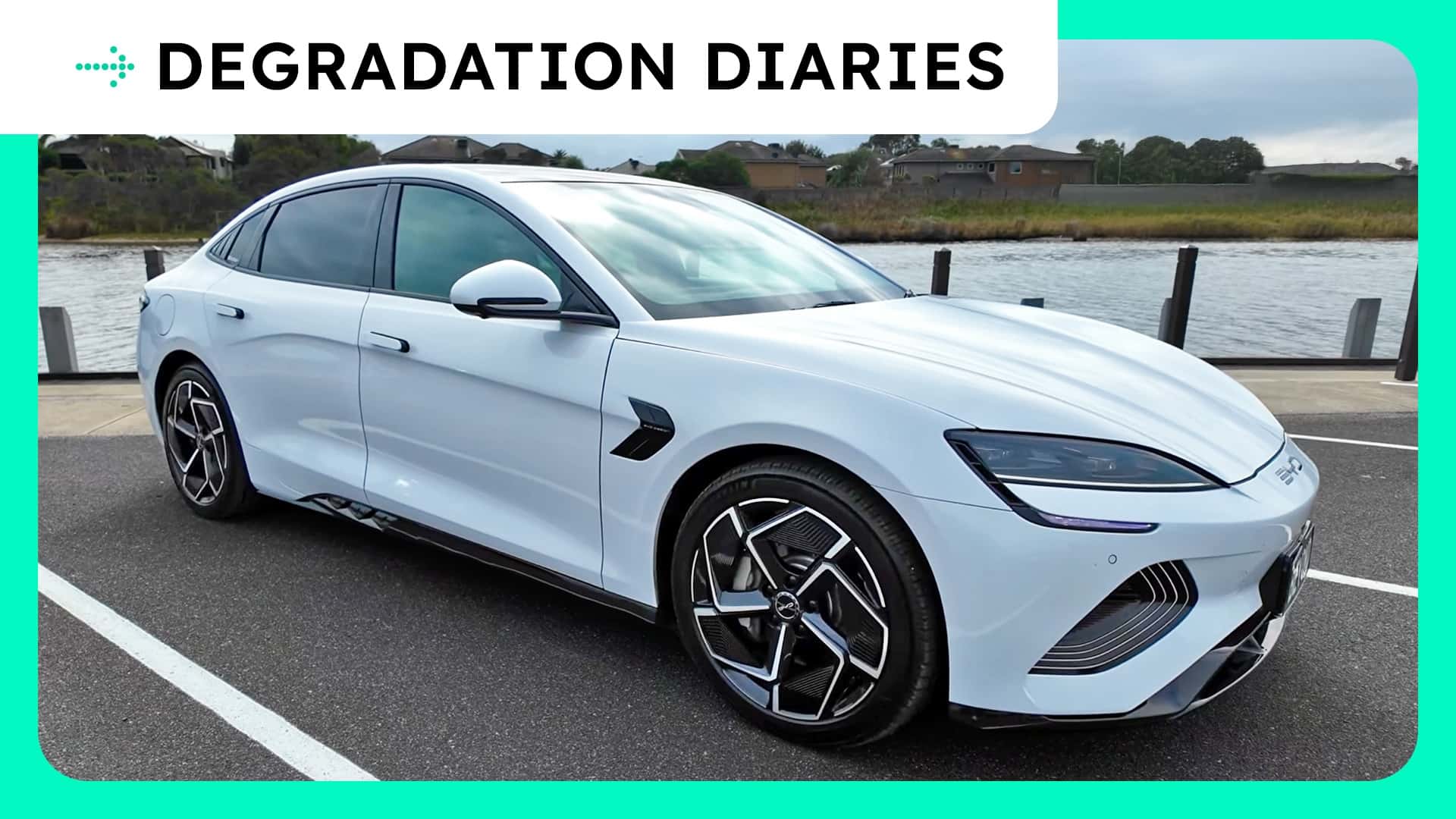
"When new, the lithium-iron phosphate (LFP) Blade battery had a capacity of 82.56 kilowatt-hours, with around 85 kWh in total including the buffer. This gave the car an official WLTP range rating of around 354 miles (570 km) or 31 miles (50 km) better than the quicker dual-motor version. The Australian Automobile Association (AAA) tested the single-motor Seal on public roads and got a theoretical maximum range of 303 miles (488 km), which is 14.4% less than the manufacturer's claim."
"The type of charger you use does affect EV battery longevity, and relying heavily on public DC fast chargers can accelerate degradation, although LFP batteries of the kind this Seal has do perform better in this respect than nickel manganese cobalt (NMC). Testing the battery in this Seal revealed that it still had 95.08% of its original capacity, which works out to around 78.5 kWh. That's a pretty good result, especially since we don't know how this car was charged, whether it was kept in"
A 2024 BYD Seal single-motor EV with a lithium-iron phosphate Blade battery was evaluated after about 31,000 miles. The battery’s original capacity was 82.56 kWh, with about 85 kWh including buffer, and the official WLTP range rating was about 354 miles. A separate road test produced a theoretical maximum range of 303 miles, about 14.4% below the manufacturer’s claim. Battery capacity was measured using an OBD2 dongle and the Car Scanner app. The measured remaining capacity was 95.08% of original, about 78.5 kWh. Charger type can influence longevity, and frequent DC fast charging can accelerate degradation, though LFP batteries generally handle it better than NMC.
Read at insideevs.com
Unable to calculate read time
Collection
[
|
...
]