"Fighter pilots have had heads-up displays since the 1950s, because asking a human to look down at instruments while traveling at 600 miles per hour and making life-or-death decisions is an engineering failure, not a pilot failure. The technology migrated to production cars in 1988 when GM offered the first automotive HUD in the Oldsmobile Cutlass Supreme, and every generation of premium vehicle design since has treated it as table stakes."
"For all the innovation packed into the Model 3 and Model Y, their dashboards direct critical driving data to a screen mounted nowhere near where human eyes naturally rest during forward motion. TrantorVision built NeuroHUD to close that gap, and the Kickstarter campaign funded in 30 minutes."
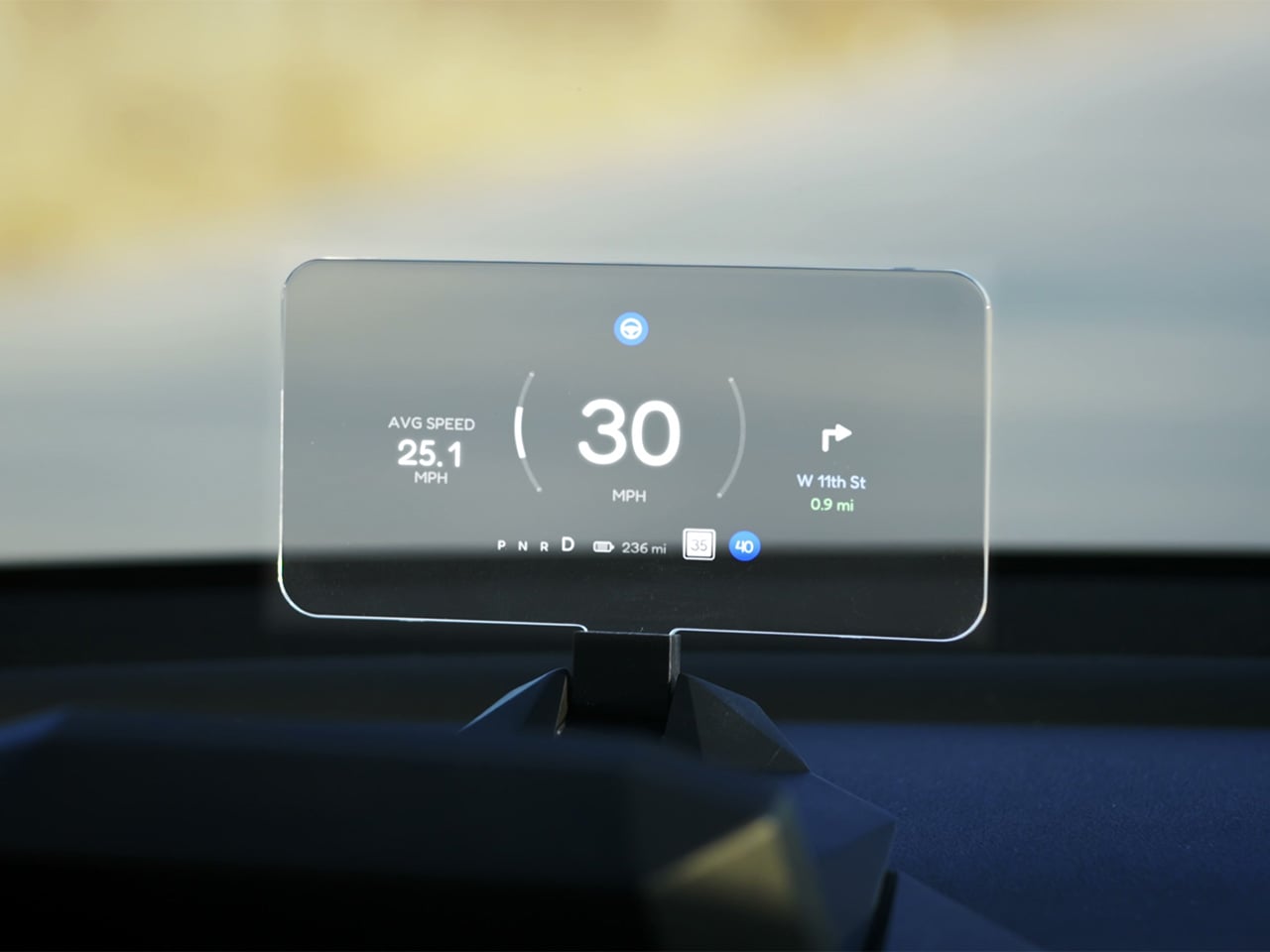
"Built alongside a community of over 4,000 Tesla owners from mid-2025 through early 2026, NeuroHUD projects Tesla driving data directly into the driver's forward sightline rather than leaving it on a screen at center console height. Installation takes about one minute, requires no tools and no disassembly, and leaves the factory wiring completely untouched, keeping the manufacturer's warranty intact."
"The compute module clips behind Tesla's center screen and draws power through a single USB-C cable, with no hardwired connections and no vehicle modifications of any kind. From there, a dual-channel data system reads Tesla's screen directly through AI cameras and simultaneously pulls deeper vehicle telemetry through the Tesla API, creating a richer information layer than either method could supply alone. The result covers speed, navigation, gear state, battery range, blind-spot alerts, and takeover warnings, all projected directly in the driver's line of sight."
Heads-up displays originated in fighter aviation to keep critical information in a pilot’s forward view. Automotive HUDs became mainstream starting in 1988 and have since been treated as expected in premium vehicles. Tesla’s Model 3 and Model Y still place key driving data on a screen not aligned with natural forward eye position. TrantorVision’s NeuroHUD projects Tesla driving data directly into the driver’s sightline. Installation takes about one minute, needs no tools, and does not require disassembly or factory wiring changes, preserving warranty coverage. A compute module clips behind the center screen and powers via a single USB-C cable. Dual-channel data uses AI cameras reading the display and Tesla API telemetry for speed, navigation, gear state, battery range, blind-spot alerts, and takeover warnings.
Read at Yanko Design - Modern Industrial Design News
Unable to calculate read time
Collection
[
|
...
]