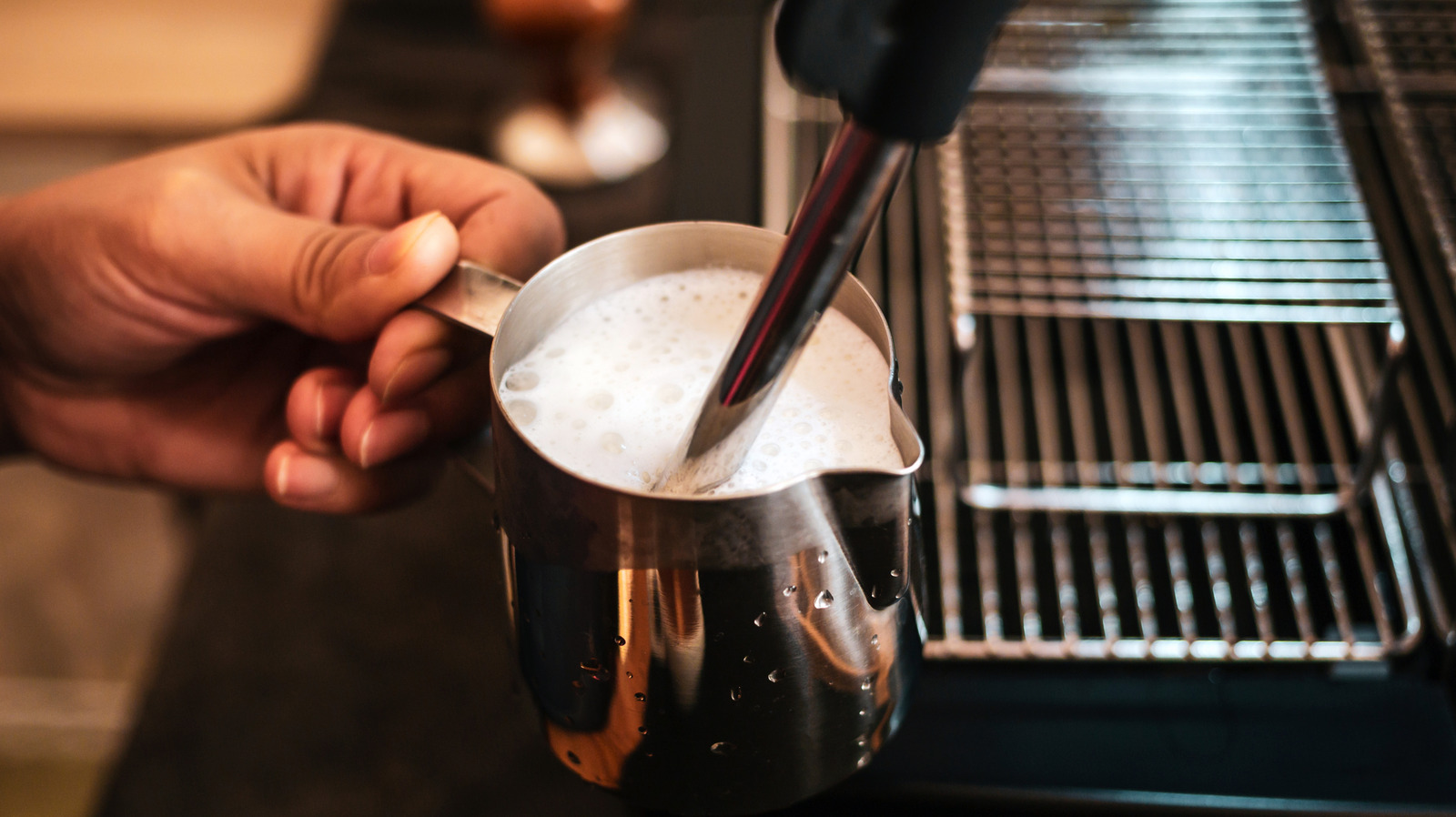
"To use a steam wand, milk gets added into the metal steaming pitcher, then the pitcher is raised up to meet and submerge the wand, and the "on" switch gets flipped - thereby forcing hot, highly-pressurized steam from the wand into the milk. The result is aerated, "stretched" milk which has been pumped full of hot air bubbles - aka coffee foam."
"But, just as adding air bubbles to the milk is fundamental to creating foam, over-aerating your milk can be just as impactful in a negative way, ruining the structure of your latte or cappuccino. Too much time under the steam wand and milk becomes a clumpy, unusable, amorphous glob that's too thick to work with."
"Stretching milk with an espresso machine's aeration wand is crucial to create stiffness for both latte-art-worthy foam and any espresso drink's structural body. The proper aeration technique when making foam is all about precision."
Milk foam with a home espresso machine depends on steam-wand technique. Milk is poured into a metal steaming pitcher, the pitcher is positioned so the wand is submerged, and the machine is turned on to force hot, pressurized steam into the milk. This aerates and stretches the milk by pumping in hot air bubbles, creating coffee foam. Aeration is necessary for stiffness and structural body in lattes and cappuccinos, but too much time under the wand breaks the foam. Over-aerated milk becomes clumpy, amorphous, and too thick to use.
Read at Tasting Table
Unable to calculate read time
Collection
[
|
...
]