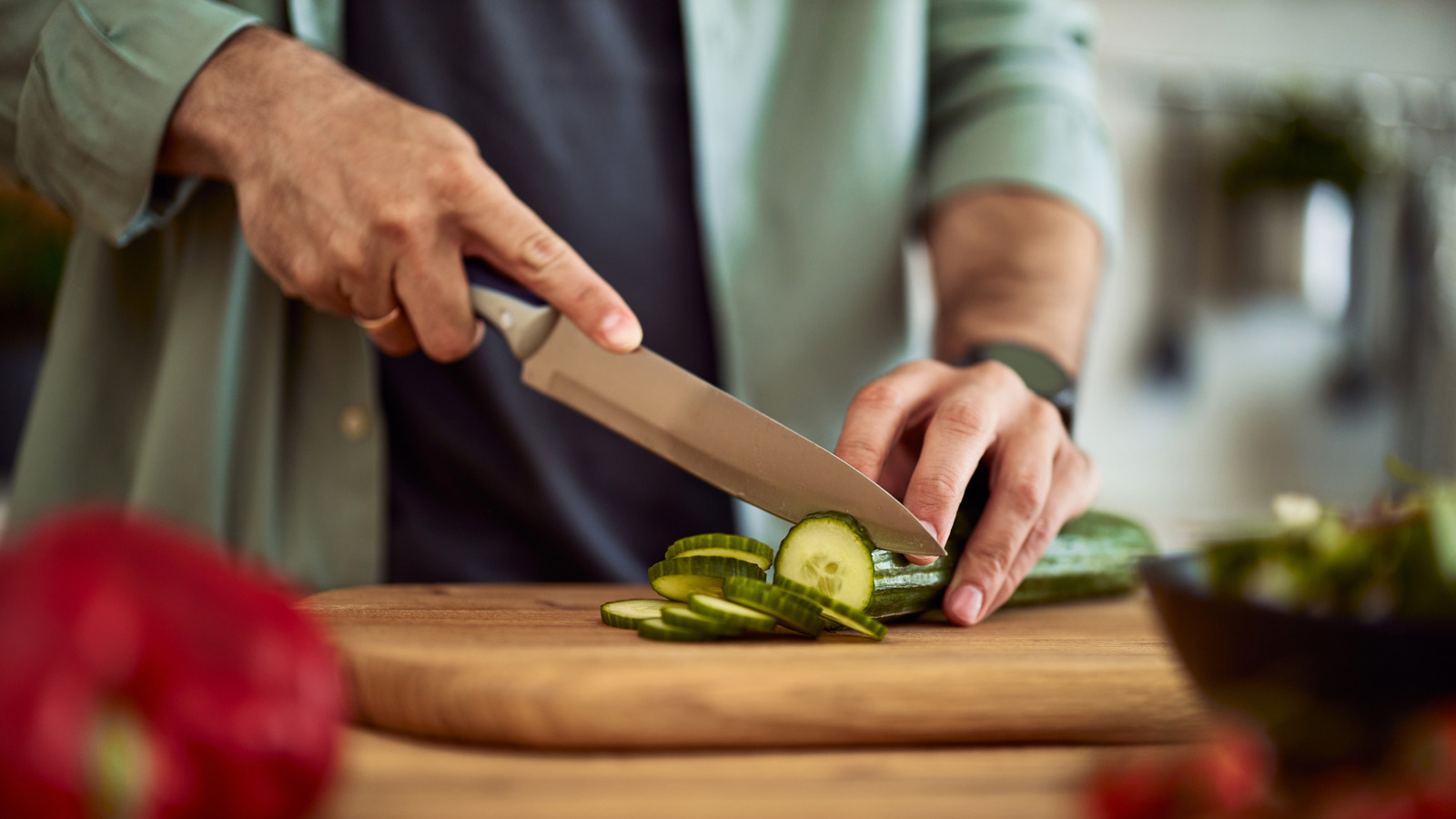
"You can do everything you're supposed to do when it comes to keeping your cutting board clean, but all too often, unseen residue from different foods remains on the surface. Even juices can slip into the fibers of a wood cutting board. This not only means you're getting unwanted flavors mingling together, which can taint an entire meal; it also means the bacteria of various foods can cross-contaminate one another."
"Fortunately, there's an easy fix for this. Of all the tips and tricks for best using cutting boards, this may be the most crucial, and it comes from restaurant pros: use a color-coded cutting board system. That's right, you want to stock up on a handful of different cutting boards and use a straightforward color-coded system to keep their uses separate, therefore keeping certain food groups to themselves and avoiding those undesirable flavors and, importantly, cross-contamination."
Residue and juices can remain on cutting boards, causing lingering flavors and bacterial cross-contamination that can taint meals. Wood cutting boards are especially prone to trapping juices in their fibers. A practical solution is to use multiple cutting boards with a color-coded system that assigns specific food groups to individual boards. Industry-standard colors include red for raw meat and poultry, blue for raw seafood, yellow for cooked meat and fish, green for washed produce, brown for unwashed produce, white for dairy and baked goods, and purple for anti-allergen foods. Extra boards can be designated for washed versus unwashed items and cooked versus raw foods.
Read at Tasting Table
Unable to calculate read time
Collection
[
|
...
]