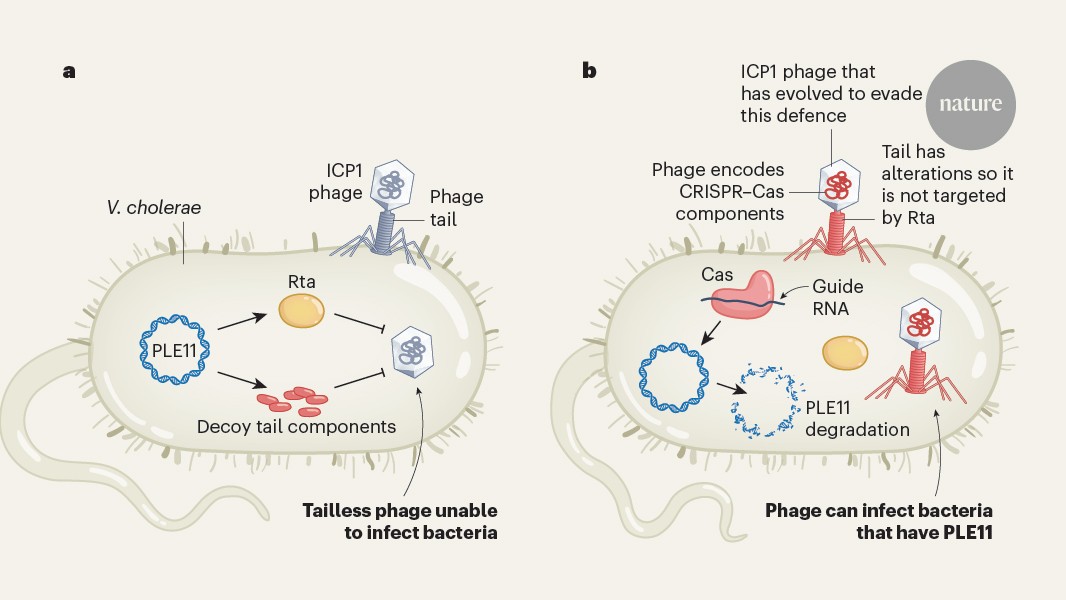
"Cholera, an intense dehydrating diarrhoeal disease, is one of the worst infections that afflict parts of the world lacking access to safe drinking water. Pandemics are not limited to respiratory infections, and the world is currently in the seventh pandemic of cholera, which started in the early 1960s and is caused by a bacterial infection of the gut."
"In parts of South Asia, cholera is endemic (continually present), and India and Bangladesh - the Ganges River delta and basin region in particular - have long been considered launchpads for global spread. The natural predators of the bacterium that causes cholera ( Vibrio cholerae) include viruses called bacteriophages or phages."
"There is interest in understanding the extent to which such interactions influence cholera epidemiology and evolution in this seventh pandemic. Writing in Nature, Barton et al. and Mathur et al. present such analyses."
Cholera is a severe dehydrating diarrhoeal disease affecting regions without safe drinking water. The world is in the seventh cholera pandemic, beginning in the early 1960s, caused by Vibrio cholerae in the gut. Cholera is endemic in parts of South Asia, with India and Bangladesh—especially the Ganges River delta and basin—serving as major sources for global spread. Vibrio cholerae has natural predators that are bacteriophages, which can influence bacterial evolution and epidemiology. Analyses using genomics and experimental data aim to determine how phage–bacteria interactions affect the evolution and spread of cholera during the current pandemic.
Read at Nature
Unable to calculate read time
Collection
[
|
...
]