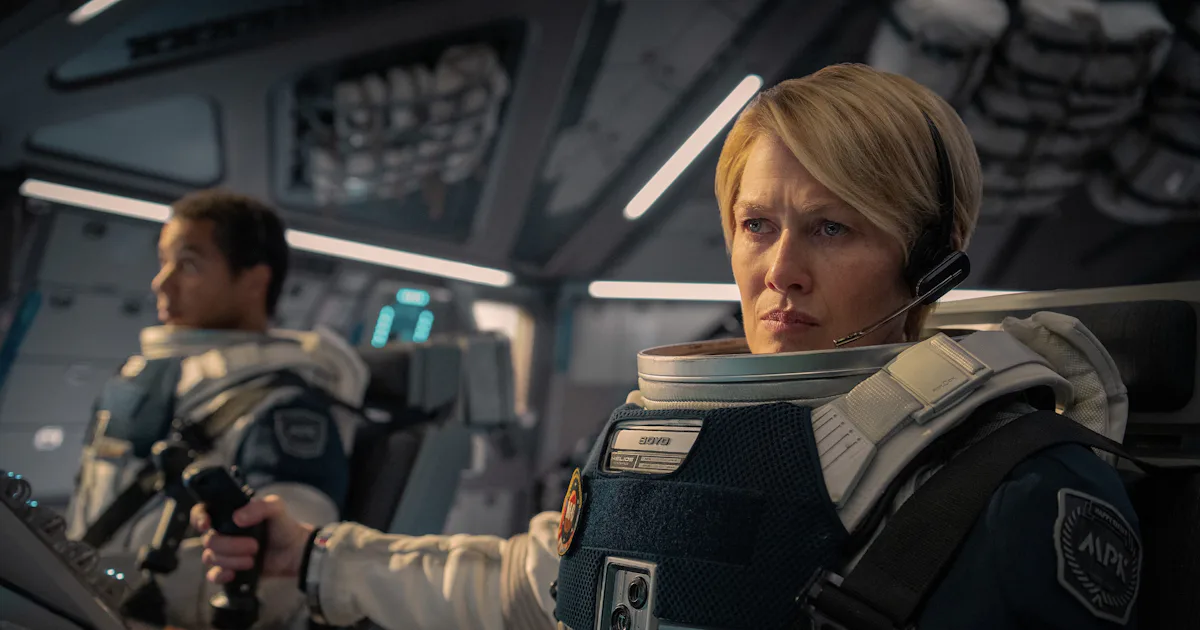
"Part of what makes For All Mankind such a compelling show is also its greatest risk. Although not technically an anthology show, each season has a kind of anthology feeling because we're always in a new decade. The alternate 2012 of For All Mankind Season 5 is also the most different-feeling season yet, partly because so many of the original characters are gone, either because they're deceased or because new characters have stepped up."
"The secret weapon of the show is that seemingly innocuous new characters wield a surprising amount of power. Take Costa Ronin and Miereille Enos, two brand-new characters in Season 5 who may have a much bigger influence on the show's overall arc."
"But, back at Happy Valley, on Mars, Celia (Enos), a former Mars "Peacekeeper" (read: cop), has joined forces with the Free Mars rebellion after discovering corruption among her own people. At the same time, the Marsies are holding Leonid Polivanov (Ronin) hostage, as he was part of the cover-up to introduce automation of Mars, putting various workers out of a job. So, Celia is good, and Polivanov is bad, right? It might not be that simple."
""I see his point. I see his point of view," Ronin tells Inverse. "Whether or not that point of view aligns with the s how's point of view, we still see where he is coming from. And that's what this whole show is all about.""
The show’s decade-by-decade structure creates an anthology-like feeling, and the alternate 2012 season introduces major changes as original characters leave through death or replacement. Season 5 adds new figures whose apparent normalcy masks significant power in the overall arc. Costa Ronin plays Soviet Governor of Mars Leonid Polivanov, while Mireille Enos plays local Mars cop Celia Boyd. Celia teams with the Free Mars rebellion after uncovering corruption among her own people. Marsies hold Polivanov hostage because he participated in a cover-up that enabled automation on Mars and displaced workers. The moral alignment between Celia and Polivanov is not straightforward, and their perspectives are framed as understandable within the show’s broader focus on viewpoint.
Read at Inverse
Unable to calculate read time
Collection
[
|
...
]