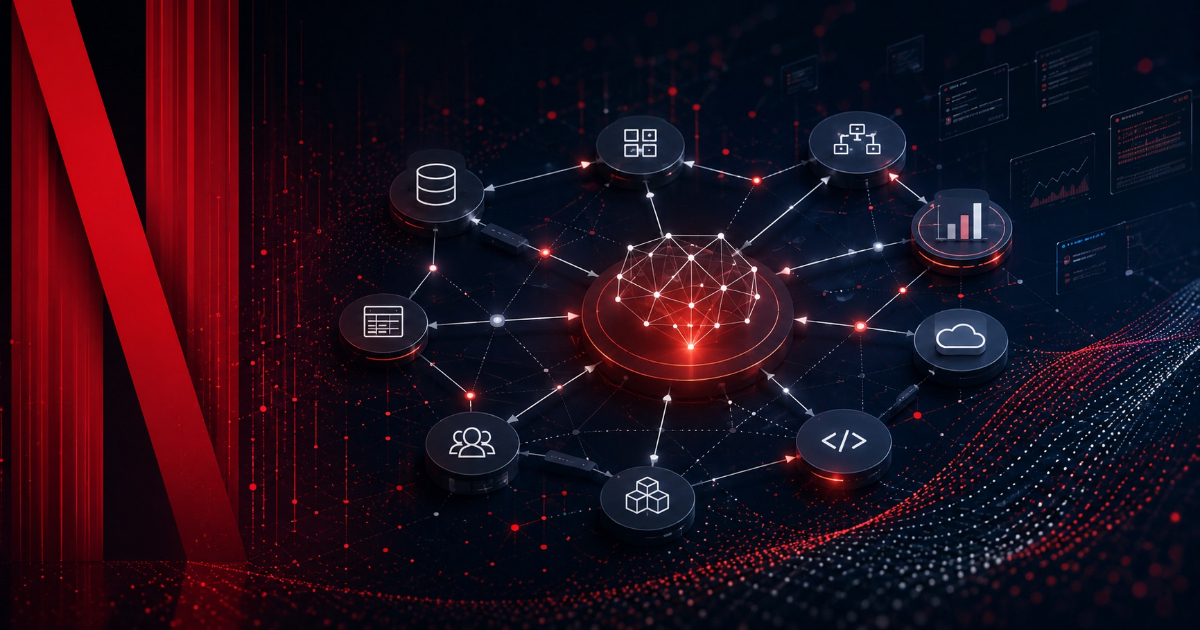
"Netflix has outlined a graph-based architecture for managing machine learning systems at enterprise scale, describing how its internal "Model Lifecycle Graph" maps relationships between datasets, models, features, evaluations, workflows, and production systems."
"The company argues that, at scale, understanding where models originated, which upstream datasets they depend on, and how changes propagate through downstream systems becomes a significant operational challenge. Netflix's proposed solution is a graph-oriented system that treats ML assets and their relationships as first-class infrastructure concerns."
"The Model Lifecycle Graph represents machine learning entities as interconnected nodes and relationships rather than isolated pipeline stages. According to Netflix, the graph models dependencies between datasets, features, models, evaluations, workflows, and production services, enabling engineers to traverse lineage relationships and better understand the operational impact of changes."
"The system is also intended to improve discoverability by allowing teams to locate reusable ML assets and inspect how models are constructed and consumed throughout the organization. Netflix's engineers argue that graph structures are particularly well suited to modeling machine learning systems because ML assets rarely exist in isolation."
Netflix outlines a graph-based architecture for managing machine learning systems at enterprise scale. The Model Lifecycle Graph represents machine learning entities as interconnected nodes and relationships rather than isolated pipeline stages. It maps dependencies between datasets, features, models, evaluations, workflows, and production services. Engineers can traverse lineage relationships to understand how upstream changes propagate to downstream systems. The approach improves discoverability by helping teams locate reusable ML assets and inspect how models are constructed and consumed across the organization. The design treats ML assets and their relationships as first-class infrastructure concerns, addressing operational complexity as organizations accumulate many datasets, features, pipelines, experiments, and deployed models across multiple teams.
#machine-learning-operations #model-lineage #graph-based-architecture #metadata-centric-ml #governance--discoverability
Read at InfoQ
Unable to calculate read time
Collection
[
|
...
]