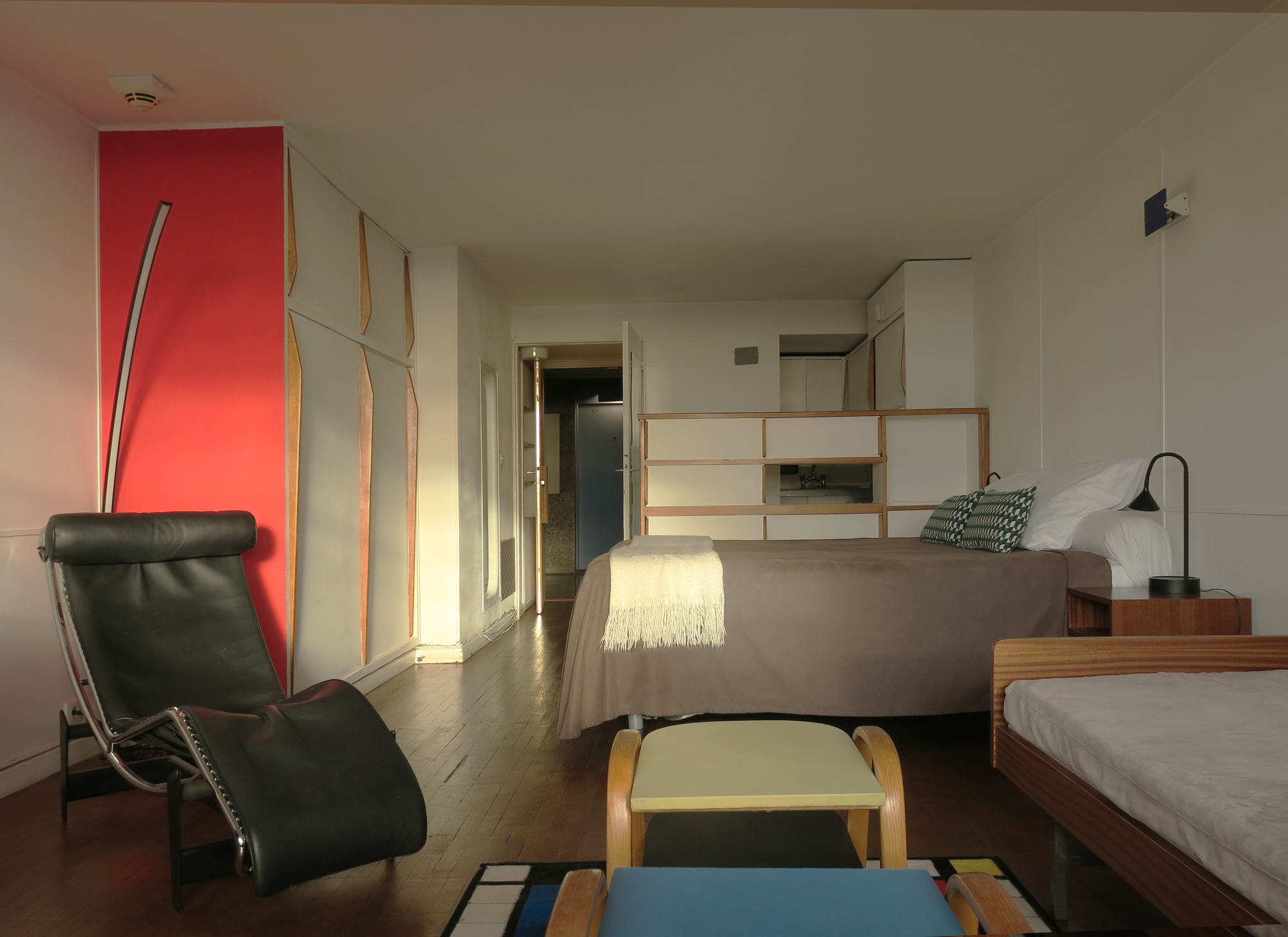
"Modernism is often encountered through built form, photographed facades, canonical plans, concrete manifestos. For most people, its first encounter was far more immediate. It was a chair in an office, a shelf in a living room, a compact unit that reorganized how one sat, stored, or slept. Long before modern architecture could be widely commissioned, it was furniture that entered everyday space, carrying with it a new logic of living. Modernism's promise of transforming life was often delivered through these smaller, repeatable objects."
"To understand this shift, furniture has to be read as a condensed form of architecture rather than decoration. Early twentieth-century designers treated it precisely this way. Le Corbusier described furniture as équipement de l'habitation (equipment of living), placing it within the operational system of the building rather than outside it. Similarly, the Bauhaus approached chairs and tables as industrial prototypes, embedding principles of standardization, efficiency, and mass production into their design."
"What allowed this miniature architecture to matter was distribution as much as design. Buildings are slow, capital-intensive, and tied to specific sites. Furniture, by contrast, can move through systems like state programs, retail markets, industrial production, reaching interiors that architecture itself cannot. In Chandigarh, this took the form of a coordinated, state-led effort. Working alongside Le Corbusier, Pierre Jeanneret developed a range of furniture for government offices, universities, and housing in the 1950s and 60s."
Modernism often entered daily life through furniture rather than buildings, with chairs, shelves, and compact units introducing new ways to sit, store, and sleep. Furniture was treated as condensed architecture, not decoration, and designers linked it to the operational logic of living spaces. Le Corbusier framed furniture as equipment of living, while the Bauhaus treated chairs and tables as industrial prototypes built on standardization, efficiency, and mass production. Furniture translated architectural ideas into everyday interiors because it could circulate through distribution networks. Buildings remained slow and site-specific, while furniture moved through state programs, retail markets, and industrial production. In Chandigarh, state-led efforts produced standardized furniture for government offices, universities, and housing in the 1950s and 1960s.
#modernism #furniture-design #architecture-and-everyday-life #standardization-and-mass-production #chandigarh
Read at ArchDaily
Unable to calculate read time
Collection
[
|
...
]