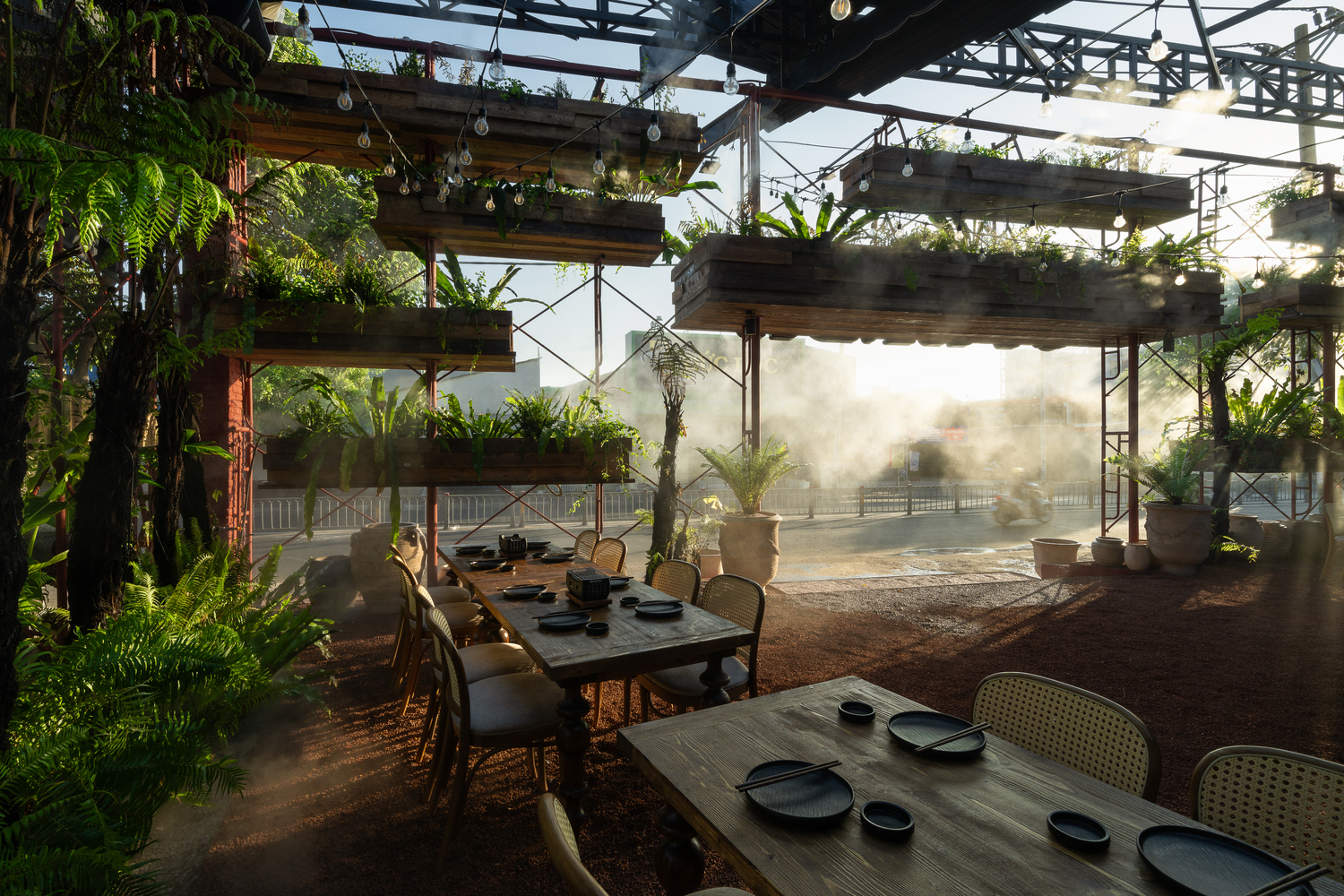
"Outdoor terraces occupy a familiar threshold in cities around the world, operating as social rooms that sit between interior space and open air to host rituals of daily life. People meet to share a drink, watch the street's movement, or pause before returning to their routines. These places serve as cultural settings as much as commercial ones, revealing how hospitality and public life intersect to shape the city's character."
"Climate influences these spaces more directly than almost any other design force, shaping how terraces function and how people inhabit them. Sun, wind, rain, and humidity guide decisions about orientation, shading, openness, and material selection. Each terrace becomes a negotiated space between human comfort and environmental pressure, and this negotiation can be read in every enclosure, surface, and spatial boundary."
Outdoor terraces function as transitional social rooms between interior spaces and the open air, hosting daily rituals like sharing drinks, watching street movement, and pausing during routines. These terraces operate as cultural as well as commercial settings where hospitality and public life intersect to shape urban character. Climate exerts a primary influence on terrace design, determining orientation, shading, openness, and material choices. Sun, wind, rain, and humidity drive practical decisions that balance human comfort with environmental pressures. Each terrace embodies a negotiated condition visible in enclosures, surfaces, and spatial boundaries.
Read at ArchDaily
Unable to calculate read time
Collection
[
|
...
]