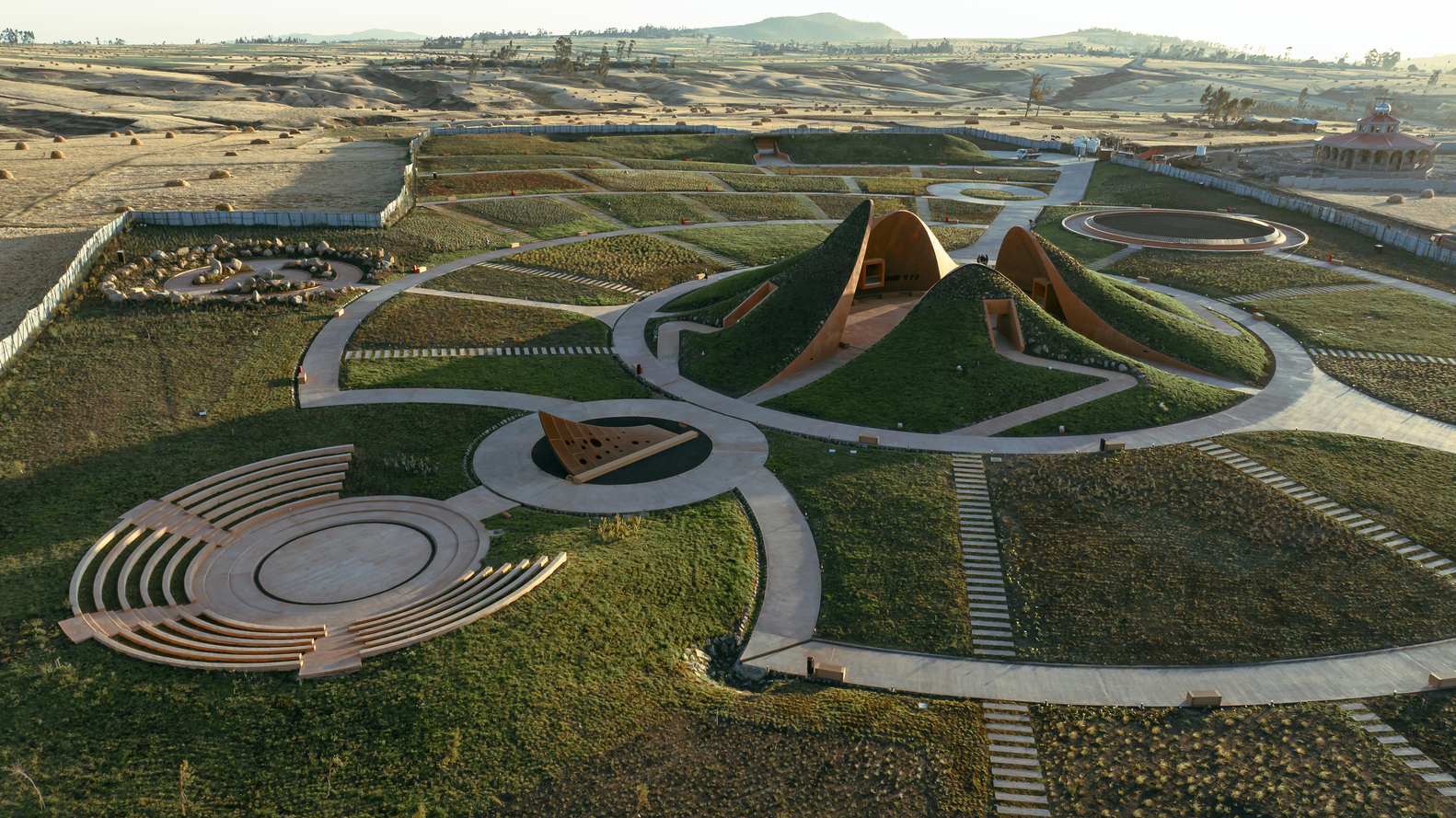
"For several years now, the countryside has ceased to function merely as a picturesque counterpoint to the city and has instead become an active laboratory for new relationships between territory, landscape, and people. Here, environmental urgency meets collective memory; ancestral techniques converse with architectural experimentation; and local communities act as curators of their own territory. Contemporary rurality emerges less as a geography and more as a culture-inscribed in ways of life that care for the environment."
"To situate this debate, it is worth revisiting Bernard Kayser's classic definition, according to which rural regions are characterized by low population density, predominance of vegetation, and activities linked to agro-silvo-pastoral systems. Kayser, however, offers a warning: the rural should neither be interpreted through an urban lens nor reduced to nostalgia. It embodies a distinct way of relating to territory, one rooted in the local."
Contemporary countryside operates as an active laboratory linking territory, landscape, and people where environmental urgency intersects collective memory and ancestral techniques join architectural experimentation. Local communities curate their own territories, producing culture-inscribed ways of life oriented toward environmental care. Rurality appears across diverse contexts-from Asian rice fields and African agricultural settlements to small European farms and American agro-extractive estates-yet shares convergences in practice and relation to land. A classic definition highlights low population density, vegetation predominance, and agro-silvo-pastoral activities while warning against urban reinterpretation and nostalgic reduction. Rooted local relations generate complex coexistence ecosystems shaped by global production, communication, and imagination networks. Rural architecture becomes fertile ground for material and technical experimentation.
Read at ArchDaily
Unable to calculate read time
Collection
[
|
...
]