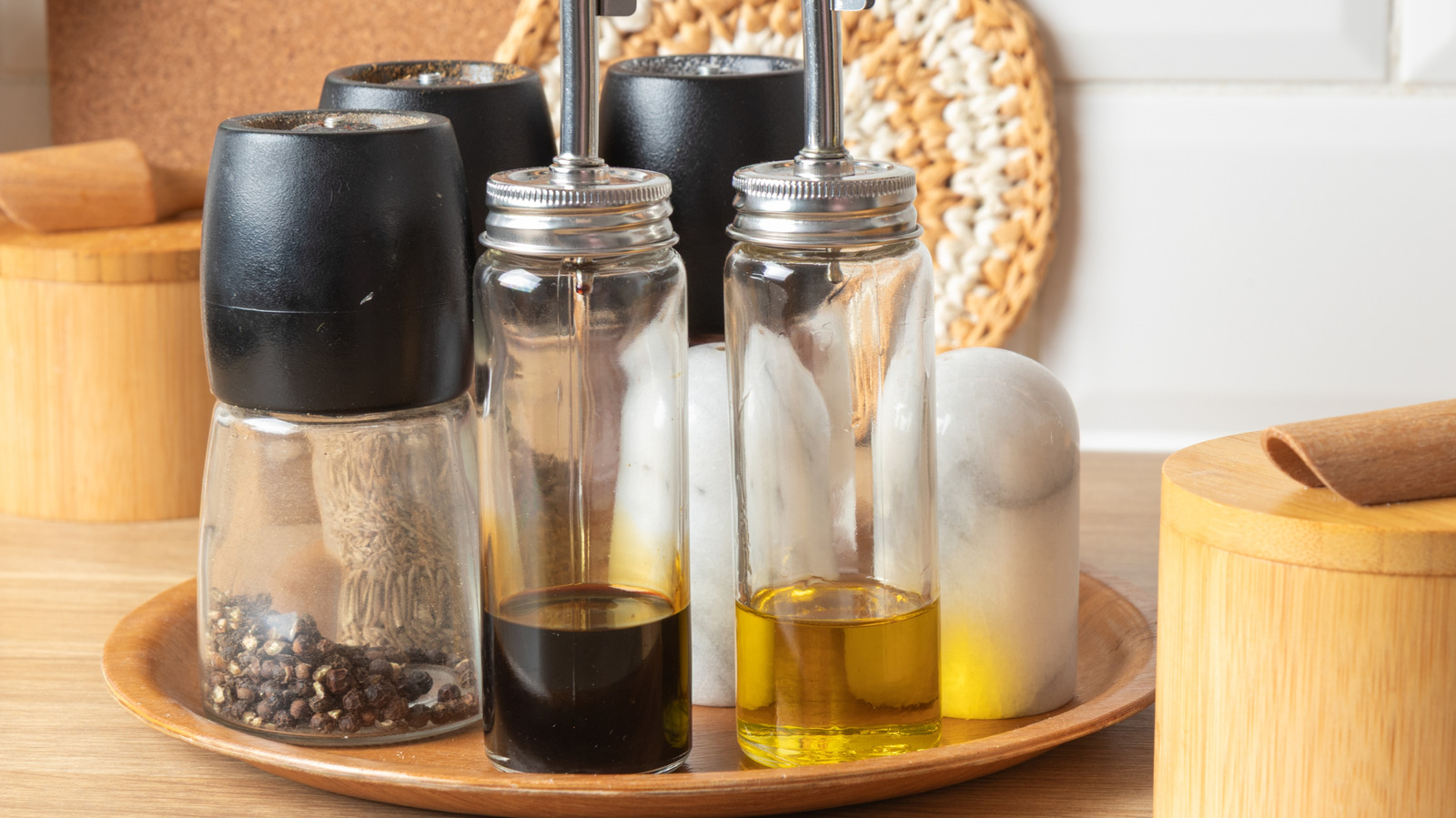
"Setting the table in the 21st century is like running through a checklist. Plates, glassware, flatware - check, check, check. Maybe you add a neatly folded napkin, and ensure a butter dish and a pair of salt and pepper shakers are within reach. In centuries past, though, table settings looked a little different. Perhaps more extravagant, with a few extra items thrown in for both flair and function. And alongside the salt and pepper, there used to be a third shaker that took its place at the table - a relic that has since disappeared from our dinner parties and dining scene altogether."
"The most widely accepted answer is (drumroll please), mustard powder. You see, five-piece cruet sets used to be the norm at the dinner table, typically featuring two bottles for oil and vinegar, along with three smaller, shakeable containers. And research from The Gale Review shows that time and time again, in newspaper articles and advertisements from the late 1800s and early 1900s, mustard is consistently listed after salt and pepper as the final seasoning in the set."
"Mustard may seem like an interesting choice to us now, but it could have served a dual function. It could be sprinkled over foods like meat or vegetables for an extra dash of tangy flavor. Or, it could have been mixed with water or vinegar right at the table to create a kind of DIY mustard sauce, ready to be slathered onto any part of the meal."
"On Reddit, aiming to shake out the truth, sugar is another popular answer. Some people r"
Modern table settings typically include plates, glassware, flatware, and a few condiments like salt and pepper. Earlier dining tables often used five-piece cruet sets with two bottles for oil and vinegar and three smaller shakeable containers. A recurring explanation identifies the missing third shaker as mustard powder, supported by newspaper articles and advertisements from the late 1800s and early 1900s that list mustard after salt and pepper. Mustard could provide tangy flavor when sprinkled on food, or be mixed with water or vinegar at the table to make a quick mustard sauce. Other possibilities like sugar have also been suggested, though mustard remains the most widely accepted answer.
Read at Tasting Table
Unable to calculate read time
Collection
[
|
...
]