"When her phone rang at around 5pm on 8 September 2016, Rosy Auffray was still at work. It was one of her daughters, distressed, calling to tell her that their father, Jean-Rene, had not come back from his daily run. Only the family dog had returned, alone and exhausted. Rosy rushed back home. When she arrived, Rosy noticed that the dog was behaving bizarrely: she refused to walk, then collapsed under a bush. Her fur stank of rotten eggs, of overflowing sewers."
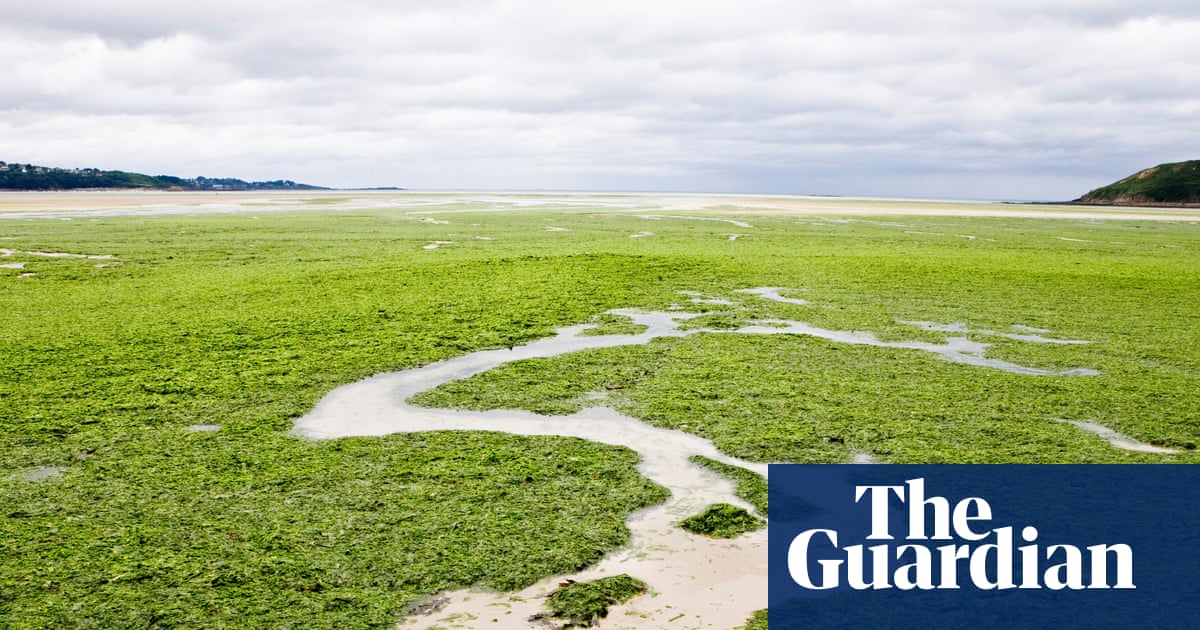
"Rosy knew where that smell came from: the mudflats roughly three miles from the family home in Brittany, where seaweed had been accumulating and putrefying. The soggy, decomposing seaweed stretched for miles along the shore, sometimes as much as five feet thick, killing other plants and suffocating fish and small birds. Rosy and the couple's two children set out on a desperate search along the route of Jean-Rene's usual run. After about 90 minutes, they found him."
"At certain times of year, when Ulva armoricana, a type of seaweed, blooms, banks of green mass form on the beaches, releasing hydrogen sulphide, a foul-smelling, potentially harmful gas. In recent years, red and yellow warning signs have appeared on stretches of the coastline. Occasionally, beaches are closed to the public. Over the spring and summer months, tractors work their way along the coast, raking up thousands of tonnes of seaweed and carting it away: it's an unending task that has to be done quickly, before the seaweed"
"A doctor attending the scene suspected a heart attack. In the shock of those first few days, Rosy didn't think to question whether the stinking seaweed might have had something to do with her husband's death. The Brittany coastline is famed for its green hills, rugged cliffs and miles of sandy beaches. But over the past few decades, in places, the sand has begun to disappear beneath a carpet of green goo."
A daughter called Rosy Auffray around 5pm on 8 September 2016 to report that her father had not returned from his daily run. The family dog came back alone, exhausted, and behaved strangely, refusing to walk and collapsing. Rosy noticed a rotten-egg smell on the dog’s fur, linked to decomposing seaweed on nearby mudflats. The seaweed had accumulated along the shore, suffocating fish and small birds and killing other plants. Rosy and her children searched for Jean-Rene and found his body in an estuary. A doctor suspected a heart attack, while warning signs and beach closures in Brittany indicate recurring seaweed blooms that release hydrogen sulphide.
Read at www.theguardian.com
Unable to calculate read time
Collection
[
|
...
]