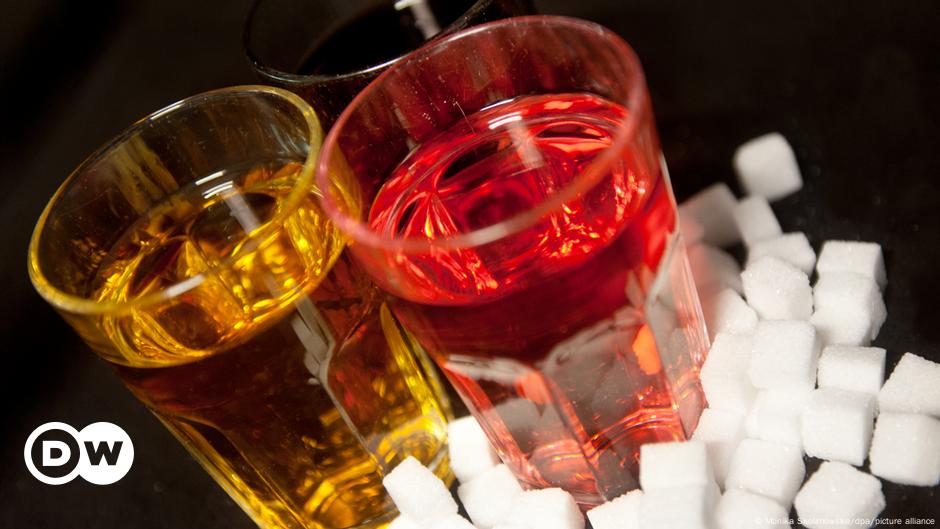
"The levy, which would only be introduced at the beginning of 2028 to give producers time to prepare, would bring in 450 million (ca. $530 million) a year, according to the German Health Ministry. This would not be folded into the federal budget, but reserved for investment in the health care system. Though the exact details of the levy are not in the ministry's draft health care reform law, a panel of experts who released a series of proposals in March suggested a tiered levy: Drinks with less than 5 grams (0.17 ounces) of sugar per 100 milliliters tax-free."
"Drinks with 5-8 gr per 100 ml: Levy 26 euro-cents per liter Drinks with more than 8 gr per 100 ml: Levy 32 euro-cents per liter Health Minister Nina Warken, of the conservative Christian Democratic Union (CDU), has said she is in favor of such a measure, though she admitted that the government still had to discuss the details and that ultimately it was up to the Finance Ministry to decide fiscal policy anyway."
"Some members of her party have already voiced concern there was a heated debate on the issue at the CDU conference in February, where many politicians expressed fears it would make the government look paternalistic. Doctors and nutritionists united in support But for Germany's doctors and nutritionists, such a measure is more or less a no-brainer. Peter Philipsborn, chair of public health nutrition at Bayreuth University, said that more than 100 countries worldwide had introduced sugar taxes on drinks, and studies had shown that they are beneficial."
Germany plans to introduce a levy on sugary drinks as part of health care reform, starting in early 2028 to allow producers time to prepare. The levy is expected to raise 450 million euros per year, according to the German Health Ministry, and the revenue would be reserved for investment in the health care system rather than added to the federal budget. Proposed details include tax-free treatment for drinks with under 5 grams of sugar per 100 milliliters, a 26 euro-cent per liter levy for 5–8 grams per 100 milliliters, and a 32 euro-cent per liter levy for more than 8 grams per 100 milliliters. Health Minister Nina Warken supports the measure while noting remaining details and that fiscal policy is ultimately decided by the Finance Ministry. Doctors and nutritionists support sugar taxes, citing evidence from more than 100 countries and studies showing reduced consumption.
Read at www.dw.com
Unable to calculate read time
Collection
[
|
...
]