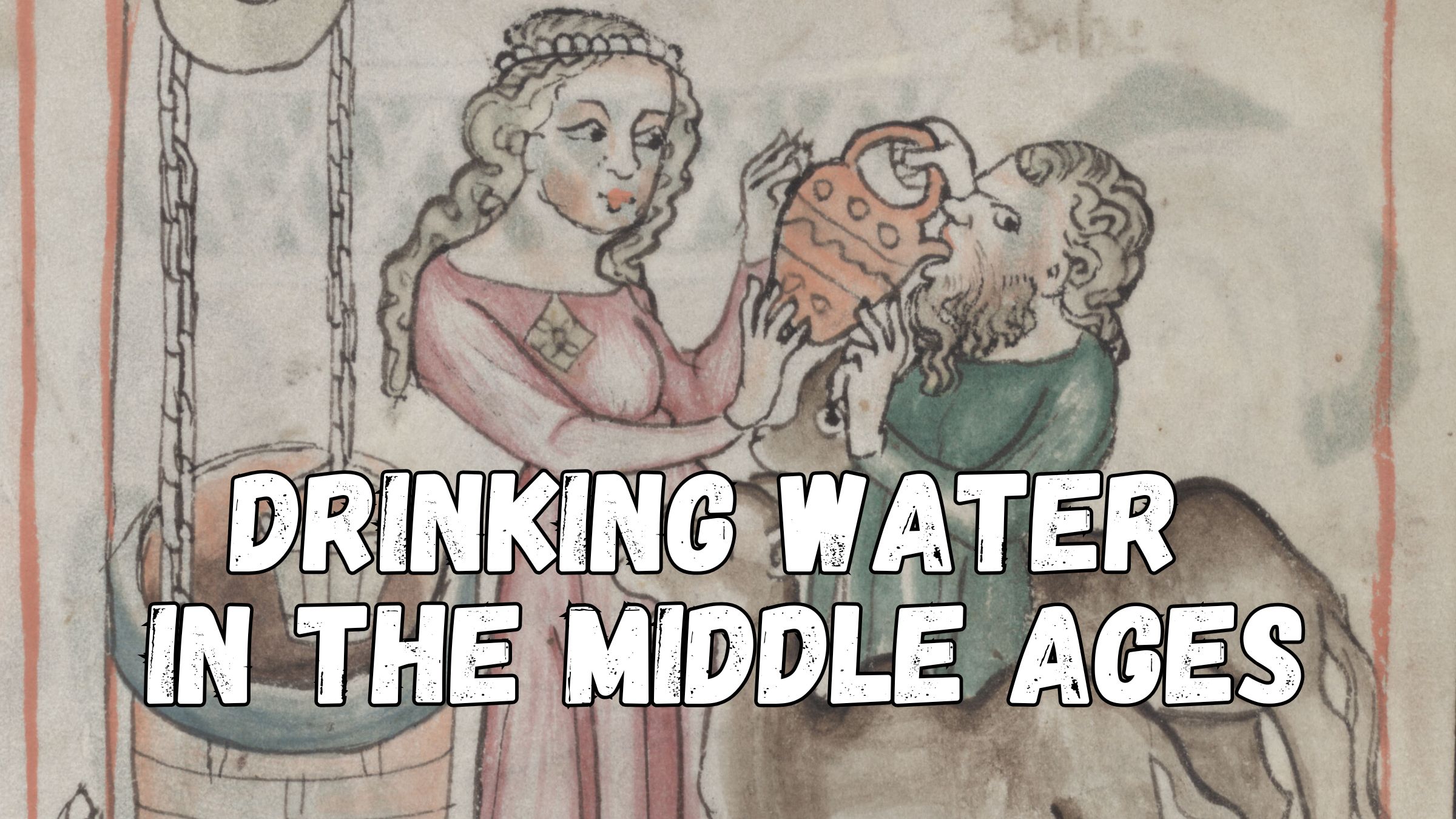
"Let us make use of a healthy, natural drink which will sometimes be of benefit to both body and soul - if it is drawn not from a muddy cistern but from a clear well or the current of a transparent brook."
"of all things water is of most use in every mode of regimen. It is necessary to know that the best water is devoid of quality as regards taste and smell, is most pleasant to drink, and pure to the sight; and when it passes through the praecordia quickly, one cannot find a better drink."
"Many books and articles have repeated the idea that water was so polluted during this period that medieval men and women would only drink wine, ale or some other kind of beverage. However, there is plenty of evidence that people regularly drank water."
"It's true that medieval people rarely wrote about their love of water - you don't find many chronicles or letters describing people drinking it. Instead, they would speak of the fondness of ale or wine. This is not surprising - water is relatively tasteless - and few people would have preferred it compared to the alternatives."
Medieval people did not avoid water entirely; they drank it regularly when it came from good sources. Many writers focused on ale and wine because water was relatively tasteless and less likely to be praised. Medical texts and health manuals repeatedly described water as beneficial, provided it was clean and drawn from clear wells or transparent brooks. A seventh-century Byzantine physician stated that the best water lacked unpleasant taste and smell, was pleasant to drink, and was superior when it moved quickly through the body. Religious and civic records also indicate that water consumption was normal across the period, with emphasis on purity and source quality.
Read at Medievalists.net
Unable to calculate read time
Collection
[
|
...
]