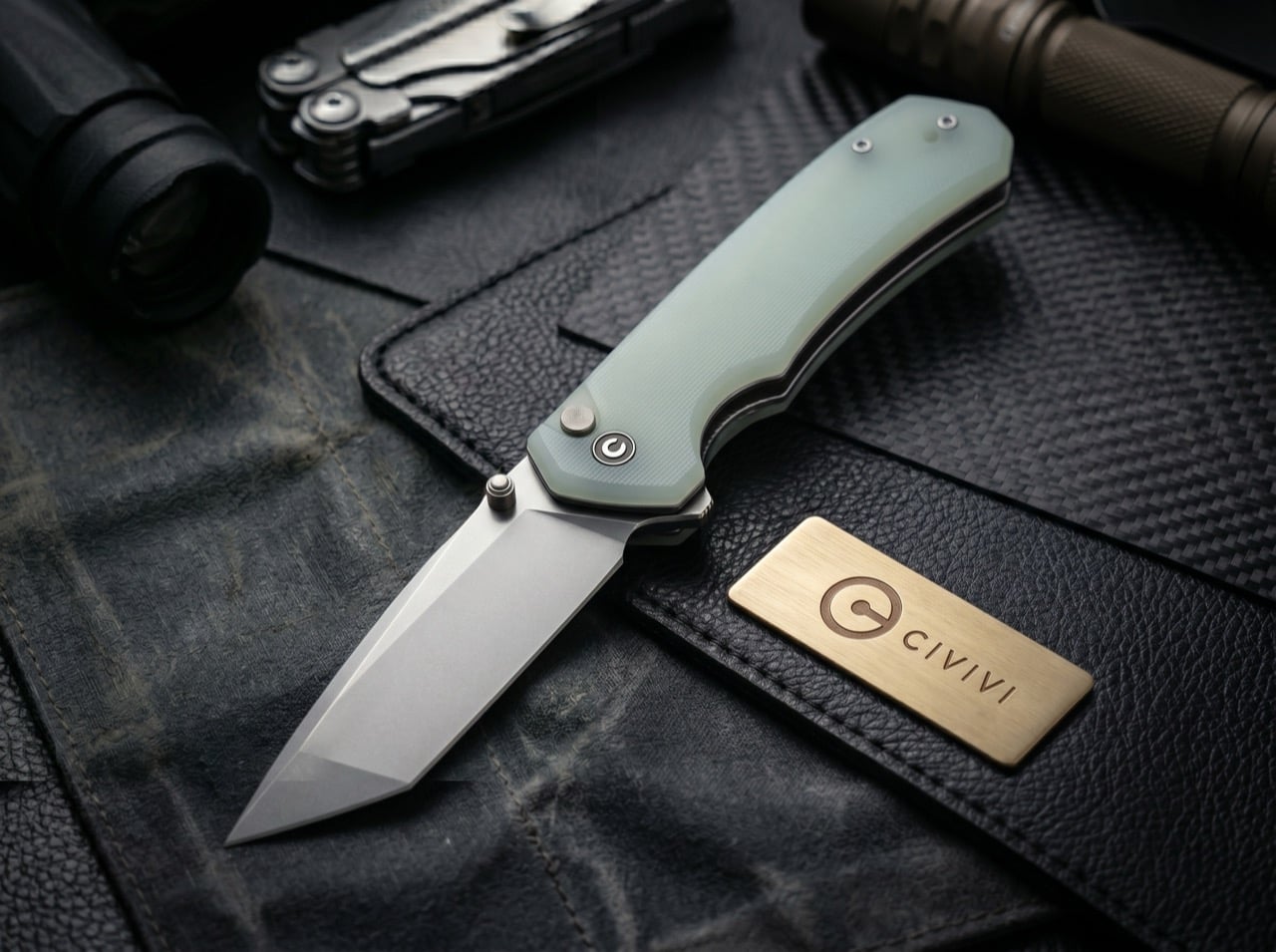
"Somewhere around the year 900 CE, a Japanese swordsmith solved a very specific problem. Samurai warriors needed a short backup blade that could function in tight spaces where a katana was useless, something compact enough to wear through a sash and fast enough to deploy at grappling range. The result was the tanto, a single-edged blade between 15 and 30 centimeters, built for thrusting and close-quarters control."
"Then, in the 1980s, a knifemaker named Bob Lum pulled the design west. He adapted the Japanese silhouette into an American form with a squared, reinforced tip, and the knife world has been arguing about, borrowing from, and building on that adaptation ever since. Cold Steel industrialized the shape, the tactical market absorbed it, and somewhere along the way it picked up a reputation for being a niche purchase for a specific kind of buyer."
"The blade sat between 5.9 and 11.8 inches, making it the smallest weapon in the samurai arsenal. Women carried them in the obi for self-defense. Samurai wore them as companion blades because the katana, for all its reach and cutting power, couldn't maneuver inside buildings or in close grappling exchanges. The original Japanese tanto carried a slight curve, a steak-knife profile designed more for utility than the armor-piercing mythology that would later attach to its American descendant."
"In 2026, that reputation is dissolving. The tanto is having one of its more interesting years in a very long time, showing up in premium titanium folders, budget G10 flippers, and American-made OTF automatics all at once."
Tantō blades originated in Japan during the Heian period as short blades for warriors needing a backup weapon beyond a primary sword. The blade size made it the smallest weapon in the samurai arsenal, carried by women in the obi for self-defense and worn by samurai as companion blades. The katana’s reach and cutting power did not translate well to tight spaces inside buildings or close grappling exchanges. The original Japanese tanto had a slight curve and a utility-focused profile. In the 1980s, Bob Lum adapted the Japanese silhouette into an American form with a squared, reinforced tip. Cold Steel industrialized the shape, and the design later spread through tactical markets. In 2026, it appears across premium titanium folders, budget G10 flippers, and American-made OTF automatics.
Read at Yanko Design - Modern Industrial Design News
Unable to calculate read time
Collection
[
|
...
]