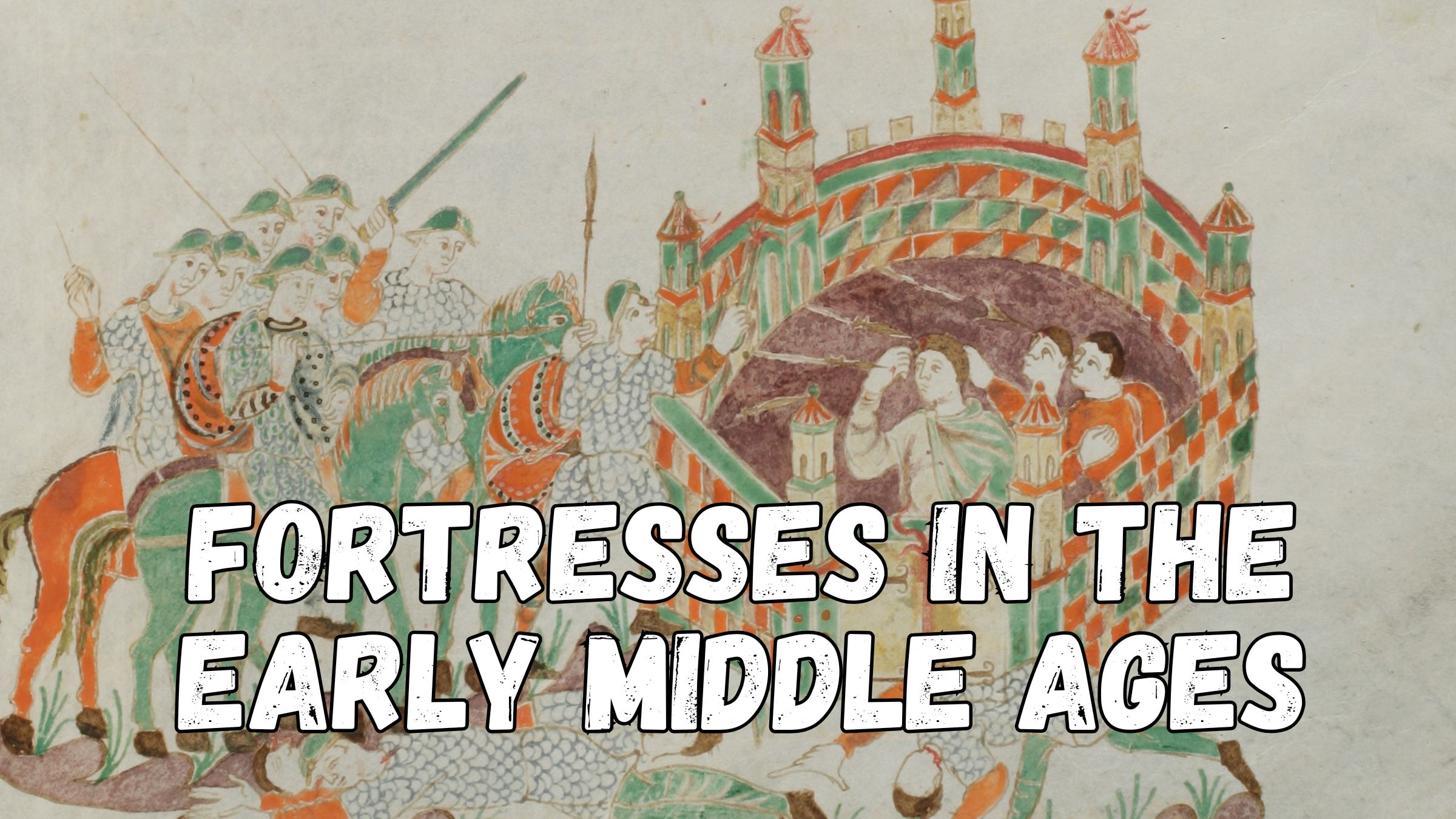
"The right to license fortifications has long been understood as a key element of royal or princely authority and power in medieval Europe. The ability to enforce control over this right has been understood as a sign that a ruler was strong, while the inability to keep control over strongholds or to stop individuals from building new fortifications without the ruler's permission has been seen as clear evidence of a weak or failed ruler."
"However, the treatment of this topic with regard to early medieval Europe, a period for which scholars rely largely on material rather than written evidence, has suffered from significant methodological problems. It is possible in this context to identify two scholarly traditions, both of which have led to false narratives regarding the collapse or even absence of royal power in the Carolingian Empire, particularly in the East, and in early medieval Germany."
"On the one hand, many scholars have argued that early medieval governments, including the rulers of the Carolingian Empire, sought to control the construction of every type of fortification, ranging in scale from fortified homes to massive, militarily significant fortresses. A key text in this narrative is the Edict of Pîtres, which was issued in 864 by the Carolingian ruler of West France, Charles the Bald (840-877)."
"In this context, the identification of numerous small-scale fortifications, mostly through excavations, has been presented as evidence for the collapse of royal power, particularly from the mid-ninth century onward. This failure of the power of the king often is explained as resulting from the period of civil wars that engulfed the Carolingian Empire during the latter part of the reign of E"
Royal and princely authority included the right to license fortifications and to control who could build them. Loss of control over strongholds or inability to stop unauthorized fortification building has been treated as evidence of weak or failed rule. Early medieval studies have relied heavily on material evidence, creating methodological problems and producing false narratives about the collapse or absence of royal power, especially in the Carolingian East and early medieval Germany. One scholarly tradition claims rulers tried to control all fortification types, using the Edict of Pîtres of 864 as a key example. Another tradition interprets many small excavated fortifications as proof that royal power collapsed from the mid-ninth century onward, often linked to civil wars.
Read at Medievalists.net
Unable to calculate read time
Collection
[
|
...
]