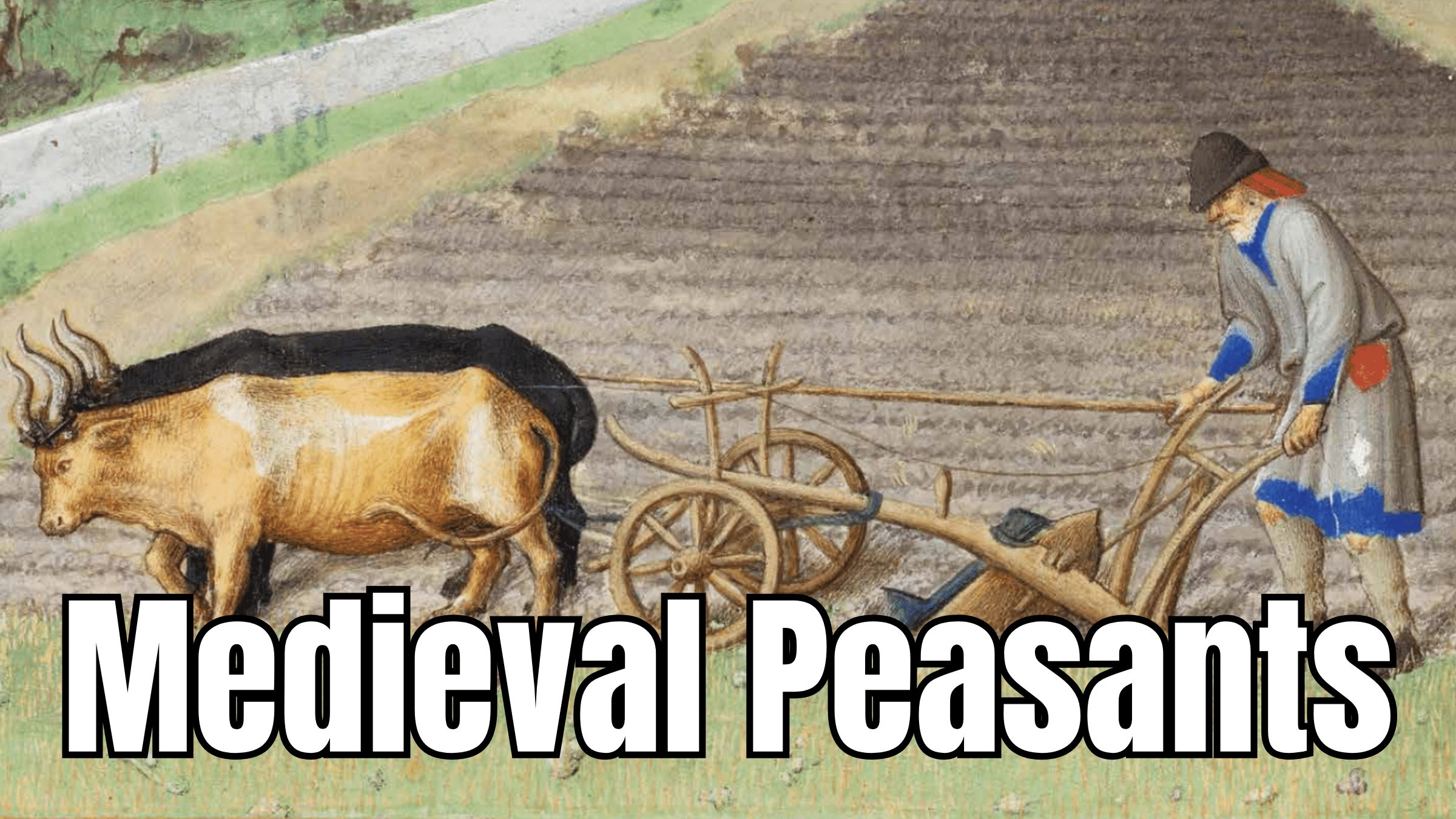
"Medieval peasants made up the vast majority of Europe's population during the Middle Ages, yet their lives were far more varied than many people imagine. Lucie Laumonier shows how from farming and village life to serfdom and social tensions, medieval peasants played a central role in shaping medieval society. There is no easy answer to that question, especially when looking at the 1,000 years of history the Middle Ages cover! Knowledge of the peasantry is moreover dependent on the sources that inform on their history, either written documents, illuminated manuscripts or archaeological artifacts."
"The first of these common characteristics is that peasants were the most prevalent type of worker in the medieval era. They outnumbered the nobility, clergy, artisans and merchants. Peasants were everywhere. The second is, obviously, that peasants practised agriculture and animal husbandry. The third is that most peasants resided in rural settings (though not all). Finally, many peasants experienced a certain degree of servitude."
"Maybe it is stating the obvious to say that peasants were agriculturalists and practiced animal husbandry. When one thinks of medieval peasants, one pictures hard-working individuals engaged in agropastoral activities such as tilling, sowing and harvesting, raising cattle and arboriculture. From the thirteenth century onwards, the labours of peasants were often featured on illuminated calendars, which yield conventional images of a dutiful peasantry. Their works resonated with the passage of time-each month had its own activities."
"But calendars also functioned as a reminder that agriculture was the most common occupation in the Middle Ages. The peasants' labours depended on local conditions and weather, on the type of agriculture they performed, on the crops they sowed and on the species of animals they raised. But all had the same m"
Medieval peasants formed the majority of Europe’s population during the Middle Ages, with lives that varied widely across regions and circumstances. Their common features included being the most prevalent workers, practicing agriculture and animal husbandry, and mostly living in rural settings. Many peasants also experienced some degree of servitude. Peasant labor centered on tilling, sowing, harvesting, raising cattle, and other forms of agropastoral work. From the thirteenth century onward, illuminated calendars depicted monthly peasant activities, reinforcing agriculture as the dominant occupation. Peasant work depended on local conditions, weather, the type of agriculture, the crops grown, and the animals raised.
Read at Medievalists.net
Unable to calculate read time
Collection
[
|
...
]