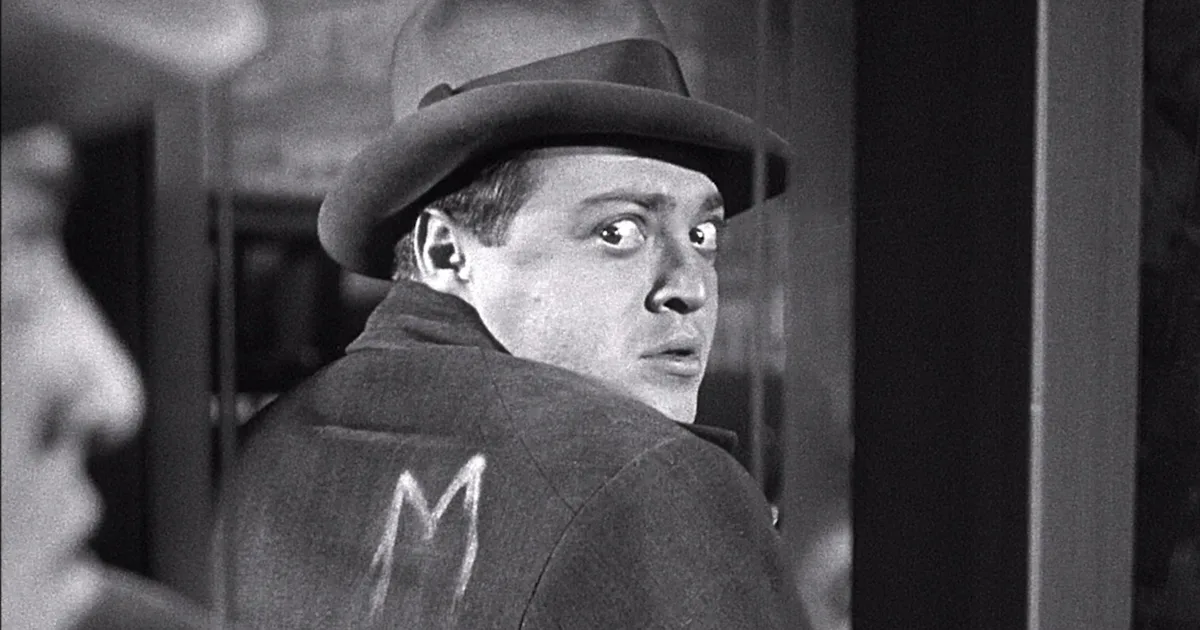
"Set in Berlin, M tracks the public reaction to an anonymous child predator (Peter Lorre) who kidnaps little girls off the streets. As the police launch a manhunt, the city's crime bosses organize their own search, motivated to catch the murderer so the cops will stop scrutinizing anyone with a criminal record. Meanwhile the murderer himself, a twitchy little man named Hans Beckert, fans the flames of a city-wide panic by sending a letter to the newspapers, prompting a fascinating sequence where the police use early forensic techniques to narrow down his identity."
"Beckert's letter echoes the attention-seeking nature of several real serial killers, beginning with Jack the Ripper, who allegedly wrote letters taunting the London police. In the 1960s and '70s, the Son of Sam and the Zodiac Killer both published letters of their own, feeding into the image of serial killers as larger-than-life figures who crave a perverse kind of celebrity status."
"While Lang's silent sci-fi epic Metropolis (1927) is now his more famous work, M is still considered to be one of the all-time greats, influential both on a technical level as an early masterpiece of sound film, and due to its innovations as a procedural thriller."
"M 's council of businesslike crime kingpins was based on Berlin's version of the mafia, the Ringvereine. Lang also took cues from gruesome homicide cases that made headline"
Cinema’s fascination with serial killers began with early fictionalized murder stories and continued through decades of popular crime-and-punishment plots. Fritz Lang’s 1931 film M became a defining model for later serial-killer movies through technical sound-era innovation and procedural thriller structure. Set in Berlin, the film follows public panic after an anonymous child predator kidnaps girls. Police conduct a manhunt while crime bosses organize their own search to stop police scrutiny of criminals. The murderer, Hans Beckert, intensifies fear by sending a letter to newspapers, leading to a sequence where early forensic methods narrow his identity. The film’s letter motif echoes real serial killer taunts and attention-seeking behavior, and its criminal leadership draws from Berlin’s Ringvereine.
Read at Inverse
Unable to calculate read time
Collection
[
|
...
]