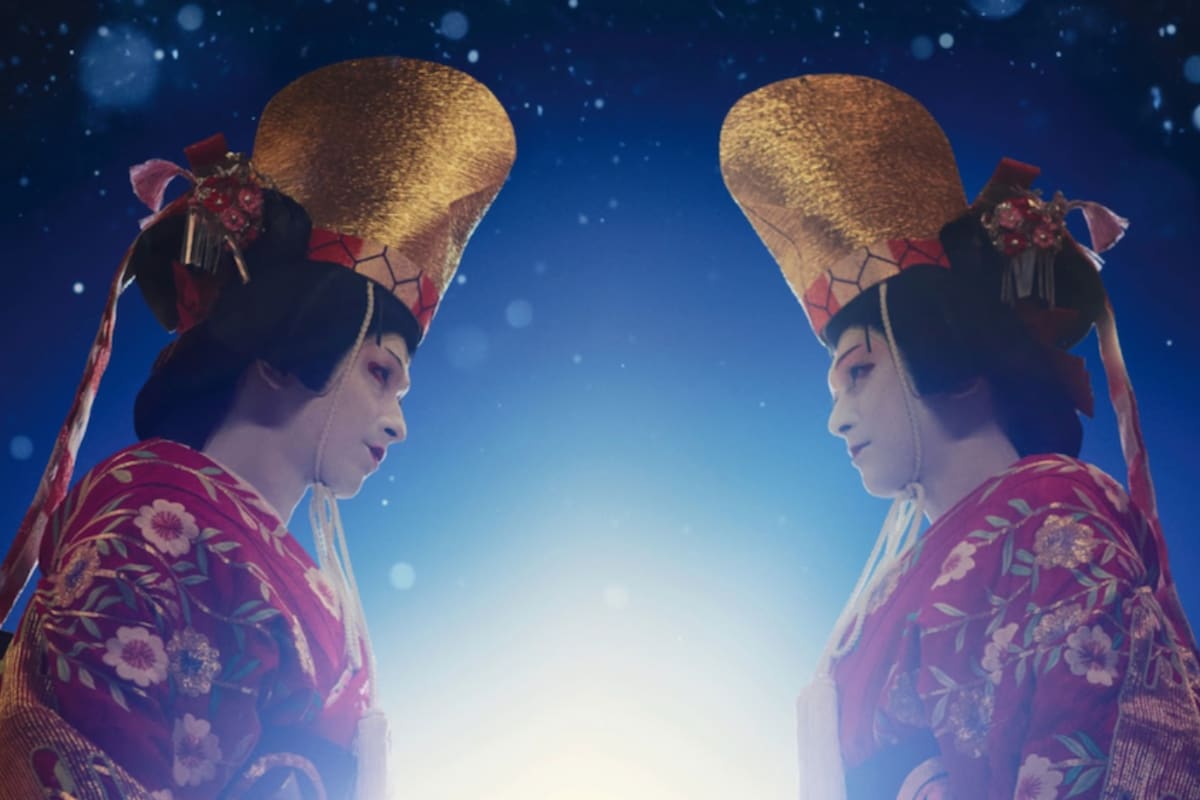
"The significance of kabuki in Japanese society - the dynasties of famous actors who pass down their stage name to male heirs, the allegorical play structures, and the intensive technique men follow while playing female roles - makes it a ripe source of melodrama and stylistic invention for Japanese artists who have been inspired and impacted by classical theatre."
A Japanese coming-of-age epic about a fictional actor adopted after his father’s death became Japan’s highest-grossing live-action film and received an Academy Awards nomination for best hair and make-up. Kabuki is defined by exaggerated performance and dance, heavy percussion with elongated melodies, and stock characters drawn from legend and folklore. Its origins trace to a 17th-century female dancer, followed by the outlawing of women on stage, which led to onnagata, men who play lead female roles. Kabuki’s social significance includes dynasties of famous actors passing down stage names, allegorical play structures, and intensive techniques for male performers playing women. These elements make kabuki a strong foundation for melodrama and stylistic creativity in Japanese cinema.
Read at AnOther
Unable to calculate read time
Collection
[
|
...
]