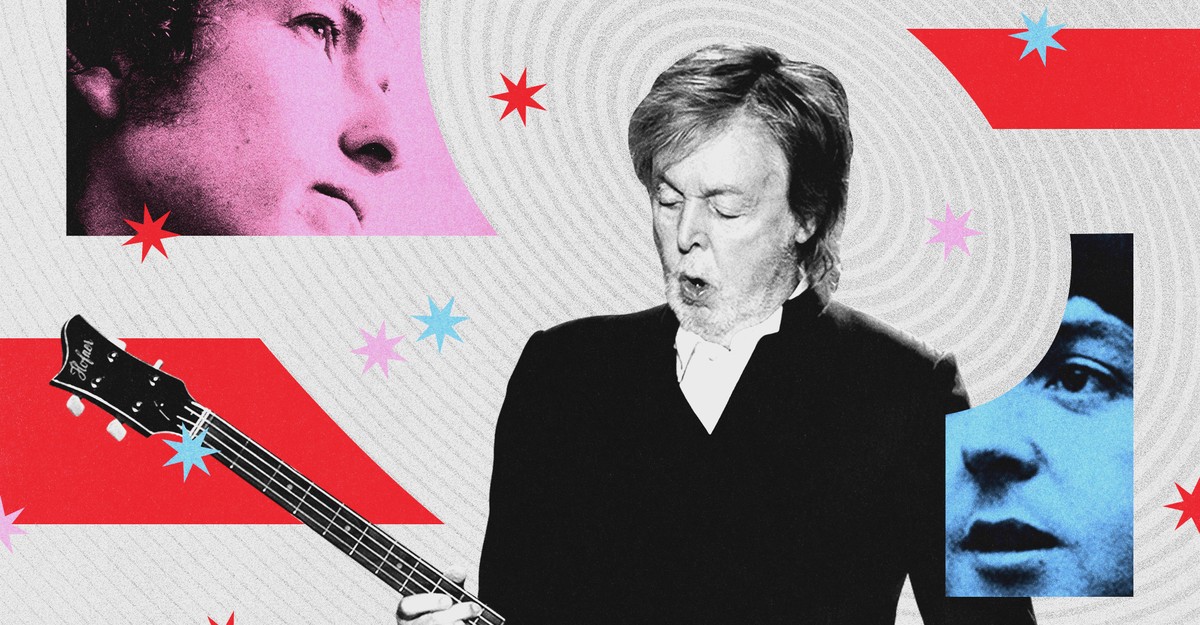
"One key to this process, in Windolf's view, is the influence his subjects had on one another, but equally essential, I'd suggest, is time. "We thought, at best, the Beatles would last a couple of years," Paul McCartney admitted in 2009. And yet, 64 years after Dylan and the Beatles released their first official recordings, the living artists are still at work."
""Dylan and McCartney have maintained their dedication to art into their eighties," Windolf observes. "They can never be sure if they have lost the thing that makes them great, but they go on anyway." This perseverance is what interests me most now about these artists: a new interpretation of what the theorist Theodor Adorno defined as "late style.""
"I am roughly as old as those early Beatles and Dylan releases, and I find myself seeking models for how to age gracefully. Earlier, I sought such lessons from John Lennon; I admired his decision, in 1975, to walk away from stardom in favor of family life. Now with Lennon long gone and my children grown, I am left to look to others, including Dylan, who still grinds out 80-plus nights on the road each year as if he were some wizened bluesman."
""If he were a genius," she retorted, "he wouldn't be playing an electric guitar." I couldn't help recalling that interaction as I read Jim Windolf's Where the Music Had to Go: How Bob Dylan and the Beatles Changed Each Other-And the World, a chatty, new popular history that seeks to tell the story of how rock and roll morphed from disposable entertainment into art."
A childhood memory of loud music and hearing damage frames a broader interest in how rock and roll became lasting art. The transformation is linked to influence among major artists and to time itself, since early expectations predicted only brief careers. Decades after initial recordings, Dylan and McCartney continue working, showing perseverance despite uncertainty about whether they still possess their greatest qualities. Their ongoing dedication is connected to a concept of “late style,” offering a way to think about aging gracefully. The search for models shifts from Lennon’s choice to leave stardom for family life to observing Dylan’s continued touring and creative drive.
Read at The Atlantic
Unable to calculate read time
Collection
[
|
...
]