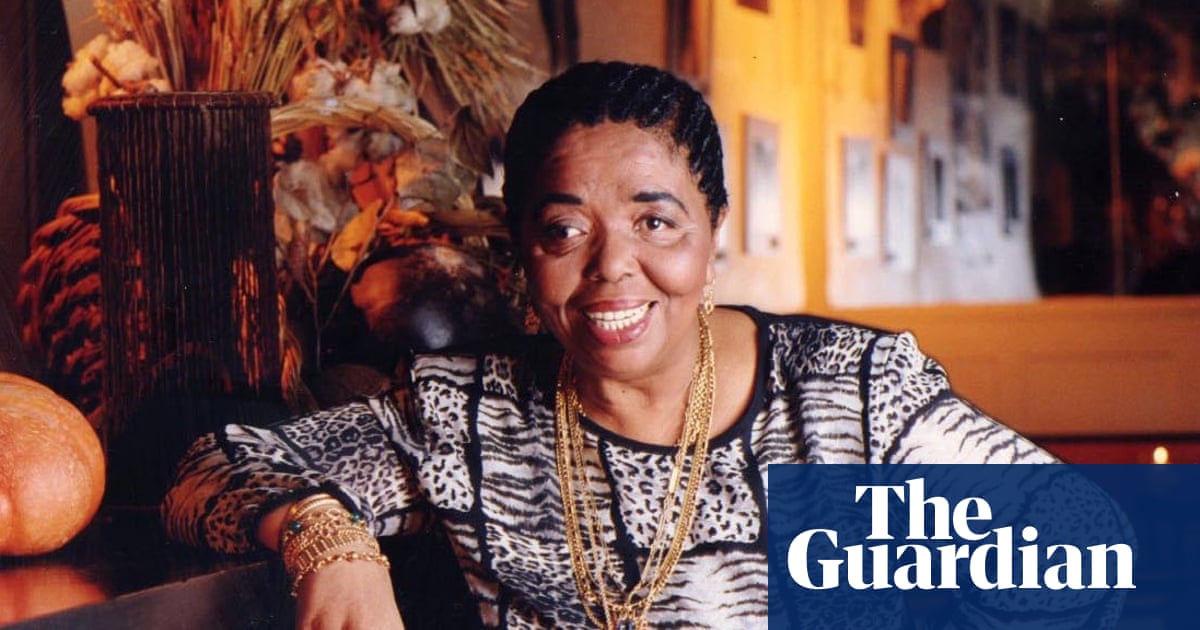
"Miss Perfumado showcased Evora's sublime voice smoky, weary, bruised yet seductive singing Cape Verdean mornas: mournful ballads sung in the Kriolu language which blends old Portuguese with west African languages, with backings that have the same cross-cultural mix."
"The album became a crossover hit across Europe, selling 500,000 copies in France alone, while in the US, Evora became the biggest selling African artist of the 20th century. Miss Perfumado showcased Evora's sublime voice smoky, weary, bruised yet seductive singing Cape Verdean mornas: mournful ballads sung in the Kriolu language which blends old Portuguese with west African languages, with backings that have the same cross-cultural mix."
"She put Cape Verde on the map and we Cape Verdeans are determined to keep her name and music alive. A concert at London's Barbican next month will celebrate Evora's legacy with morna performed by rising Cape Verdean singers (Ceuzany, Elida Almeida, Lucibela, Teofilo Chantre) and Mayra Andrade, a celebrated vocalist who was mentored by her."
"Raised in Mindelo, a port city on the island of Sao Vicente, her widowed mother was unable to feed her children and at 10, Evora was placed in an orphanage. Her music career started out with performances in bars in her early teens. Recordings she made in the 1960s were released in the Netherlands, where there is a substantial Cape Verdean community, but were not successful, and Evora retired from singing in 1975, living with her mother and struggling with alcoholism and depression."
Cape Verde is home to about 800,000 people and had limited global recognition for its music for decades. In 1992, Cesaria Evora released Miss Perfumado, which became a crossover hit across Europe and sold 500,000 copies in France alone. In the United States, she became the biggest selling African artist of the 20th century. The album featured her smoky, weary, bruised yet seductive voice singing Cape Verdean mornas, mournful ballads in Kriolu, a language blending old Portuguese with West African languages. Backings matched the cross-cultural mix. Later concerts at London’s Barbican honor her legacy with morna performed by rising Cape Verdean singers and Mayra Andrade, who credits Evora with putting Cape Verde on the map and keeping her name and music alive.
Read at www.theguardian.com
Unable to calculate read time
Collection
[
|
...
]