"For days last spring I watched an army of confederates, with their uniforms of fiery gold bands and anthracite hoops, advancing up the road. They were cinnabar moth caterpillars, gathered on their host plant, common ragwort. And thanks to Liverpool city council's observance of No Mow May, there were plenty of both in the roadside verge near my home. But days before the month ended, the mowing team arrived, like pilgrims breaking their Lenten fast early. The ragworts and their parties of travellers were churned up and spat out. I was desolate."
"No Mow May was launched by Plantlife in 2019 to help wildflowers grow and attract pollinators, and encourage biodiversity. With 97% of flower-rich meadows in the UK lost since the 1930s, and 41% of insect species facing extinction, it seems the least we can do. In response, Liverpool city council adopted a verge management strategy of reduced mowing regimes. Not everyone likes it (it's been known for residents here to mow the verge themselves) and last May's destruction is still unexplained: I emailed the relevant councillor asking what happened, but never had a response very common, I find, when the query is about nature."
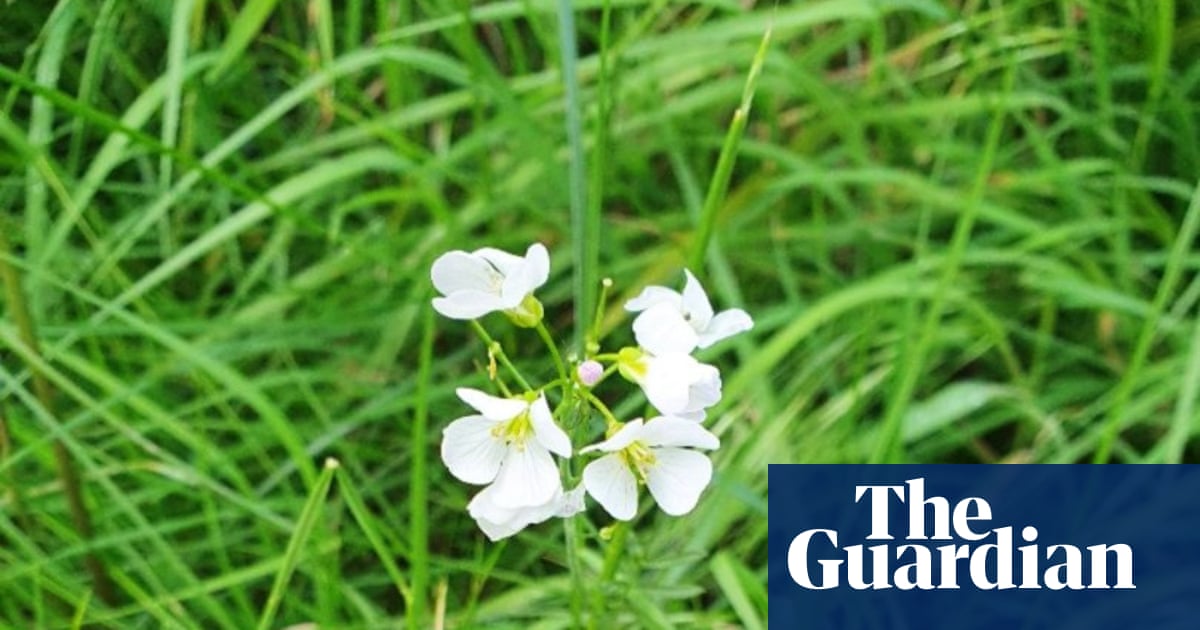
"It was a good sign that the mowing team arrived in mid-April. After a few weeks, I went down to survey the verges for early signs of resuscitation. It was a bright day, full of promise and I was delighted to find 21 species. Dandelions on the verge edges have flowered, fed insects, and now sport their beacon clocks, while daisies abound. Leaves of common ragwort, white clover, shepherd's purse, common chickweed, spear thistle, yarrow and common bird's foot trefoil have grown well, their flowers to follow soon. Two plants of cuckoo flower lurk in a corner."
"While I was there, a featherstorm flash, and 18 starlings swooped like teenagers raiding the fridge. Their bills probed the turf in concert, seeking the unmown v"
Cinnabar moth caterpillars gathered on common ragwort in roadside verges, but mowing during No Mow May destroyed the plants and their caterpillar “travellers.” No Mow May, launched in 2019 by Plantlife, aims to help wildflowers grow, attract pollinators, and encourage biodiversity. With most flower-rich meadows lost in the UK and many insect species facing extinction, reduced mowing is presented as a minimal action. Liverpool adopted reduced mowing regimes through a verge management strategy, though some residents mow verges themselves and an earlier destruction event remained unexplained. After mowing began in mid-April, verges showed recovery, with 21 plant species observed, including dandelions, daisies, ragwort, and other flowering plants, alongside starlings feeding in the unmown turf.
Read at www.theguardian.com
Unable to calculate read time
Collection
[
|
...
]