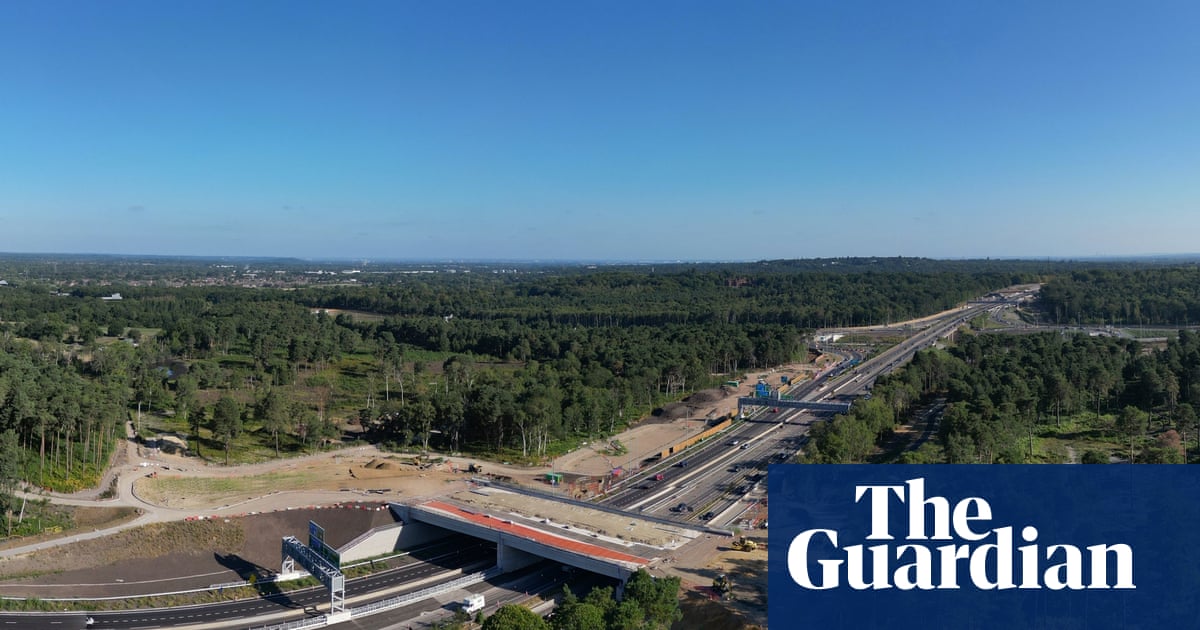
"When James Herd moved near to Wisley Common 17 years ago, the heathland nature reserve was teeming with wildlife. I'd take the dog around the common in spring and summer, and every few hundred metres I'd hear the rustle of a lizard in the undergrowth and I'd see adders, he says. But over the past decade, the Surrey Wildlife Trust's director of reserves management, who oversees the internationally important habitat, has seen that wildlife become depleted."
"There was a period, eight or nine years ago, when I'd get home and think: God, I didn't see or hear any evidence of reptiles.' To understand the decline, he says, you have to understand the route of the A3, a main arterial road into London that carries hundreds of thousands of vehicles a day. The road cuts in half the protected Wisley and Ockham commons, rare lowland heath in Surrey that for centuries has been home to a rich pocket of biodiversity, including the sand lizard, Britain's rarest lizard."
"It has fragmented the habitat, disconnected the ecological permeability of the site, Herd says. So species on this side of the common can't get to that side of the common because there's six lanes of tarmac and vehicles doing 70mph in the way. The habitat was dismantled further by the 317m M25 improvement scheme, which is widening the A3 at the Wisley interchange. This isn't just about big, charismatic species it's about reconnecting entire communities of insects James Herd"
"From the rubble of that construction project, a green shoot has emerged. To mitigate the impact on the area's wildlife, National Highways has built the Cockrow Bridge, a lowland heath wildlife crossing connecting the reserves and giving biodiversity a chance to recover. The green bridge will allow a range of animals and insects to move between habitats and th"
Wisley and Ockham commons are rare lowland heath habitats in Surrey that support biodiversity, including the sand lizard. Over the past decade, wildlife has declined, with fewer reptiles observed during routine walks. The decline is linked to the A3, which cuts the protected commons in half and disrupts ecological movement across the site due to multiple lanes and high vehicle speeds. Further habitat fragmentation occurred during the 317m M25 improvement scheme that widened the A3 at the Wisley interchange. National Highways built the Cockrow Bridge, a lowland heath wildlife crossing, to reconnect the reserves and allow animals and insects to move between habitats for recovery.
Read at www.theguardian.com
Unable to calculate read time
Collection
[
|
...
]