"A paper published this winter in JAMA Neurology found that a new drug, called tofersen, can radically slow and even reverse the course of the disease in a small subset of patients with a rare genetic variant. It is a small but unprecedented glint of light in the long, dark struggle with what used to be called Lou Gehrig's disease, both for the patients who had been staring down certain paralysis and death and for the researchers who work on the disease."
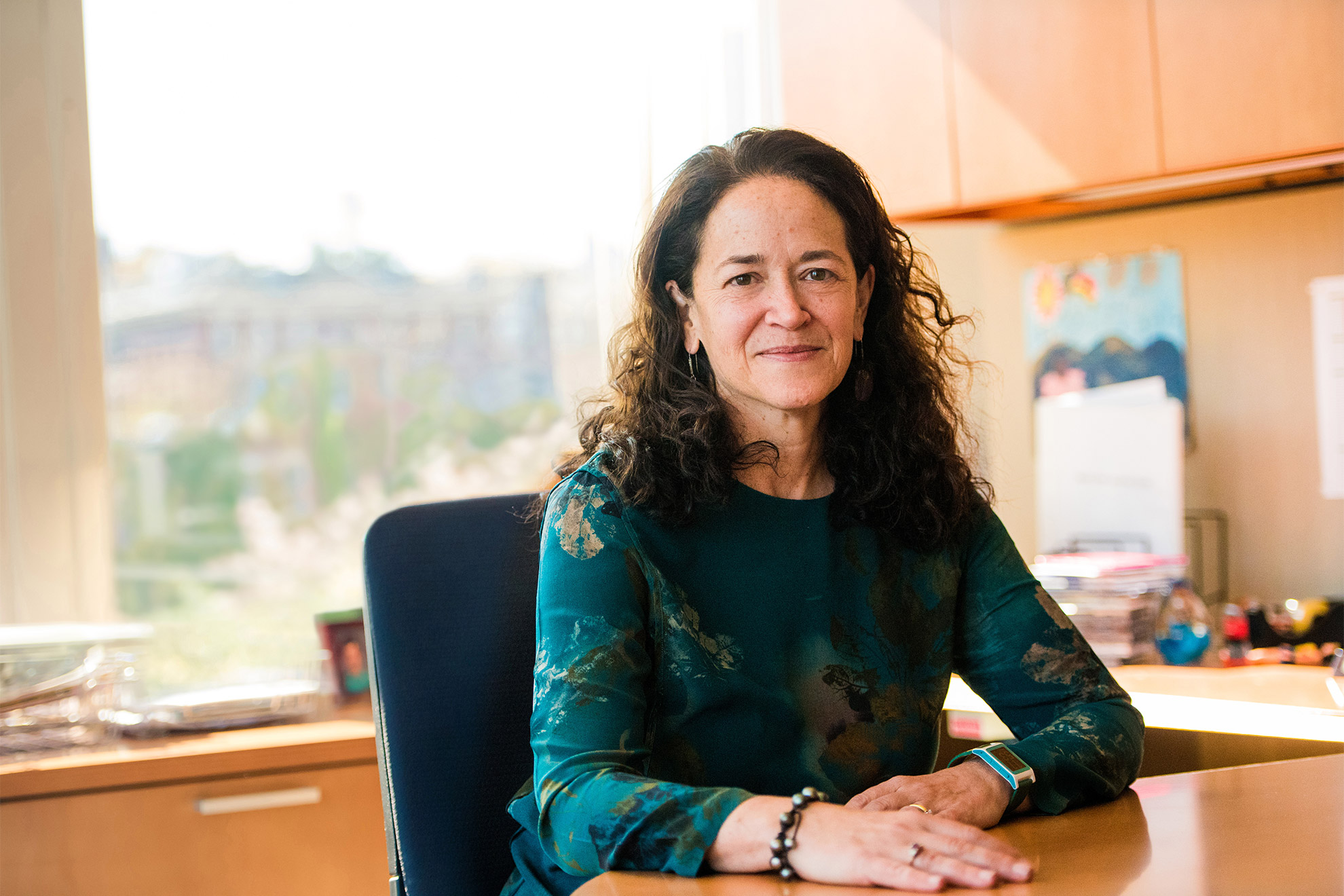
"Cudkowicz, the Harvard Medical School Julieanne Dorn Professor of Neurology at Massachusetts General Hospital and a co-author of the paper, said the data reveal was "the best day" in her years of confronting ALS. "It tells the whole field that this illness can be stopped. We thought that was true, hypothetically, but we had never seen it," she said."
"December's findings came only after years of fitful progress; the paper lists almost two dozen researchers in eight countries. Eleven are based in Boston or Cambridge, including at biotech pioneer Biogen, which is marketing the drug as Qalsody. Cudkowicz, who directs the Sean M. Healey and AMG Center for ALS, was involved almost from the start."
"Merit Cudkowicz has been working on ALS for three decades. She knew who she wanted to tell as soon as she was able to discuss the breakthrough findings publicly. "The first person I called was the husband of my very first [ALS] patient, when I was a fellow," she said. His wife had been diagnosed at 44 with the fast-moving A4V variant of the deadly disease."
A new drug, tofersen, was found to radically slow and even reverse ALS progression in a small subset of patients with a rare genetic variant. The findings come from a JAMA Neurology paper published in winter, with data showing meaningful changes in disease course for those patients. The results represent a major shift after decades of trials and incremental progress without a breakthrough. The work involved nearly two dozen researchers across eight countries, including major Boston and Cambridge institutions and Biogen, which markets the drug as Qalsody. The discovery is viewed as evidence that ALS can be stopped, at least for specific genetic cases.
Read at Harvard Gazette
Unable to calculate read time
Collection
[
|
...
]