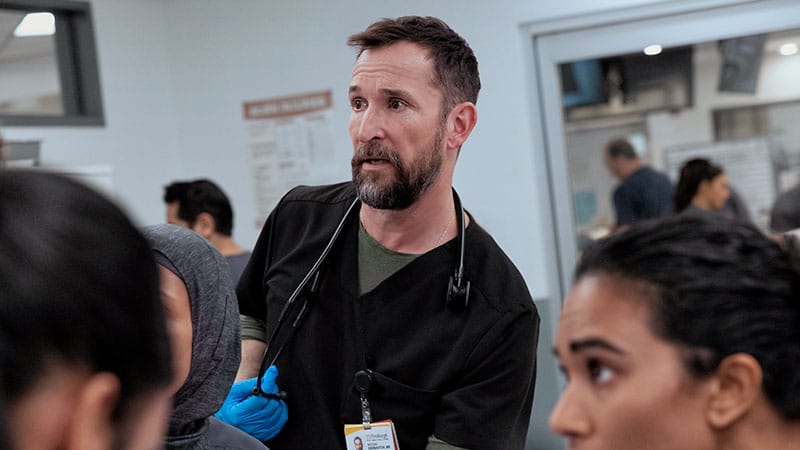
"Dr Robby holds an infant abandoned in the chaos of trauma. Robby cradles him with a tenderness that seems incongruous with the man we have watched unravel across the season. You have so many wonderful things to see, he whispers, his voice cracking. And so many people to love ahead of you. Tyler Beauchamp, MD When Robby speaks these words of comfort to the child, something shifts in his eyes a dawning recognition that he is not merely soothing an abandoned infant, but speaking to the abandoned parts of himself that, too, deserve saving."
"It is a moment that crystallizes a tragedy of modern medicine: The very skills that enable physicians to heal others can become the mechanisms that prevent themselves from healing. The Scope of Mental Health Struggles in Medicine As we enter Mental Health Awareness Month, it's important to remember that physician burnout, depression, and suicide remain prevalent concerns. It is estimated that roughly half of all physicians have experienced symptoms of burnout, and over 300 physicians a year die by suicide."
"Many suggest the true numbers may be even higher, as historically physicians have felt discouraged from disclosing mental health struggles or seeking help. What We Learn to Carry and Hide The narrative arc of The Pitt's second season offers a rare and unflinching portrait of physician burnout as told through Robby's internal battle to acknowledge his need for help and seek it. Months after surviving a mass shooting that shattered the equilibrium of their emergency department, we find each team member navigating their own nonlinear path to recovery."
"Robby, once the department's unshakeable anchor, has become a walking cry for help a man who has sacrificed everything to the altar of medicine only to discover that the calling he serves is slowly killing him. His story illuminates a paradox that defines contemporary medical practice: compartmentalization, the essential skill that allows"
An emergency physician cradles an abandoned infant and offers comfort that triggers recognition of his own abandoned parts needing care. The moment reflects a modern medical paradox: the same skills used to heal others can become barriers to healing oneself. Physician burnout, depression, and suicide are described as prevalent, with estimates that about half of physicians experience burnout and hundreds die by suicide each year. Disclosure and help-seeking are historically discouraged, suggesting higher true rates. A season-long portrayal follows clinicians after a mass shooting, showing nonlinear recovery and a physician who once anchored the department now struggles internally, having sacrificed everything to medicine while it slowly harms him.
Read at www.medscape.com
Unable to calculate read time
Collection
[
|
...
]