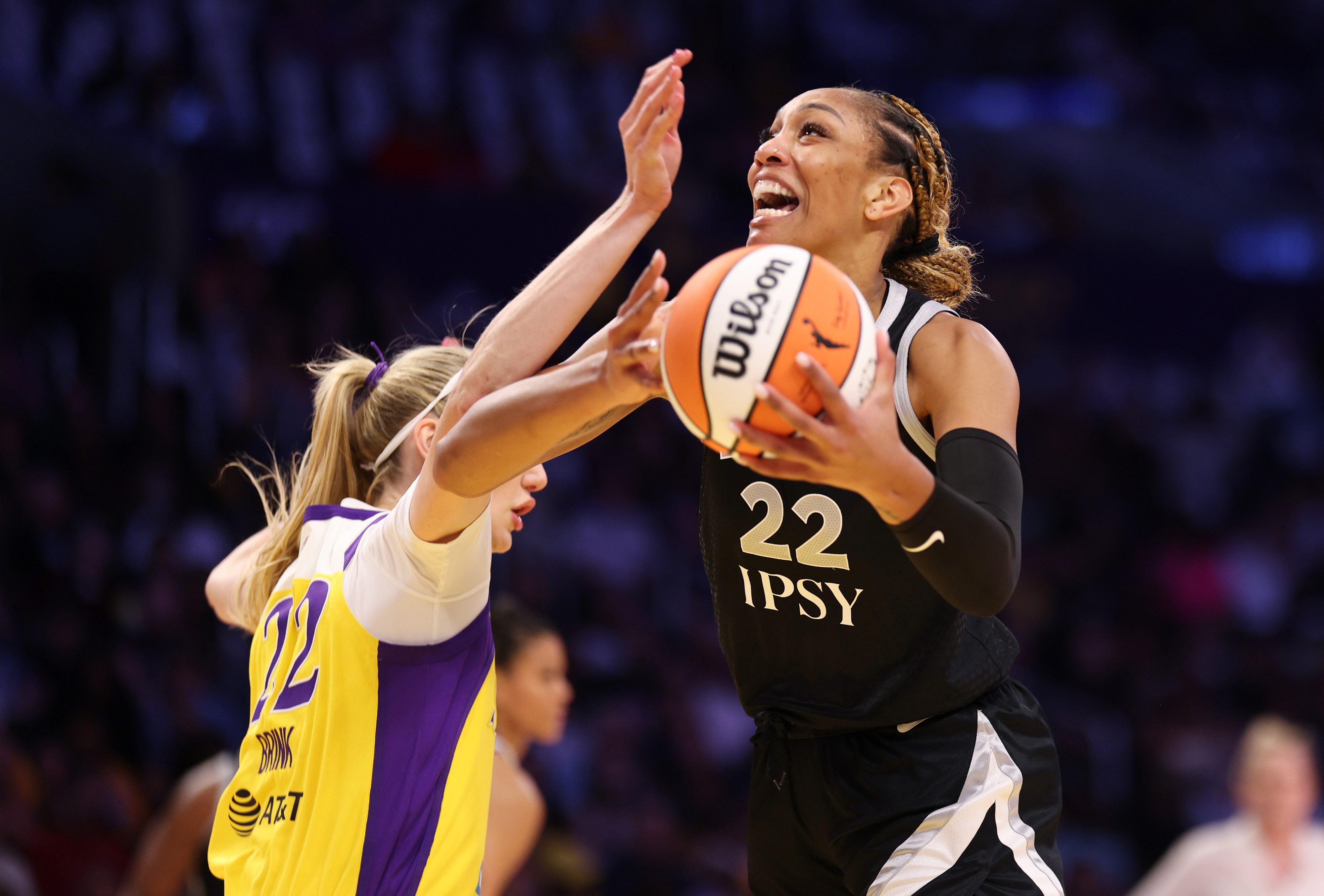
"Cameron Brink came back to a very different team than the one she left in June of 2024, when she tore the ACL in her left knee in a game against the Connecticut Sun. That year's Los Angeles Sparks were firmly rebuilding-or, as veteran guard Lexie Brown described the young roster in training camp that year, "We're like little babies." Brink was one of the Sparks' two lottery picks; they'd used the other to select three-level scorer Rickea Jackson out of Tennessee. ACL recoveries are long, but the Sparks' front office didn't exactly seem short on time. All spring, they had used telling words like "process" and "foundation." When Brink was injured, the Sparks were 4-11."
"She returned, in the middle of last season, to a new head coach and a new star teammate, on a team with some strange new ambitions. (Gone this year is Jackson, who was traded in the offseason to Chicago for 29-year-old guard Ariel Atkins.) These circumstances might explain a rough preseason and season opener this past weekend for the former No. 2 overall pick. The Sparks are in an awkward place: a "win-now" team that has yet to do any winning. So is Brink, an ostensible franchise cornerstone now coming off the bench, caught in the middle of her team's pivot and her league's officiating shift."
"Fouls have been an issue for Brink since she was a freshman in college. Her Stanford career ended with few signs of progress in this department. (Literally: She fouled out of her final collegiate game, Stanford's Sweet Sixteen loss to NC State.) The transition to pro basketball granted her one more foul to work with each game, and she has happily made use of it: She averaged around seven fouls per 36 minutes in each of her first two WNBA seasons."
"Imagine the quintessential Cam Brink foul, and the botched block might come to mind-she's a great help-side defender who likes to play aggressive. But those are rarer than the plain silly fouls, like tie-ups away from the basket, m"
Cameron Brink returned from an ACL tear to a Los Angeles Sparks roster that had changed significantly since her injury. The team had been rebuilding, using lottery picks and emphasizing “process” and “foundation,” and was struggling when she went down. Upon her return mid-season, she faced a new head coach and a new star teammate, while the roster continued to pivot toward different ambitions. Brink’s role also shifted, moving from a franchise cornerstone expectation to coming off the bench. Her foul issues have long been part of her game, including fouling out in her final college game and averaging about seven fouls per 36 minutes early in her WNBA career. The article connects these tendencies to early-season challenges amid officiating changes.
Read at Defector
Unable to calculate read time
Collection
[
|
...
]