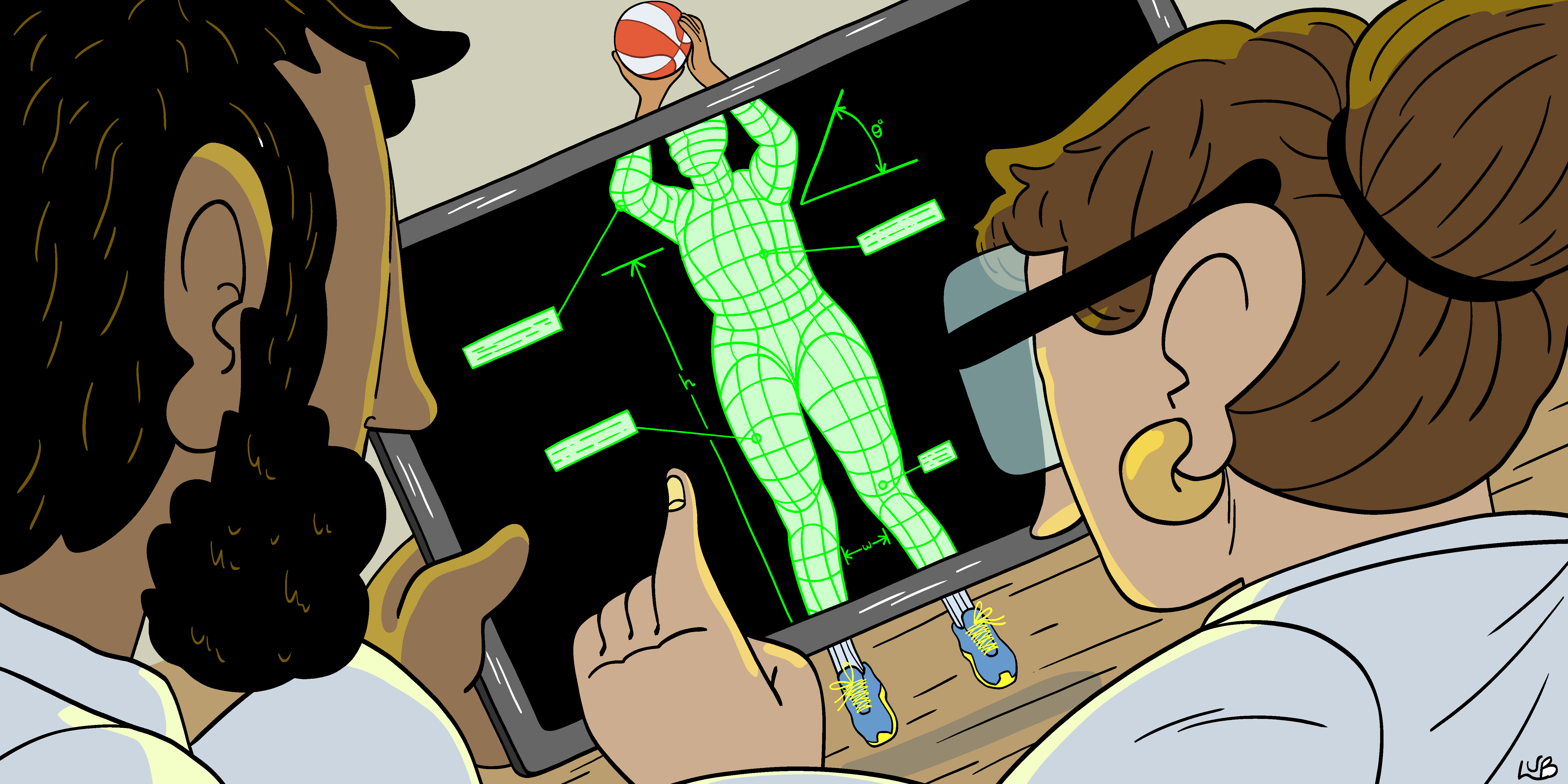
"Dream players ran across 87 subterranean force plates underneath the court, precisely tracking the force each player generated with their movements. Forty cameras, 20 on each side of the court, captured their movements; multiple optical tracking engines processed skeletal profile data based on the inputs. Ball and basket tracking technology monitored every shot's arc, depth, and orientation in inch-perfect detail. Sensors sat in players' waistbands and tracked granular movements like accelerations and decelerations."
"The setting was the Joe Gibbs Human Performance Institute in Charlotte, N.C., originally designed as a biomechanics-heavy recruitment and training hub for pit crew members for the Joe Gibbs NASCAR racing team. But the team quickly realized their facility had potential uses across sports, basketball chief among them. They purchased a wooden floor from the same company that makes the NBA's, then outfitted the setup with tech typically reserved for actual laboratories."
"The Dream were among several early visitors, a collection that also included NBA players and team personnel. And while a number of different applications for the technology were discussed, one naturally stood out: the jumper."
"Jump shooting is the single most foundational skill in basketball, and it's been a largely subjective art for its entire existence. A dozen shooting coaches might give you 10 different nuanced approaches to shooting an ideal jumper. Now, though, the game's most important repetitive motion is on the verge of being deconstructed by tech that has finally caught up."
Atlanta Dream players gathered during the WNBA Olympic break for a midseason training camp at the Joe Gibbs Human Performance Institute in Charlotte, N.C. The court used 87 subterranean force plates to measure forces generated by each player’s movements. Forty cameras captured player motion, while optical tracking engines processed skeletal profile data. Ball and basket tracking monitored shot arcs, depth, and orientation with high precision. Waistband sensors tracked granular movement patterns such as accelerations and decelerations. The facility, originally built for biomechanics-focused training for NASCAR pit crew members, was adapted for basketball by adding a wooden floor and laboratory-grade technology. The standout application was jump shooting, a foundational skill long guided by subjective coaching approaches.
Read at Defector
Unable to calculate read time
Collection
[
|
...
]