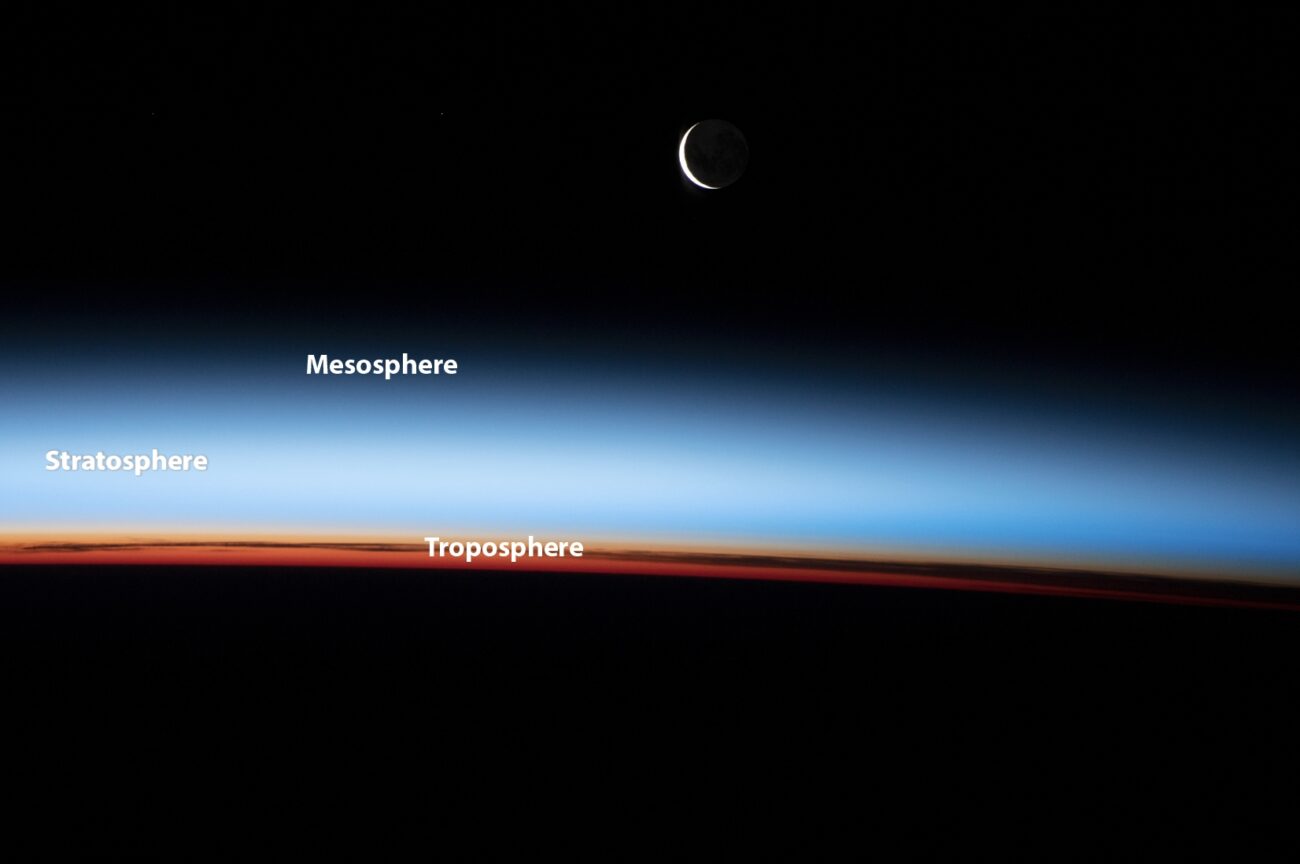
"Even as temperatures rise on Earth's surface and in the lower atmosphere, the planet's upper atmosphere has cooled dramatically. This paradoxical pattern is a well-known sign of humanity's climate impacts-but until now, the underlying physics has remained a mystery."
"In the lower atmosphere, CO2 molecules trap heat that would otherwise escape into space. Higher in the atmosphere, though, the dynamics change. In the stratosphere-the atmospheric layer that extends from about 11km to 50 km above Earth's surface-CO2 molecules function almost like a radiator, absorbing infrared energy from below and emitting some of that energy into space. When more CO2 is added, the stratosphere radiates heat away more efficiently and it cools."
"The study shows this cooling is largely controlled by how CO2 interacts with different wavelengths of infrared light. As CO2 levels rise, the range of infrared wavelengths involved in stratospheric cooling expands. The findings help explain how stratospheric cooling strengthens CO2's heat-trapping effect."
""It explains a phenomenon that's a fingerprint of climate change, has been known to occur for decades, and has not been understood," says Robert Pincus, a research professor of ocean and climate physics at Lamont-Doherty Earth Observatory, which is part of the Columbia Climate School, and co-author of the study published in Nature Geoscience."
Earth’s surface and lower atmosphere warm while the stratosphere cools, a pattern linked to climate change. In the lower atmosphere, CO2 absorbs outgoing heat and reduces heat loss to space. In the stratosphere, CO2 behaves more like a radiator, absorbing infrared energy from below and emitting part of that energy to space. As CO2 concentrations increase, the stratosphere radiates heat away more efficiently, producing cooling. The cooling depends largely on how CO2 interacts with different infrared wavelengths. With higher CO2 levels, the range of infrared wavelengths involved in stratospheric cooling expands, helping explain how stratospheric cooling strengthens CO2’s overall heat-trapping effect.
#stratospheric-cooling #carbon-dioxide-radiative-forcing #infrared-spectroscopy #climate-change-physics #atmospheric-radiation
Read at State of the Planet
Unable to calculate read time
Collection
[
|
...
]