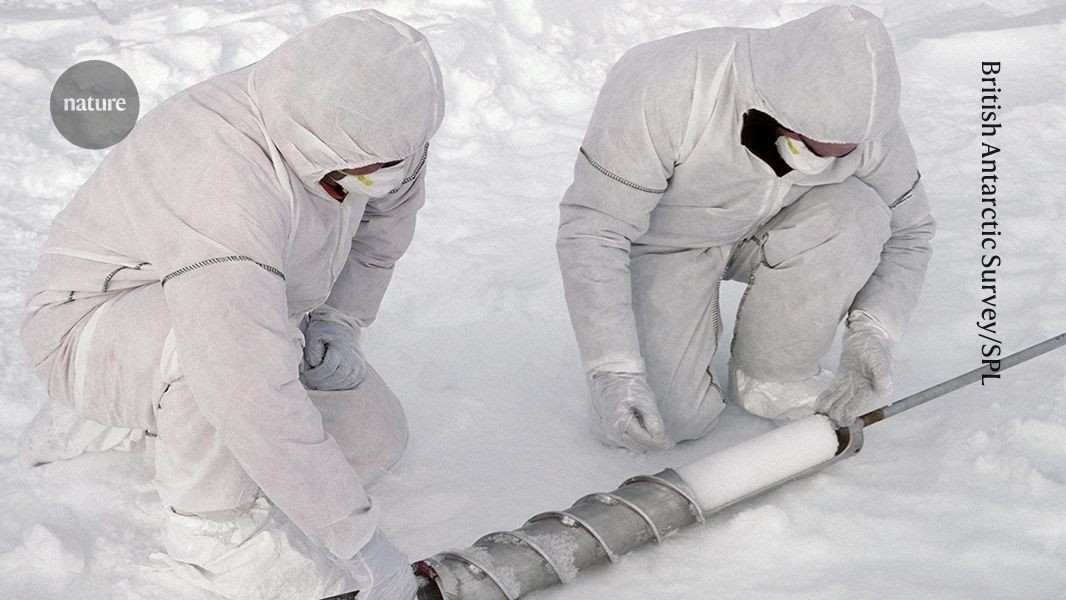
"The data were extracted from a 2.8-kilometre-deep ice core drilled in Antarctica, and show how the concentration of carbon dioxide in the atmosphere tracked changes in global temperatures across multiple cycles of climate change."
""We can now look at each cycle, see how they are different in CO 2 concentration. We really didn't know that before.""
"Until about a million years ago - in the middle of the Pleistocene epoch - ice ages occurred every 40,000 years, apparently caused by periodic wobbles in the Earth's orbit and axis of rotation. But during the 'Mid-Pleistocene transition', the periodicity switched to once every 100,000 years. The severity of natural climate cycles also increased, producing longer, colder glaciations with thicker ice sheets."
""It is thought that greenhouse gases had a minor role before the transition compared to after - but what caused the change is not firmly established," says Beyond EPICA project coordinator Carlo Barbante, a glaciologist at the Ca'Foscari University of Venice, Italy."
A 2.8-kilometre-deep Antarctic ice core provides a continuous climate and atmospheric record extending 1.2 million years. The measurements show how atmospheric carbon dioxide concentrations tracked changes in global temperatures across multiple climate-change cycles. The record enables comparison of individual cycles and reveals differences in CO2 concentration that were previously unknown. The ice core spans the Mid-Pleistocene transition, when ice ages became less frequent but more intense. Before about one million years ago, ice ages occurred roughly every 40,000 years, then shifted to about every 100,000 years, with longer, colder glaciations and thicker ice sheets. The cause remains uncertain, with hypotheses involving changes in greenhouse-gas roles and possible CO2 drops.
Read at Nature
Unable to calculate read time
Collection
[
|
...
]