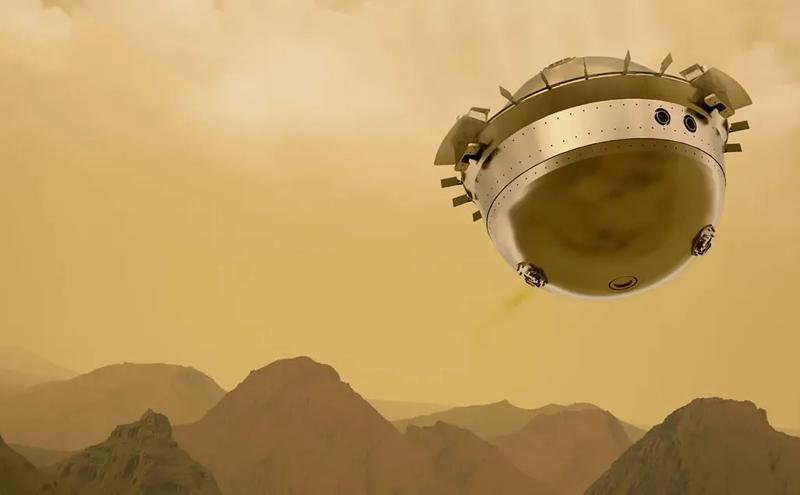
"Out of 20 probes, landers and balloons sent by the U.S. and Soviet Union that have reached the surface of Venus in the past 60 years, the study found that at least seven were probably hardy enough to endure the hostile environment and ended up in places on the planet where they're not imminently threatened with geological burial or destruction."
"Many researchers had assumed that all robotic missions sent there would so thoroughly succumb to Venus's brutal combo of scorchingly hot surface temperature and crushingly high atmospheric pressure that little would be left behind for subsequent study."
"This does not mean that the others cannot be preserved, says space archaeologist and independent researcher Luca Forassiepi, one of the study co-authors. But I'd say for those seven ... I don't find any reason to not think that they are still there."
"Reaching that conclusion required somehow replicating the harsh realities of Venus right here on Earth."
International space probes sent to Venus can remain on the surface long after missions end. Venus resembles Earth in mass and bulk composition but has extreme conditions that quickly destroy human and machine hardware. Researchers previously expected that heat, pressure, volcanic activity, landslides, and Venusquakes would eliminate most remnants. A study examining 20 U.S. and Soviet landers and balloons that reached Venus found that at least seven were likely hardy enough to endure the environment. Those probes likely ended up in locations not immediately threatened by geological burial or destruction. The conclusion required reproducing Venus-like harsh conditions on Earth to assess preservation potential.
Read at www.scientificamerican.com
Unable to calculate read time
Collection
[
|
...
]