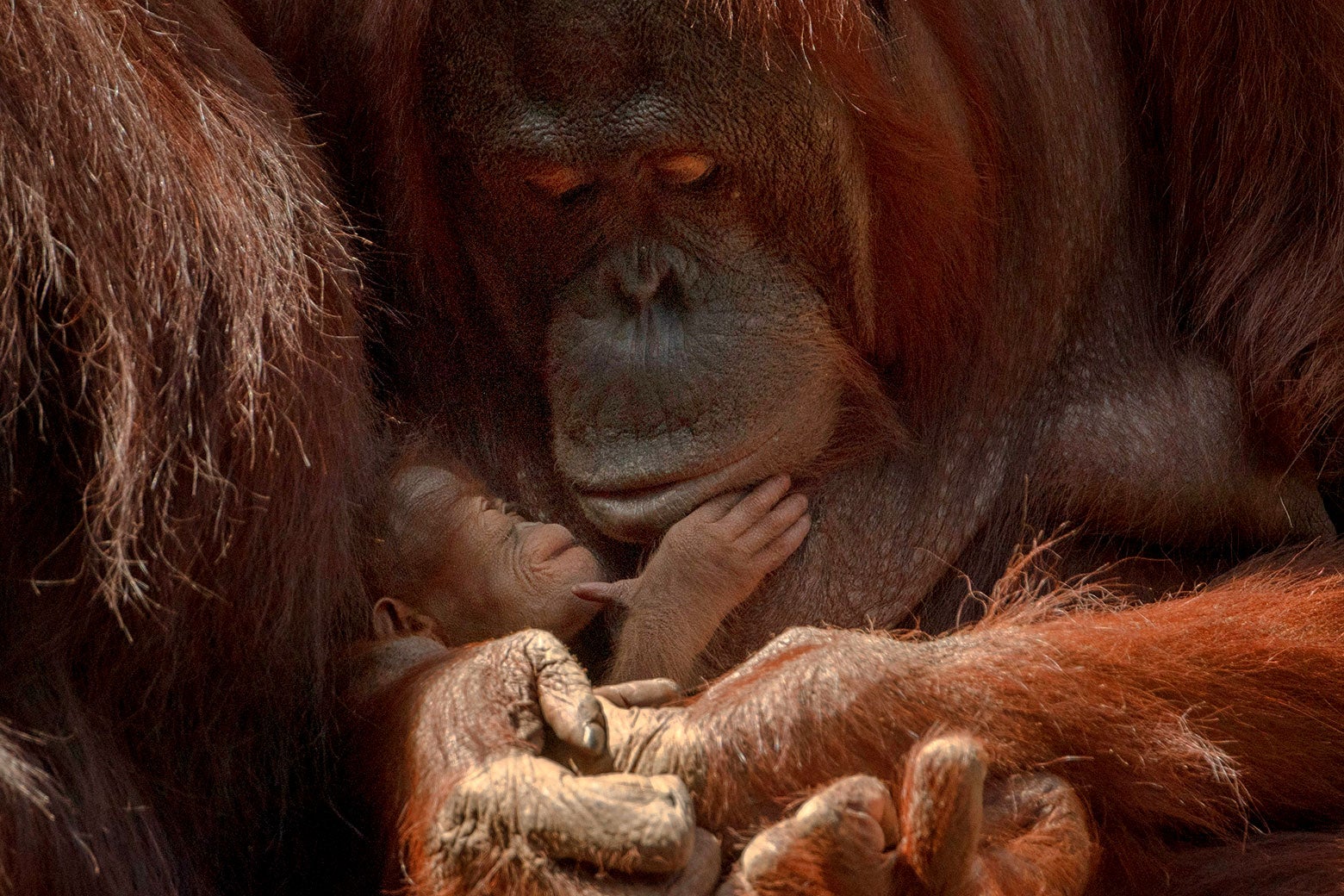
"Orangutans are a little bit like tradwives. An orangutan mom doesn't have a partner to make dinner or put on a dress for—orangutans live mostly alone—but she does handle all the homemaking and childcare herself. Her kids may breastfeed until the age of 8. But unlike the tradwife with her gaggle of youngsters underfoot, the orangutan mother sustains this intense caretaking by spacing her kids seven or so years apart."
"When it comes to other great apes, the moms also get almost no help in raising their children—from dads, or anyone else—and they space their kids several years apart. Their families look even less like a "traditional" human family: Chimpanzees, bonobos, and gorillas live in promiscuous groups."
"Modern Western parents have been taught that the ideal, natural family means a beleaguered mom plus a partner who may or may not equally share the work of raising kids. If we feel exhausted trying to follow this model, maybe that's because it isn't natural to our species at all."
"In recent decades, many biologists and anthropologists have come to view Homo sapiens as what's called a "cooperative breeder." This means our species parted ways with the other great apes, and evolved for kids to be raised not by one or even two parents, but by parents plus helpers. The helpers could be grandparents, older siblings, or other relatives or community members. Such helpers are called alloparents, for "other" parents."
Orangutan mothers raise offspring largely alone, handling homemaking and childcare without a partner, and sustain intense caretaking by spacing children about seven years apart. Other great apes also receive almost no help from fathers or others, and they space births several years apart, with chimpanzees, bonobos, and gorillas living in promiscuous groups. Modern Western parenting ideals emphasize a beleaguered mother supported by a partner, but this model may not match human biology. Many biologists and anthropologists describe Homo sapiens as a cooperative breeder, where children are raised by parents plus helpers. Helpers can include grandparents, older siblings, relatives, or community members, called alloparents. This system is linked to raising big, needy, slow-developing babies closer together than other great apes.
Read at Slate Magazine
Unable to calculate read time
Collection
[
|
...
]