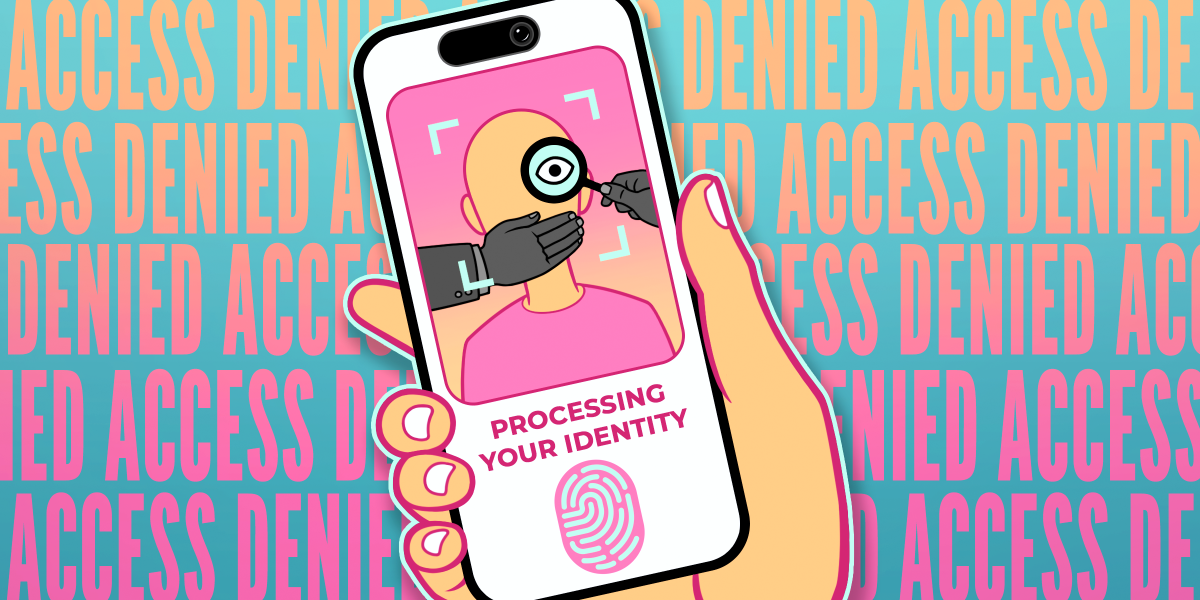
"EFF is against all mandatory age verification. Not only does it turn the internet into an age-gated cul-de-sac, but it also leaves behind many people who can't get or don't have proper and up-to-date documentation. While populations like undocumented immigrants and people experiencing homelessness are more obviously vulnerable groups, these restrictions also impact people with more mundane reasons for not having valid documentation on hand."
"But age restriction mandates threaten all of that. Not only do age-gating laws block adults and youth alike from freely accessing services on the web, they also force users to trade their anonymity -a pillar of online expression-for a system in which they are bound to their real-life identities. And this surveillance regime stretches beyond just age restrictions on certain content; much of this infrastructure is also connected to government plans for creating a digital system of proof of identity."
EFF is against all mandatory age verification. Mandatory age verification turns the internet into an age-gated cul-de-sac and excludes people without proper, up-to-date documentation, including undocumented immigrants, people experiencing homelessness, and those who have moved or changed names or gender markers. People should retain the right to opt out of unreliable technology and practices that could endanger personal information. Age-gating laws block adults and youth from accessing web services and force users to trade anonymity for systems that bind online accounts to real-world identities. Much of the verification infrastructure connects to government plans for a digital proof-of-identity system, expanding surveillance beyond content restrictions.
Read at Electronic Frontier Foundation
Unable to calculate read time
Collection
[
|
...
]