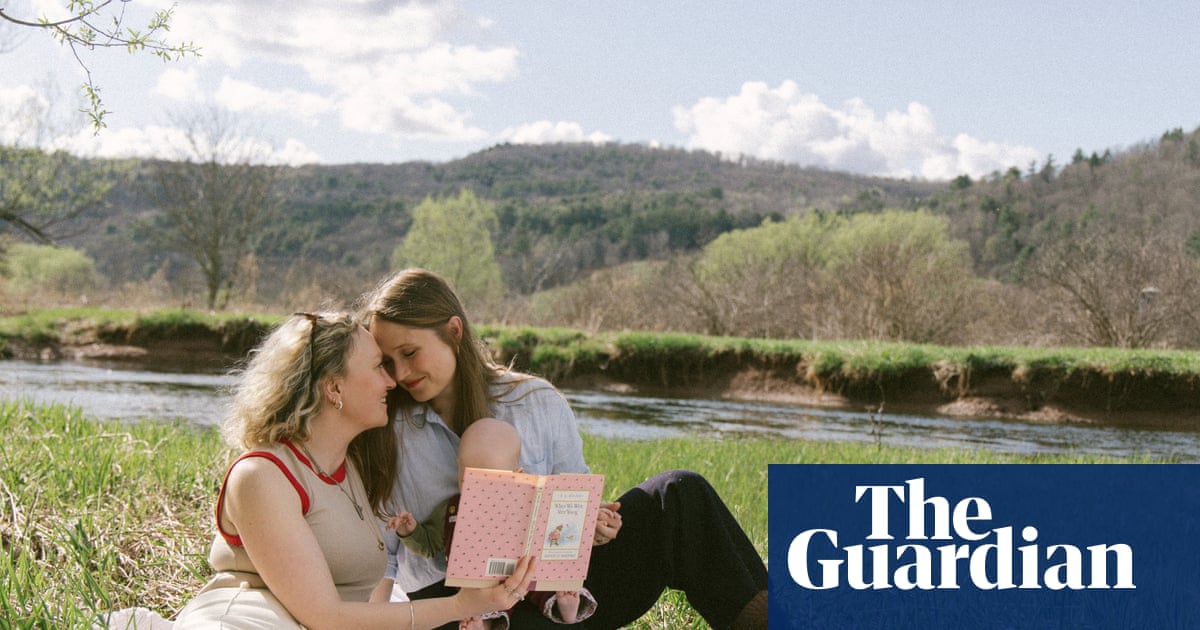
"We did what is known as reciprocal IVF: a route to parenthood that is increasingly being used by queer people. First, we each made embryos by retrieving our eggs and having them fertilised with donor sperm. With normal IVF, the embryo, if you're lucky enough to have made one, returns to the body that made the eggs. With reciprocal IVF, there's a body swap that feels a touch Shakespearean, or sci-fi. You receive your partner's embryo instead."
"Knowing nothing could be taken for granted, the hope was that Leah would carry my embryo, then I would carry hers. There are certain griefs you face when gay. If you are ambivalent about having children, you can't leave it up to fate to see whether two bodies cooperate. (There are lots of self-protective jokes: have we been doing it wrong all this time? Should we try a new position?)"
"I had fears. What if, one day, my child looked at me and said I wasn't their real mum? (Psychological theory tells us this is a normal developmental phase, but, a more harrowing th"
A baby is born to a queer couple using reciprocal IVF, where each partner’s eggs are retrieved and fertilized with donor sperm to create embryos. Instead of returning an embryo to the same body that produced the eggs, the embryo is transferred to the other partner, creating a “body swap” approach to pregnancy. The couple chose this method because nothing could be assumed and because ambivalence about children could not be left to chance. The process includes emotional grief tied to being gay and fears about how a child might later understand parenthood. Even with psychological reassurance, the uncertainty of identity and biology remains emotionally significant.
Read at www.theguardian.com
Unable to calculate read time
Collection
[
|
...
]