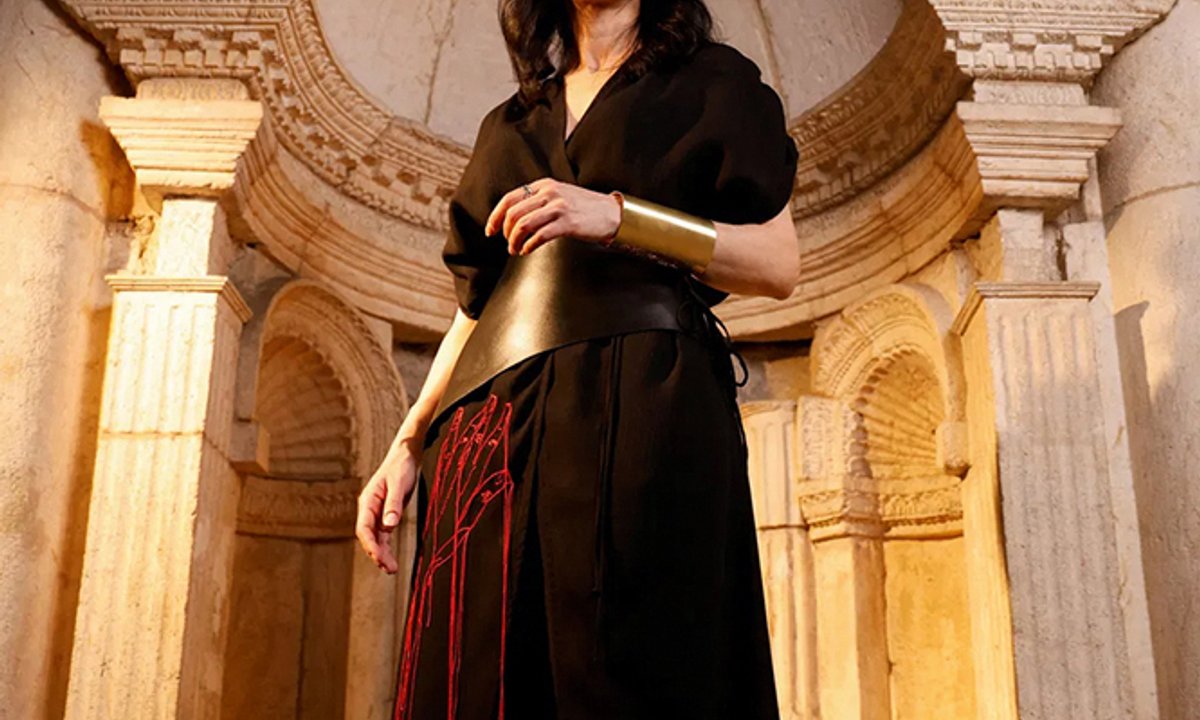
"For the first time, its national pavilion will centre on a single artist, Sara Shamma, one of Syria's leading contemporary artists, reflecting a renewed cultural direction as the country moves into a new post-war phase."
"When she returned to Syria in September 2024, after eight years of living between London and Damascus, she had no idea the Assad regime would fall within months-or that she would find herself living through what she describes as the country's rebirth. She is wasting no time in taking it in. Walking its streets, she says, she is rediscovering its beauty "again and again and again", along with a renewed sense of belonging."
"Conceived as an immersive installation combining painting, architecture, light, sound and scent, the project draws on the ancient funerary towers of Palmyra-destroyed by Islamic State in 2015-and responds to both cultural loss and the possibility of reconstruction. It also alludes to the widespread looting of Syrian artefacts during the war. "All these [funerary] towers have been destroyed, so I decided to create one," she says."
"The installation is expected to centre on a large-scale architectural structure housing 18 new paintings, inviting visitors to move through the space. For Shamma, the gesture is both commemorative and forward-looking. "There's no life without death," she says. "For me, that's the re-creation of our country.""
Syria will return to the Venice Biennale in 2026 with a new approach for its national pavilion. The pavilion will center on a single artist, Sara Shamma, as the country enters a post-war phase. Shamma returned to Syria in September 2024 after eight years between London and Damascus and experienced the fall of the Assad regime within months. She describes rediscovering the country’s beauty and a renewed sense of belonging. Her commissioned project, The Tower Tomb of Palmyra, is an immersive installation combining painting, architecture, light, sound, and scent. It responds to cultural loss from the destruction of Palmyra funerary towers and to looting during the war, while also pointing toward reconstruction. The installation will include a large architectural structure housing 18 new paintings and will invite visitors to move through the space.
Read at The Art Newspaper - International art news and events
Unable to calculate read time
Collection
[
|
...
]