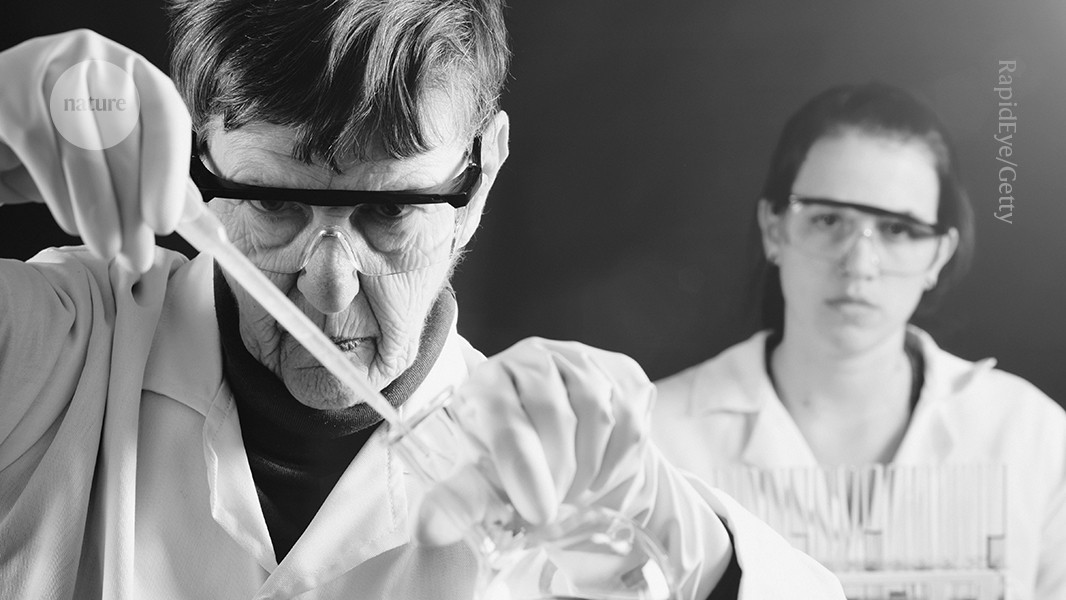
"Experienced researchers are less likely to produce 'disruptive' science than are those just starting their careers, finds an analysis of the scientific papers published by 12.5 million researchers over 60 years. The authors discovered that older researchers are better at connecting existing ideas to produce new knowledge than are younger researchers. But those with more experience are worse at achieving massive breakthroughs that overhaul, or disrupt, entire fields of research - as happened with innovations such as the discovery of the structure of DNA."
"The analysis, which was published today in Science, also concludes that, as their careers progress, scientists are more likely to cite older papers than newer ones. This phenomenon, which the authors call the nostalgia effect, can hold back scientific innovation, they say, because scientists get hung up on ideas from the past and are not as receptive to new developments."
"To measure how disruptive a scientific paper is, the research team examined how later studies cite it. If those studies cite the paper without also citing its references - which represent previous work in a field - this suggests that the idea or discovery reported in the paper rendered older work obsolete. This is a sign of disruption, the team says."
"Scientists become less disruptive as they age, and the scientific workforce is getting older, so the entire system is shifting toward a composition that favours consolidation [of existing ideas] over disruption,"
An analysis of scientific papers from 12.5 million researchers over 60 years finds that experienced researchers are less likely to generate disruptive science. Older scientists tend to connect existing ideas to produce new knowledge, but they are less likely to achieve massive breakthroughs that overhaul entire research fields. As careers progress, scientists cite older papers more often than newer ones, a pattern called the nostalgia effect. This nostalgia effect can slow innovation because researchers become more focused on past ideas and less receptive to new developments. The study measures disruption by examining whether later studies cite a paper without also citing its references, indicating that earlier work became obsolete.
#scientific-innovation #researcher-career-age #disruptive-science #citation-patterns #nostalgia-effect
Read at Nature
Unable to calculate read time
Collection
[
|
...
]