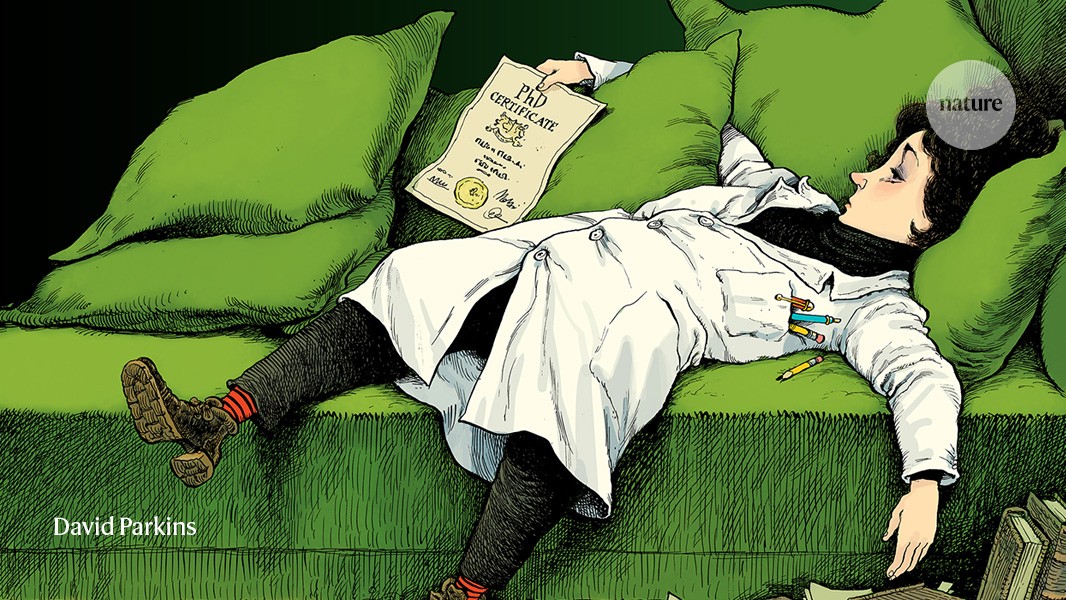
"When she completed her neuroscience PhD at Pompeu Fabra University in Barcelona, Spain, last year, Maria del Mar Cajiao Manrique knew that she didn't want to continue in academia, but she didn't have a clear idea of the alternatives. Cajiao Manrique took a three-month contract as a visiting researcher at the Icahn School of Medicine in New York City, then found a position as a medical writer in August this year."
"From the time we start university, we are shown there's only one path: bachelor, master, PhD, postdoc, and then more postdocs until you become a principal investigator. It becomes internalized. If someone doesn't feel like they fit that one path, that's when they start having this existential crisis: What is it that I'm good at? Have I wasted the past four years on this PhD?"
Many newly minted PhD graduates experience a career crossroads and existential uncertainty about whether the traditional academic path suits them. Recognizing that such a crisis can accompany the nature of research and striving for a healthy balance between passion and wellbeing can reduce pressure. Career trajectories for researchers are no longer linear or predictable. Short-term research contracts, roles such as medical writing, and networking with PhD holders in varied careers can reveal viable alternatives. Attending talks and connecting with peers who transitioned out of academia helps broaden perspectives and uncover practical career possibilities beyond the principal-investigator track.
Read at Nature
Unable to calculate read time
Collection
[
|
...
]