"“this is not solely a demand and an AI buildout and a chip demand from Wall Street or from the US. This is all around the world.” The host added that “the scramble for those hot stocks is more around in Asia certainly than it is on Wall Street itself.”"
"The numbers back the thesis. The iShares MSCI South Korea ETF (NYSEARCA:EWY | EWY Price Prediction) is up 87% year-to-date (YTD) through May 6, 2026, after delivering a 95% total return in 2025 that crowned it the world's top-performing major equity market. For comparison, the iShares Semiconductor ETF (NASDAQ:SOXX) is up 68% YTD and the SPDR S&P Semiconductor ETF (NYSEARCA:XSD) is up 65% YTD."
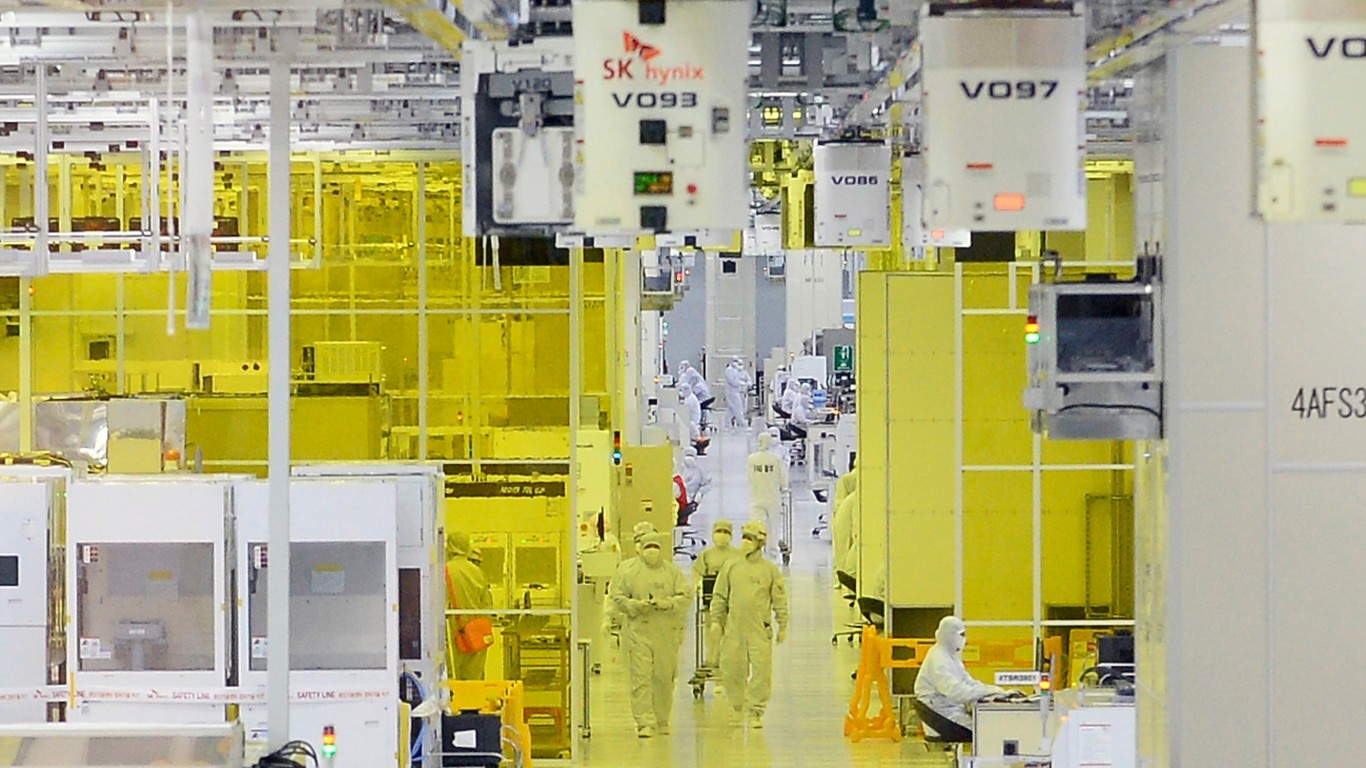
"That gap matters. US chip benchmarks are running hot, and Korea is still pulling ahead. The host noted Korea's 75% surge was “led by two very big stocks,” without naming them on air. We will respect that gap. What is publicly disclosed by BlackRock is that the top two holdings in EWY together account for 45% of the fund, and that concentration is the engine behind the move, fueled by memory-chip pricing tied to AI infrastructure demand."
"Korea's boom is part of a broader cycle. Wafer-fab equipment makers tied to Korean memory capex are participating in the same cycle. Applied Materials (NASDAQ:AMAT) shares are up 67% YTD, roughly in line with the broader chip ETFs. That is the “global story” in practice: Korean fabs order from US toolmakers, US hyperscalers buy Korean HBM, and the cycle compounds."
Korean markets have shown stronger gains than U.S. chip benchmarks, indicating the chip rally is not limited to Wall Street. The iShares MSCI South Korea ETF has risen sharply year-to-date and delivered exceptional total returns in 2025. The outperformance is linked to concentration in the fund’s largest holdings, which together represent a large share of the portfolio. Memory-chip pricing tied to AI infrastructure demand is a key driver. The broader cycle also involves wafer-fab equipment makers benefiting from Korean memory capital expenditures. U.S. toolmakers supply equipment to Korean fabs, while U.S. hyperscalers buy Korean HBM, reinforcing the demand chain.
#ai-semiconductors #korean-equities #memory-chips-hbm #semiconductor-supply-chain #market-concentration
Read at 24/7 Wall St.
Unable to calculate read time
Collection
[
|
...
]