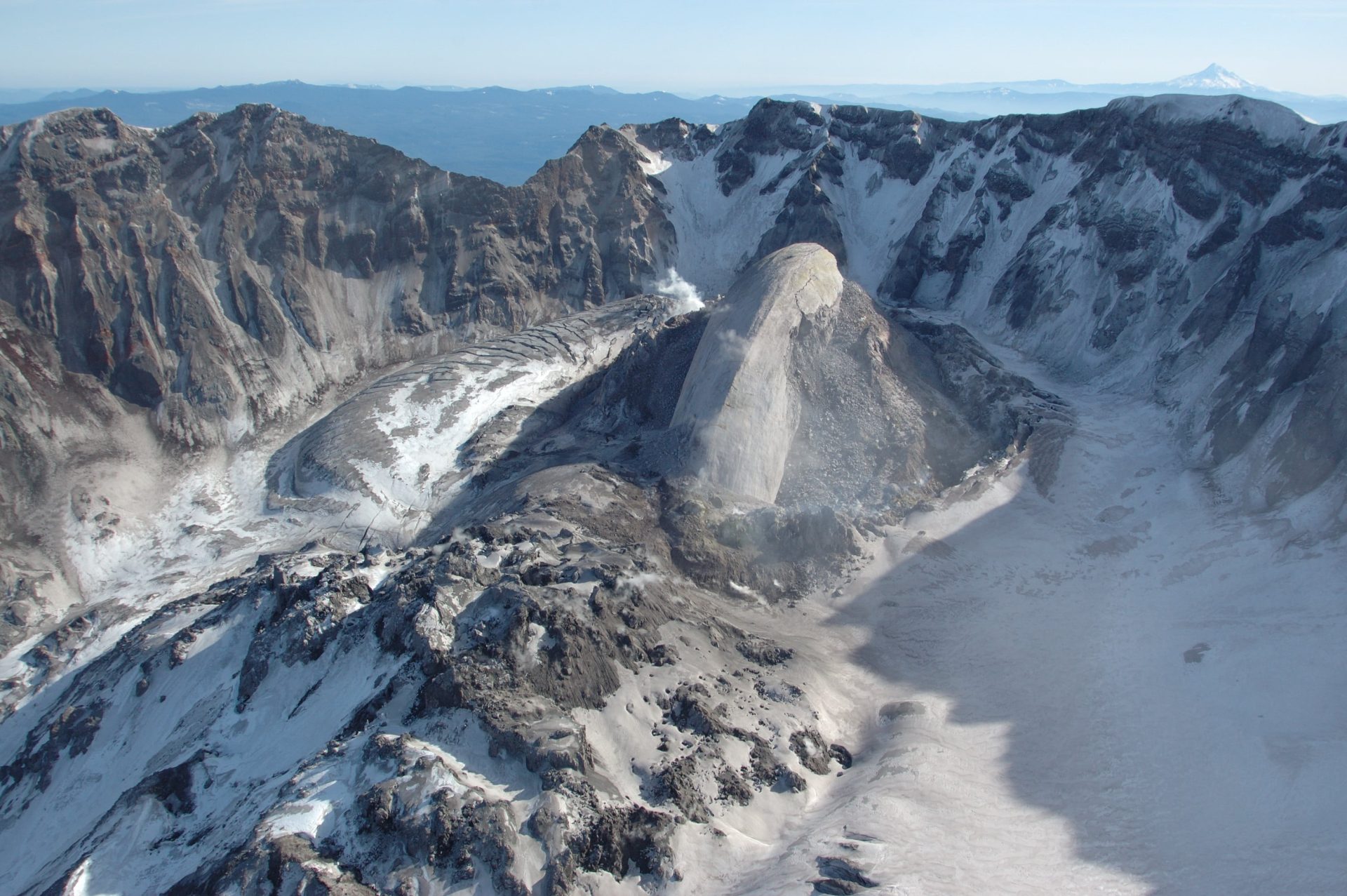
"Crater Glacier, the world's youngest glacier, sitting at an approximate elevation of 6,526 feet. It is also officially known as Tulutson Glacier, its original Indigenous designation, though the U.S. Board on Geographic Names formally approved the name "Crater Glacier" in 2006."
"What makes this glacier unique, especially in a warming climate, comes down to a near-perfect combination of three key factors: 1) A protective blanket: Rockfall and volcanic debris constantly cascade onto the glacier, forming a natural insulating layer. This debris acts like a shield, reducing direct solar heating and slowing the melt rate."
"2) A north-facing, shaded crater: Crater Glacier sits tucked against the north side of Mount St. Helens' inner crater. The steep crater walls block much of the sun's direct radiation, keeping temperatures lower than the surrounding terrain. 3) A relentless supply of snow and avalanches: Snow doesn't just fall here; it pours in. Frequent avalanches from the crater walls continuously feed and build the glacier, creating one of the most efficient accumulation zones in the entire Cascade Range."
Crater Glacier, also known as Tulutson Glacier, is a young glacier inside the shattered crater of Mount St. Helens in Washington. It sits at about 6,526 feet and is officially recognized as Crater Glacier. A glacier forms when snowfall consistently exceeds melting, with compressed snow turning to ice that slowly flows downslope. Crater Glacier’s growth in a warming climate comes from three interacting conditions: volcanic debris and rockfall create an insulating layer that reduces solar heating, the glacier’s north-facing crater position limits direct sunlight, and frequent avalanches continuously deliver snow that efficiently accumulates ice.
Read at SnowBrains
Unable to calculate read time
Collection
[
|
...
]