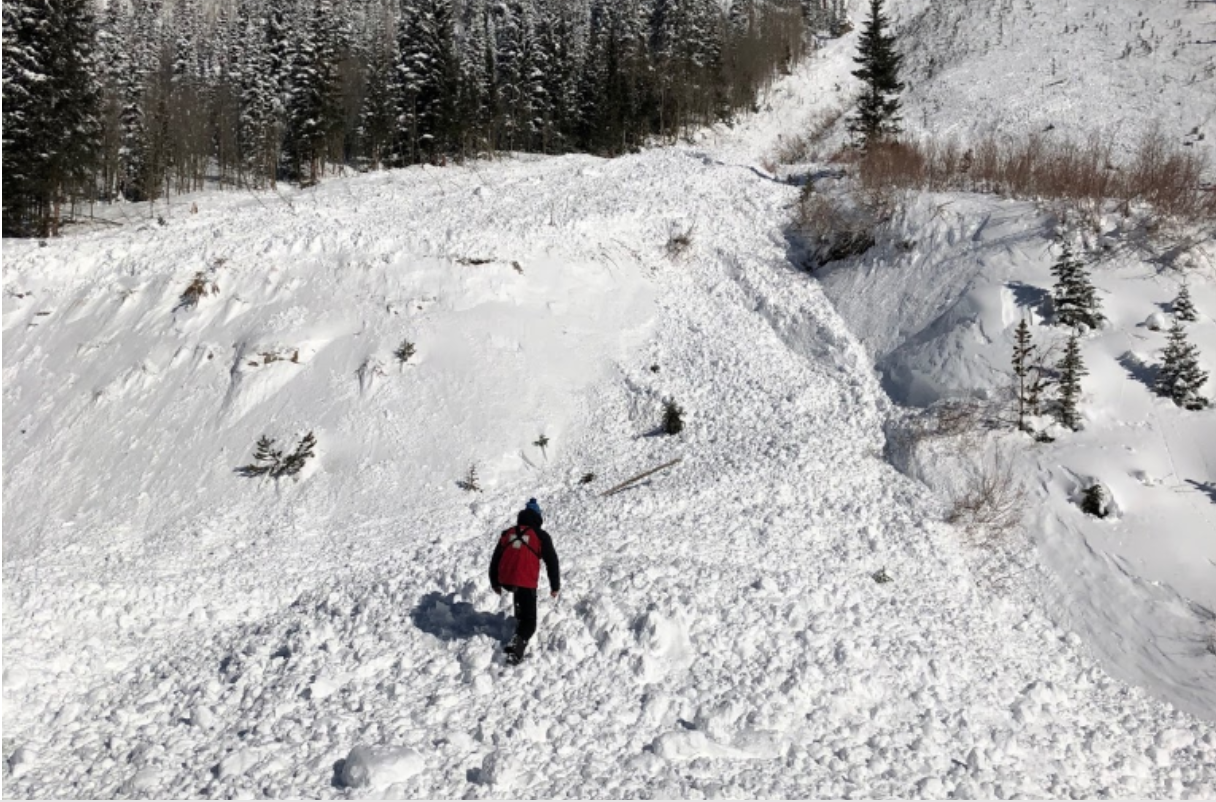
"Avalanches can be triggered remotely when traveling above or below a steep slope, meaning awareness is always required when traveling in the backcountry."
"Research shows that snow that adheres to itself is often rounded in shape, while weak layers are often comprised of 'faceted' or 'angular' snow that is unable to stick together."
"When the top layer of the snowpack breaks apart from the rest due to a weak layer in between, dangerous slab avalanches can occur, sending the entire top layer and chunks of snow down the mountain."
"Slab avalanches are the most common and dangerous form of avalanches."
Avalanches are significant natural hazards that can disrupt ski areas and public roads, necessitating substantial investments in prevention. They are triggered by various factors, including human activity, heavy snowfall, and earthquakes, with the highest risk occurring on slopes over 30 degrees. In Europe, approximately 100 people die from avalanches annually, while the U.S. sees nearly 30 fatalities, mostly caused by the victims themselves. The American Institute for Avalanche Research and Education has been providing essential training for winter backcountry travel since 1998. Slab avalanches, the most common type, occur due to unstable snowpack conditions.
Read at SnowBrains
Unable to calculate read time
Collection
[
|
...
]